Table of Contents
- How to Open a Bar Without Guessing on the Draft Side
- The Planning Order That Protects Your Budget
- Opening a Bar Checklist: Draft Equipment You Need
- Draft System Planning: Direct-Draw or Long-Draw?
- How to Choose a Draft System Provider
- How to Build a Cleaning Plan Before Opening Night
- Frequently Asked Questions
- Open With a Draft System You Can Trust
Key Takeaways
- Plan your draft system before the floor plan, since keg-to-tap distance drives everything.
- Direct-draw suits small footprints, while long-draw with glycol cooling suits remote kegs.
- Budget for gas, cooling, and cleaning gear, not only taps.
- Hire installers who also service systems.
- Start a two-week cleaning log before opening night.
How to Open a Bar Without Guessing on the Draft Side
If you are working out how to open a bar in Putnam County, the draft system is the one purchase you cannot easily fix after the doors open. Walls get built around it, coolers get sized for it, and your first impression with guests depends on it. A foamy first pint or a sour second one travels fast in a small community.
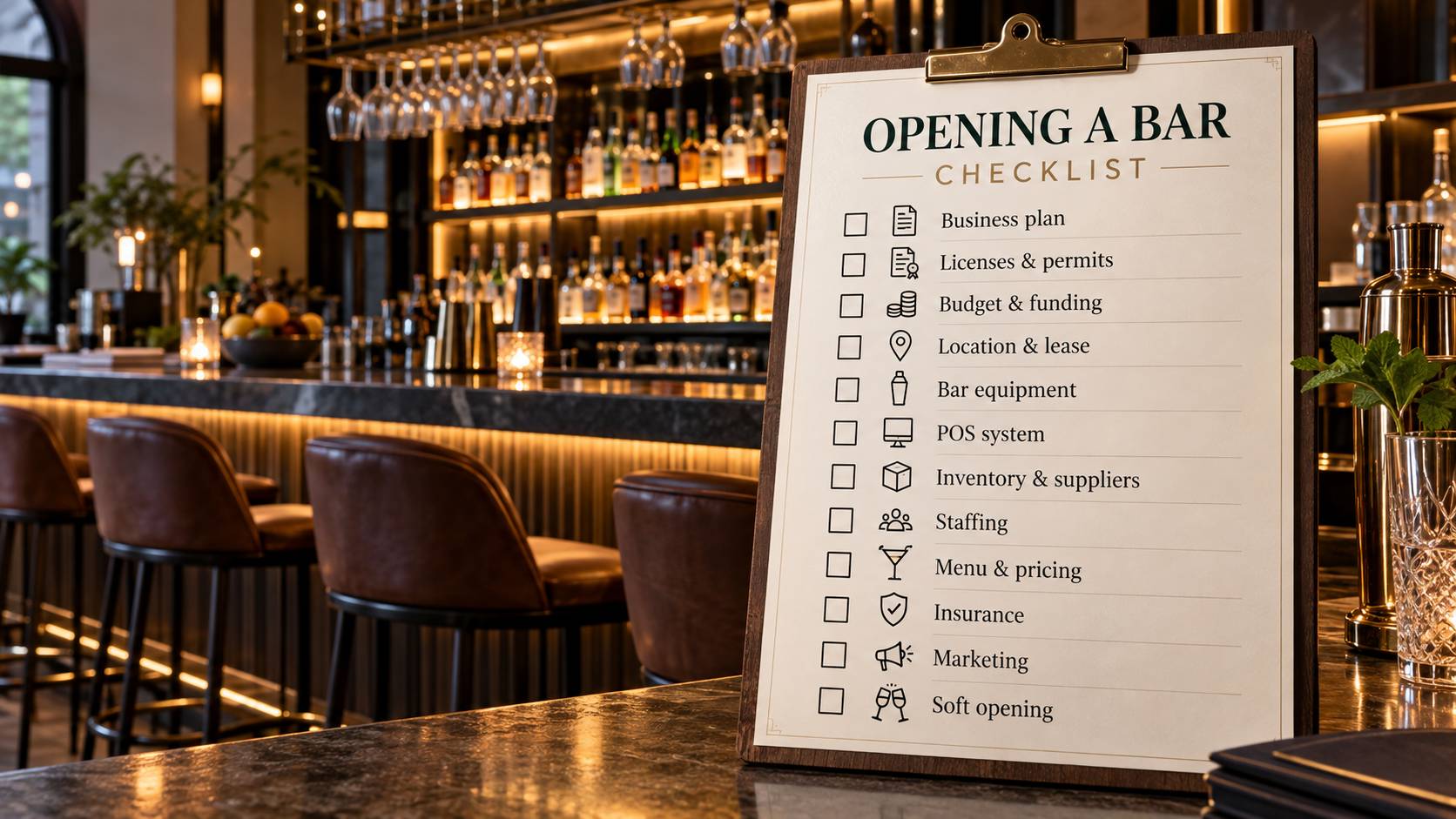
This opening a bar checklist covers the equipment you need, how to plan the draft system, and what to do before opening night. We built it for owners and managers across Brewster, Carmel, Mahopac, and Cold Spring, but the logic applies anywhere.
The Planning Order That Protects Your Budget
Most first-time owners start with the concept and the lease, which is right. The mistake is treating the draft system as a late detail. Use this order instead:
- Define the concept and tap count. A ten-tap taproom and a four-tap neighborhood bar need different cooling, gas, and layout.
- Confirm licensing and approvals. Liquor licensing, building permits, and health department review all have their own timelines. Check requirements with the relevant authorities early, because they can set your opening date more than construction does.
- Locate the keg cooler relative to the bar. The distance between kegs and faucets decides your system type, so settle it during draft beer line installation planning in Putnam County, before routing and wall penetrations get locked into the build.
- Lay out the back bar, sinks, and storage around that decision. Building the layout around the cooler location keeps line runs short and avoids costly rerouting later.
- Schedule installation, balancing, and a first cleaning before staff training. Your team should learn on a system that is already dialed in and clean, not one still being adjusted.
Opening a Bar Checklist: Draft Equipment You Need
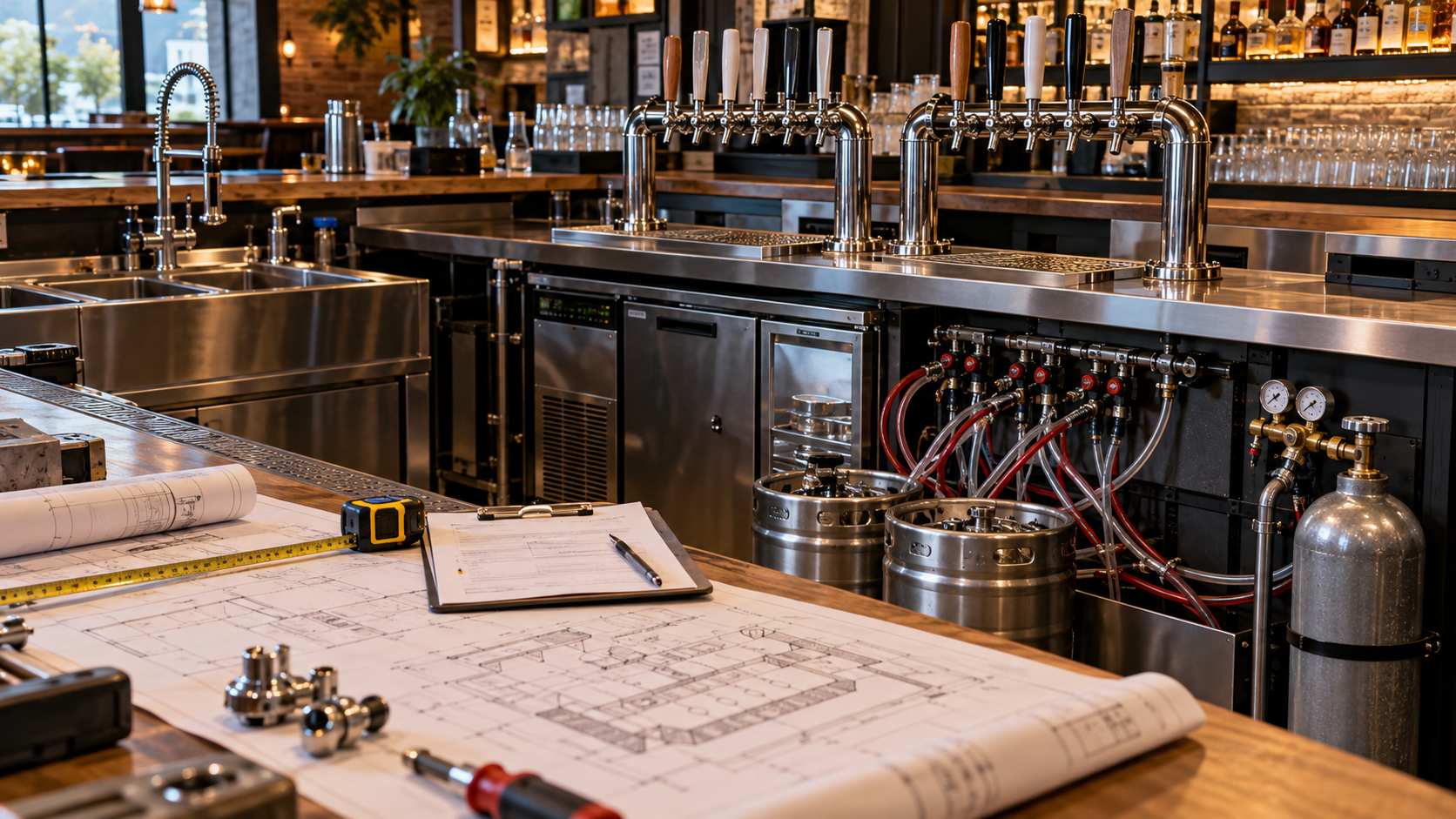
A commercial draft system is a set of parts that must work together, and each of the draft beer system components below affects how the beer pours. Here is the core list, with a plain-language note on what each part does.
- Keg refrigeration: A walk-in cooler, keg cooler, or under-bar unit. The Brewers Association recommends a dispensing temperature of 34 to 38°F, held steady.
- Gas supply: CO₂ cylinders, and for some long-draw or nitro programs, a gas blender. Gas pressure must match beer temperature and carbonation. As a reference point, the Brewers Association notes that beer at 36°F with 2.6 volumes of CO₂ calls for roughly 11.3 PSI, adjusted for altitude and system design.
- Regulators and manifolds: These control and distribute pressure to each keg.
- Couplers: The connection to each keg. Most American domestic kegs use the Sanke D style, while some imports need a different coupler.
- Beer lines and barrier tubing: Line length and diameter create the resistance that keeps beer from rushing to the faucet.
- Shanks, towers, and faucets: The visible end of the system, and the part guests judge first.
- FOB (foam on beer) detectors: These reduce waste during keg changes.
- Glycol power pack and trunk line: Required when beer travels a long way from keg to tap.
- Cleaning equipment: A cleaning keg or recirculating pump, approved chemicals, brushes, and personal protective gear.
Non-Draft Items for Your Bar Equipment List
Draft is only one line item on a complete bar equipment list. Most bars also need:
- Back-bar refrigeration for bottles, cans, and mixers
- Ice machine and ice bins
- Three-compartment sink and a separate handwashing sink, per local health department requirements
- Glass washer or a dedicated manual glassware setup
- Speed rails, shakers, jiggers, strainers, and bar tools
- POS system, receipt printers, and card readers
- Shelving, dry storage, and a secure area for inventory
If you plan to serve food, merge this with your restaurant equipment list early. Shared refrigeration, sinks, and storage change your space and electrical needs, and it is far easier to settle that before the walls go up.
|
One practical tip: Keep beer glassware separate from greasy kitchenware. Detergent and grease residue can collapse the head and make a perfectly balanced system look broken. |
Draft System Planning: Direct-Draw or Long-Draw?
This is the decision that shapes your layout, your budget, and your daily workflow.
|
Factor |
Direct-Draw |
Long-Draw (Glycol-Cooled) |
|
Keg location |
Directly behind or beneath the bar |
Remote cooler, sometimes on another floor |
|
Typical fit |
Smaller bars, cafés, taprooms |
High-volume bars, large venues, many taps |
|
Cooling |
Keg cooler cools the beer and the lines |
Glycol chills a trunk line alongside beer lines |
|
Complexity |
Simpler to install and maintain |
More components to monitor |
|
Upfront investment |
Generally lower |
Generally higher |
As a working rule, once the keg-to-tap run passes roughly 25 feet, plan on glycol cooling to hold temperature. Shorter runs can often stay direct-draw.
A few questions help settle it:
- How many taps do you want at launch and in two years?
- Can your floor plan place a cooler close to the bar?
- Will you serve different styles that benefit from different temperatures or gas blends?
- Who will monitor the glycol and check the system between service visits?
How to Choose a Draft System Provider
Installers vary in what happens after the last fitting is tightened, so use these steps to choose a draft system provider in Putnam County you can rely on long after installation day.
Confirm They Handle the Full Service Cycle
Ask whether they install, balance, clean, and repair, or only one of those. A single team that covers all four already knows your system when something goes wrong.
Ask How They Set Line Lengths and Gas Pressure
A qualified installer should be able to explain why they chose each line length and gas setting for your layout and beer styles. If the answer is vague, expect foam and waste later.
Request Written Documentation of the Setup
Ask for a record of line lengths, pressure settings, and component locations. With it, your team can troubleshoot basic issues without guessing, and any future technician can pick up where the last one left off.
Test Their Response Time Before You Need It
Ask how fast they respond when a tap goes down on a Friday night. Their answer, and how they handle your questions before the contract, shows how they will treat you during a rush.
Look for Experience With Systems Like Yours
Ask for examples of builds that match your size, tap count, and cooling setup. A provider who has handled both installation and ongoing service will design with cleaning access and repair in mind from day one, which saves you labor and downtime later.
How to Build a Cleaning Plan Before Opening Night
A new system is clean on day one, but it does not stay that way. Yeast, bacteria, and beer stone build up inside lines and faucets, and they show up as foam, sour notes, and cloudy pours. These steps belong on your opening a bar checklist before the first keg is tapped.
Set a Two-Week Schedule With a Named Owner
Put a recurring cleaning date on the calendar and assign one person to make sure it happens. Without a named owner, cleanings slip during busy weeks, which is when buildup grows fastest.
Follow the Brewers Association Cleaning Minimums
The Draught Beer Quality Manual calls for recirculation cleaning of every line at least every two weeks. It also covers faucet disassembly and periodic acid cleaning to address beer stone, so use it as your baseline.
Keep a Visible Cleaning Record
Write down the date, the lines cleaned, and who did the work every time. A draft beer cleaning log for Putnam County bars that anyone on your team can check at a glance makes missed cleanings obvious before guests notice them.
Add Detail Cleaning Between Full Line Cleans
Faucets, couplers, and FOB detectors collect residue faster than the lines do. Plan a quick check and scrub of these parts between full cleanings so small buildup never turns into off-flavors.
Train Staff on Safety and What a Clean Pour Looks Like
Anyone handling line-cleaning chemicals should wear eye and hand protection, and every line must be rinsed completely before beer goes back in. Teach your team what a clean pour looks like, and who to call when it does not.
Decide Who Handles the Chemicals
If your team will not manage cleaning chemicals in-house, schedule professional service from the start. It removes the gap between opening day and your first missed cleaning.
Frequently Asked Questions
How much does it cost to open a bar?
It varies widely with the space, build-out, licensing, equipment, and opening inventory, so no single number fits every bar. Your bar equipment list and draft system are two of the biggest swing factors, especially tap count and keg-to-tap distance. A site review gives you a more realistic budget than any general estimate.
How long does it take to open a bar?
Timelines range from a few months to a year or more, depending on the property, permits, construction, and equipment lead times. Licensing and approvals often set the pace, so start them early. Booking draft installation while the build-out is underway helps you avoid delays near the end.
What are the most common mistakes when opening a bar?
The usual ones are underbudgeting for equipment, building a tap list that is too long for your volume, and skipping staff training before opening night. Many owners also leave out a maintenance plan. A realistic opening a bar checklist covers all four before the first guest arrives.
How can a new bar reduce beer waste?
Waste usually comes from foam, so start with steady cold temperatures, balanced gas pressure, and clean lines and faucets. Training bartenders on proper pour technique makes a noticeable difference too. Tracking waste per keg helps you spot a system problem early.
How long does a keg last once it is tapped?
It depends on the beer and how it is stored and dispensed. Under CO₂ with steady refrigeration, a tapped keg can stay fresh for weeks, and unpasteurized craft beer generally has a shorter window than pasteurized beer. Check the brewer’s packaging date and rotate stock so slower sellers do not sit.
Open With a Draft System You Can Trust
You now know how to open a bar with the draft side planned correctly: choose the system by distance and volume, buy the full equipment set, and lock in cleaning from day one. Mistakes in these steps are expensive to correct once walls are closed and the first keg is tapped.
We plan, install, clean, and service commercial draft systems for bars, restaurants, breweries, and venues in Putnam County and across NY, NJ, and CT. If you want a second set of eyes on a floor plan, we can review the layout through draft system installation before you commit to construction.
Not sure your plan will hold up? Talk to a draft system expert before you build.