What’s In This Guide
- What Does Draft Beer Line Installation Planning Involve?
- Why Line Routing Decisions Matter for Long-Term Bar Operations
- 4 Key Planning Factors for a Bar Renovation
- Common Mistakes to Avoid in Draft Beer Line Installation Planning
- Draft System Installation Planning Checklist
- Cost, Timing, and Documentation Factors
- When to Bring in a Professional Draft System Installer
- Frequently Asked Questions
- Ready to Plan Your Draft Beer Line Installation in Putnam County?
Renovating a bar or restaurant space in Putnam County means dozens of decisions happen at once: kitchen layout, seating flow, electrical capacity, and where the taps go. Draft beer line installation often gets treated as an afterthought, squeezed in after the layout is finalized. That sequencing creates problems that show up months or years later, usually as foam, inconsistent pours, or lines that are nearly impossible to service without tearing into finished walls.
Planning the draft system alongside the rest of the renovation, not after it, protects pour quality and keeps future maintenance simple.
Quick Facts
- Keg-to-tap distance is a primary factor in determining whether a direct-draw or glycol-cooled long-draw system fits the space, and that decision should happen before walls close.
- Trunk line routing through walls, floors, or ceilings should account for future line replacement access, not just the initial install.
- Keg room placement affects delivery logistics, refrigeration load, and how quickly staff can rotate kegs during service.
- Maintenance access points directly affect how easily a system can be inspected, repaired, and serviced over time.
- Coordinating draft system planning with a qualified installer before construction begins reduces the risk of costly rework after finishes are in place.
What Does Draft Beer Line Installation Planning Involve?
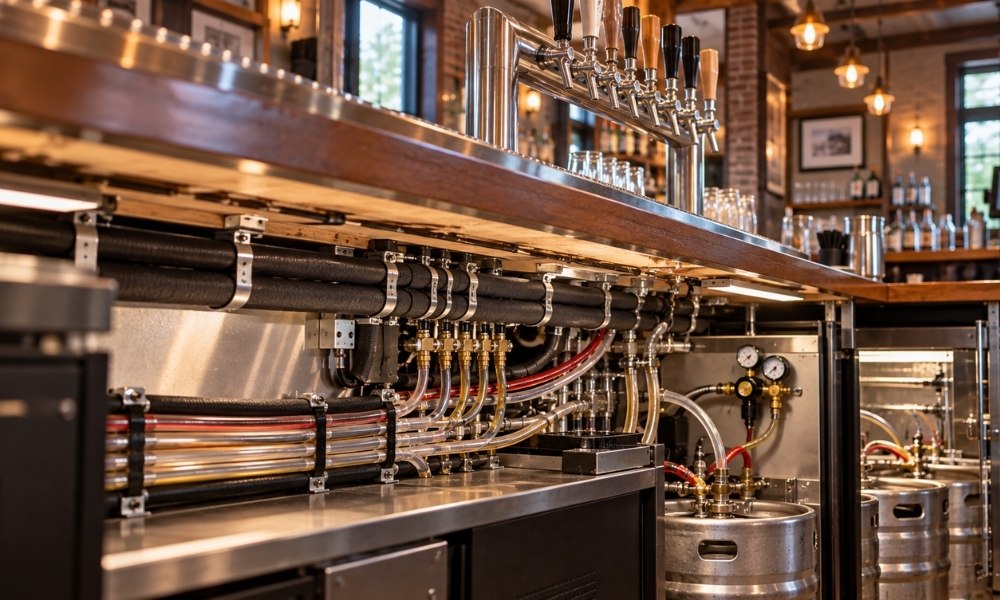
Draft beer line installation planning means mapping keg storage, line routing, cooling method, and tap placement before construction begins, ensuring the finished system pours consistently and stays accessible for long-term maintenance. It requires early coordination with general contractors, electricians, and refrigeration technicians during the renovation timeline.
For a bar renovation, this planning phase typically covers:
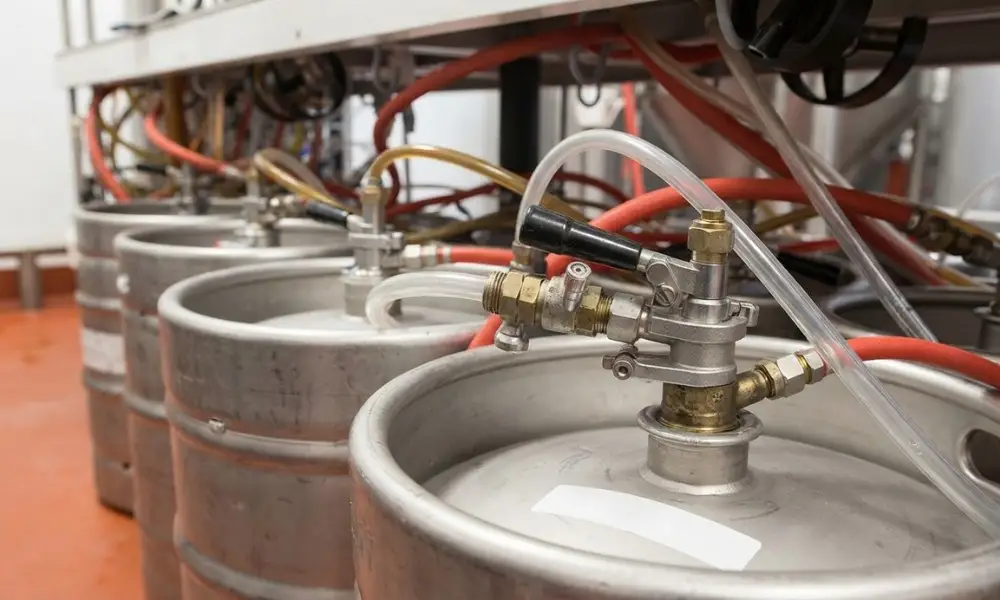
- Where kegs will be stored: walk-in cooler, under-bar refrigeration, or a dedicated keg room
- How far beer needs to travel from keg to faucet
- Whether the system needs glycol cooling to protect beer temperature over that distance
- How trunk line bundles will be routed through the building structure
- How technicians and staff will access lines and components for routine cleaning and maintenance once the venue is open
Skipping this step doesn’t just risk a weaker pour. It can mean line runs that are difficult to reach for inspection, repair, or replacement, refrigeration that’s undersized for the system’s cooling load, or tower placement that conflicts with other build-out elements like signage, lighting, or seating sightlines.
Why Line Routing Decisions Matter for Long-Term Bar Operations
Line routing decisions made during construction affect pour consistency, maintenance access, and repair costs for as long as the system is in use. A poorly routed system can look fine on opening night and still cause recurring problems for years.
Beer line diameter and length contribute to flow resistance, which has to be balanced against applied gas pressure for a proper pour. According to the Brewers Association, a balanced draught system dispenses beer at roughly two ounces per second, and achieving that rate requires matching total system resistance, including resistance from tubing size and length, to the applied pressure needed to maintain carbonation.
That means the physical path a line takes through a renovated building isn’t just a construction detail. It’s part of the equation that determines whether beer pours properly or produces excessive foam when a bartender pulls the tap.
Routing also affects:
- Temperature stability. Lines routed near kitchen equipment, HVAC ducts, or exterior walls can pick up heat that carries through to the tower and faucet.
- Serviceability. Lines concealed in finished walls without access panels can turn inspection, repair, or replacement into a more disruptive construction project.
- Future flexibility. Renovations that leave room for adding taps later avoid a second disruptive build-out if the beer program expands.
4 Key Planning Factors for a Bar Renovation
Several factors determine what kind of draft system a renovated space actually needs. These decisions should be made with input from a draft system professional, not finalized purely based on layout preferences.
1. Keg-to-Tap Distance and System Type
In Putnam County commercial spaces, this choice depends on keg-to-tap distance, site layout, and available refrigeration space. Compact layouts may support direct-draw units, while longer runs may require remote keg storage and glycol-cooled trunk line bundles.
2. Trunk Line Routing and Glycol Considerations
In glycol-cooled long-draw systems, trunk line bundles contain multiple beer lines and glycol coolant lines enclosed within insulation. Routing these bundles through walls, floors, or ceiling chases must be planned prior to framing and drywall installation.
Poor routing exposes lines to heat, reducing cooling efficiency. Installers should map paths away from HVAC, plumbing, and electrical lines.
3. Keg Room and Storage Access
Keg location impacts daily operations, including keg rotation, staff workflow, and overall cooling efficiency. A well-designed keg room provides adequate clearance for hand trucks, maintains proper refrigeration, and positions storage near delivery entrances to streamline staff movement during busy service shifts.
4. Planning for Future Maintenance Access
Beer lines and draft system components require accessible service points for routine inspection, repair, and eventual replacement. Installing service access panels and providing accessible chases or conduits at key routing points can help technicians reach components without damaging finished surfaces during maintenance.
READ MORE: Draft Beer Cleaning Logs for Putnam County Bars
Common Mistakes to Avoid in Draft Beer Line Installation Planning
Many draft system installation and service problems trace back to decisions made, or skipped, during the planning phase of a renovation. These mistakes are often avoidable when the system is planned alongside the rest of the build-out.
- Finalizing tap count before confirming refrigeration capacity. Adding taps without matching cooling capacity can strain the system and affect temperature consistency across the lines.
- Routing lines without access points. Sealing trunk lines behind finished walls without service panels makes future inspection, repairs, or replacement far more disruptive.
- Underestimating keg-to-tap distance. Choosing a direct-draw setup for a distance that actually needs glycol cooling leads to warm beer at the tower and inconsistent pours.
- Overlooking staff workflow. Placing keg storage in a location that’s awkward for delivery or rotation slows down service and increases the chance of handling errors.
- Treating installation and cleaning as separate conversations. A system designed without cleaning access in mind creates ongoing maintenance friction long after construction wraps.
Draft System Installation Planning Checklist
Use this checklist during the early planning stages of a bar renovation, before construction drawings are finalized.
- Confirm keg-to-tap distance and determine whether a direct-draw or long-draw glycol system fits the layout.
- Identify keg storage location, whether that’s a walk-in cooler, dedicated keg room, or under-bar refrigeration.
- Map trunk line bundle routing through building structures, coordinating with contractors on wall chases, floor penetrations, and ceiling clearance.
- Plan for future tap expansion, even if the initial build-out only includes a handful of lines.
- Build in maintenance access points at key junctions and wall chases for inspection, repair, and eventual line replacement, while keeping faucets, couplers, and other service points accessible for routine line cleaning.
- Coordinate refrigeration and glycol chiller sizing with the confirmed tap count and line lengths.
- Document the final system layout, including line lengths and diameters, for future service visits.
Cost, Timing, and Documentation Factors
Draft beer line installation costs vary widely depending on system type, tap count, line length, and how much refrigeration or glycol equipment the renovation requires. There is no single price point that applies across different bar layouts.
Several factors typically influence the estimate for a draft system installation:
- Whether the project uses direct-draw or long-draw glycol equipment
- The number of taps and beer lines involved
- Distance between keg storage and the tower
- Site conditions, including existing electrical, plumbing, and structural layout
- Accessibility of the space during construction
- Timeline and coordination with other renovation trades
- Documentation needs for future service and warranty records
Because these factors differ from one bar renovation to the next, an accurate estimate depends on a site-specific assessment rather than a general price list.
When to Bring in a Professional Draft System Installer
A professional draft system installer should be involved as early as the design phase of a renovation, not after construction begins. Draft systems involve gas regulation, temperature control, and line balancing that affect both beer quality and equipment longevity, and mistakes made during framing are expensive to correct later.
Bring in a specialist when:
- The renovation involves adding taps, relocating keg storage, or extending line runs
- The keg-to-tap distance is long enough that glycol cooling may be necessary
- Contractors need line routing coordinated with electrical, plumbing, and HVAC plans
- The bar plans to expand its tap program in the future and wants the infrastructure to support that growth
- Ongoing beer line cleaning and maintenance access need to be built into the design
A qualified installer can also help distinguish between what a general contractor can handle and what requires draft-specific expertise, particularly around glycol systems and gas regulation.
Frequently Asked Questions
Does a renovated system still need regular line cleaning after installation?
Yes. A newly installed draft system still requires regular line cleaning. The Brewers Association recommends cleaning draught beer lines at least every two weeks, or 14 days, to remove buildup and help maintain beer quality. Proper installation can also make key system components easier to access during routine cleaning and maintenance.
Can existing beer lines be reused during a bar renovation?
Sometimes. Reuse depends on the age, material, condition, routing, and accessibility of the existing lines. An installer should inspect the current system before deciding whether reuse makes sense or whether replacement would provide better long-term performance.
Can a draft system be designed to support more taps later?
Yes. Future expansion can be considered during the initial renovation by leaving adequate space for additional lines, cooling capacity, trunk routing, and tap locations. Planning for growth early is usually less disruptive than modifying a finished bar later.
What information should be kept after a draft system is installed?
Keep records of line lengths, diameters, routing, equipment specifications, glycol settings, gas configuration, tap count, and service access points. Good documentation gives future technicians a clearer starting point for cleaning, troubleshooting, repairs, or expansion.
Can a bar change from a direct-draw system to a long-draw system later?
It may be possible, but the conversion can require new trunk lines, glycol equipment, refrigeration changes, and additional routing through the building. If future relocation of keg storage is possible, it is worth discussing that scenario during the original renovation.
Ready to Plan Your Draft Beer Line Installation in Putnam County?
Beer Line Cleaning USA works with bar and restaurant operators across Putnam County and the broader NY, NJ, and CT region on draft system installation, maintenance, and ongoing line cleaning. Planning the system early in a renovation helps avoid the routing and access problems that create service headaches down the road.
If you are planning a renovation or need expert advice on your draft system layout, contact our team today to request a draft system consultation and ensure your project is built for long-term success.