What’s In This Guide
- What Should a Draft System Provider in Putnam County Actually Do?
- Why Provider Selection Affects Operations, Budget, and Guest Experience
- Provider Evaluation Checklist: What to Look For
- Common Mistakes When Selecting a Draft System Provider
- Signs a Business Needs to Reevaluate Its Current Provider
- What Draft System Services Typically Cost
- When to Bring In a Professional Draft System Provider
- Frequently Asked Questions
- Ready to Choose a Draft System Provider in Putnam County?
Bar owners, brewery taproom managers, and restaurant operators in Putnam County often start looking for a draft system provider only after something goes wrong: a foamy tap, a slow pour, or a health inspection note about line cleanliness. By then, the business is already reacting instead of planning.
Choosing the right provider before a problem forces the decision protects pour quality, service speed, and guest experience.
Quick Facts
- Full-service draft system providers combine installation, cleaning, repair, and ongoing consulting into a single point of contact.
- Draft system maintenance frequency, documentation, and response time are key vendor evaluation factors.
- Inconsistent pours, recurring foam, and undocumented service histories can indicate that it is time to reevaluate the current provider.
- Costs vary by system size, service scope, and site conditions rather than following a single flat rate.
- A provider that regularly serves Putnam County may reduce travel-related delays during peak hours or equipment failures.
What Should a Draft System Provider in Putnam County Actually Do?
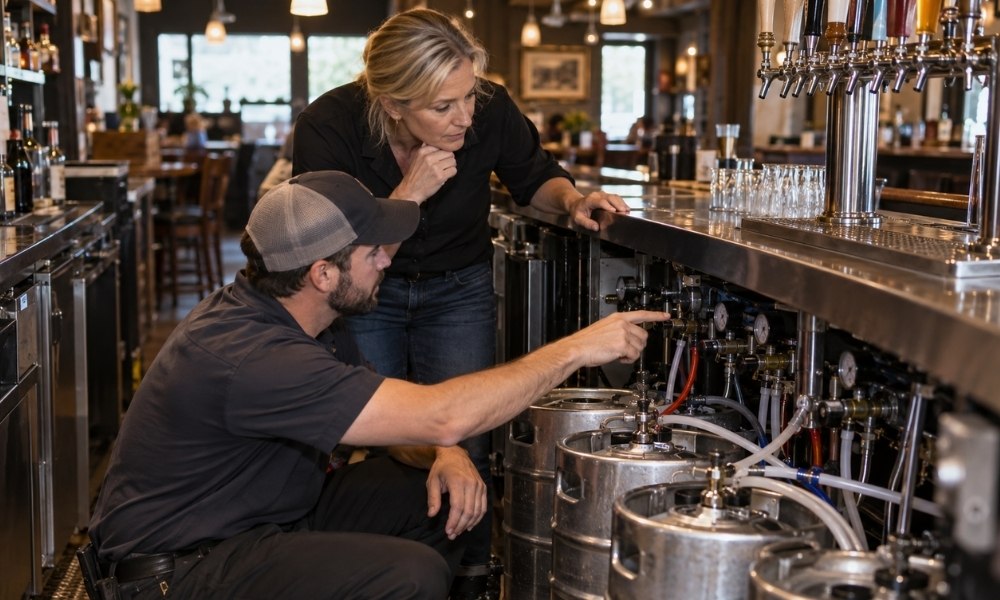
A qualified draft system provider should manage installation, routine cleaning, equipment repair, and overall system optimization as connected services rather than requiring separate vendors for each task. When evaluating commercial draft beer services, operators who split these responsibilities across multiple companies can lose accountability when a problem spans two service categories, such as a pour issue that could stem from either a dirty line or a pressure imbalance.
Draft beer systems rely on interdependent components: kegs, CO2 or nitrogen regulation, tubing, faucets, couplers, and, in long-draw setups, glycol cooling units. A provider focused only on line cleaning may not be equipped to diagnose a pressure regulator failure. Similarly, a provider who only installs equipment may not offer ongoing maintenance once the system is fully operational.
Businesses that consolidate these services with one draft system provider may simplify diagnosis because the provider has access to the system’s service history and previous findings.
Why Provider Selection Affects Operations, Budget, and Guest Experience
The provider a business chooses directly shapes pour consistency, product waste, and how quickly draft issues get resolved. This decision carries more operational weight than many operators expect going in.
Draft beer quality problems can result from conditions within the dispensing system. According to industry quality guidelines, temperature and pressure problems can contribute to foaming and inconsistent pours. A provider who understands the full system, not just the cleaning cycle, is better positioned to identify these issues before they affect service.
Consider the business impact of the wrong choice:
- Wasted product. Foam and inconsistent pours from a poorly maintained system increase keg loss and cut into margin.
- Guest trust. A flat or foamy pour reads to customers as a quality failure, even when the true cause is a mechanical issue.
- Staff efficiency. Bartenders who constantly adjust pressure to compensate for an unresolved issue lose valuable time that should be spent serving guests.
- Quality and cleanliness standards. Proper cleaning schedules matter for flavor integrity, brand reputation, and draft performance.
Provider Evaluation Checklist: What to Look For

Evaluating a draft system provider comes down to five core factors: service scope, cleaning frequency, documentation, response time, and local familiarity. Reviewing each before signing a service agreement helps avoid a mismatch between what a business needs and what a vendor actually delivers.
Service Scope
Confirm whether the provider handles installation, cleaning, repair, and consulting, or only one of these. A provider limited to cleaning cannot help when a coupler fails or a glycol chiller needs servicing. Ask directly what falls outside their scope so there are no surprises mid-contract.
Cleaning Frequency and Method
Ask what cleaning schedule the provider follows and why. Routine line cleaning on a consistent cycle, typically every two weeks, serves as an essential standard for maintaining flavor integrity and preventing bacterial buildup. A provider who cannot explain their chemical process, contact time, or rinse verification method should be evaluated with caution.
Documentation Practices
Ask whether the provider logs service dates, technician notes, and system readings. Documentation matters for three reasons:
- It creates an internal operational record for system care.
- It helps diagnose recurring issues by comparing service history over time.
- It protects the business if a dispute arises over service quality.
Response Time for Repairs
A draft system failure during a busy Friday night requires a different response than a scheduled maintenance visit. Ask how quickly the provider responds to urgent repair calls and whether that response time changes seasonally or during peak hospitality periods.
Local Familiarity with Putnam County Operations
A provider based in or regularly servicing Putnam County may be better positioned to account for local travel times and scheduling realities for urgent calls. Out-of-area vendors may have longer travel times, so operators should confirm actual response windows before choosing a provider.
READ MORE: Why Commercial Beer Line Cleaning Is Essential for Consistent Flavor and Efficient Draft Operations
Common Mistakes When Selecting a Draft System Provider
Operators can encounter problems by prioritizing price over scope, skipping documentation requirements, or assuming a general maintenance company can handle draft-specific equipment. Reviewing these areas helps prevent unexpected issues later.
- Choosing on price alone. Lower quotes may reflect a narrower service scope rather than better overall value.
- Assuming general facility maintenance covers draft systems. Draft beverage systems require specialized knowledge of gas regulation, temperature zones, and line balancing.
- Skipping the documentation conversation. Businesses that never ask about service logs often cannot track maintenance history or verify when lines were last cleaned.
- Ignoring multi-beverage needs. Venues serving wine on tap, cocktails, kombucha, or cold brew alongside beer need a provider comfortable working across beverage types, not one focused solely on traditional beer lines.
- Delaying provider evaluation until a major issue occurs. Addressing system maintenance proactively can help prevent service disruptions.
Signs a Business Needs to Reevaluate Its Current Provider
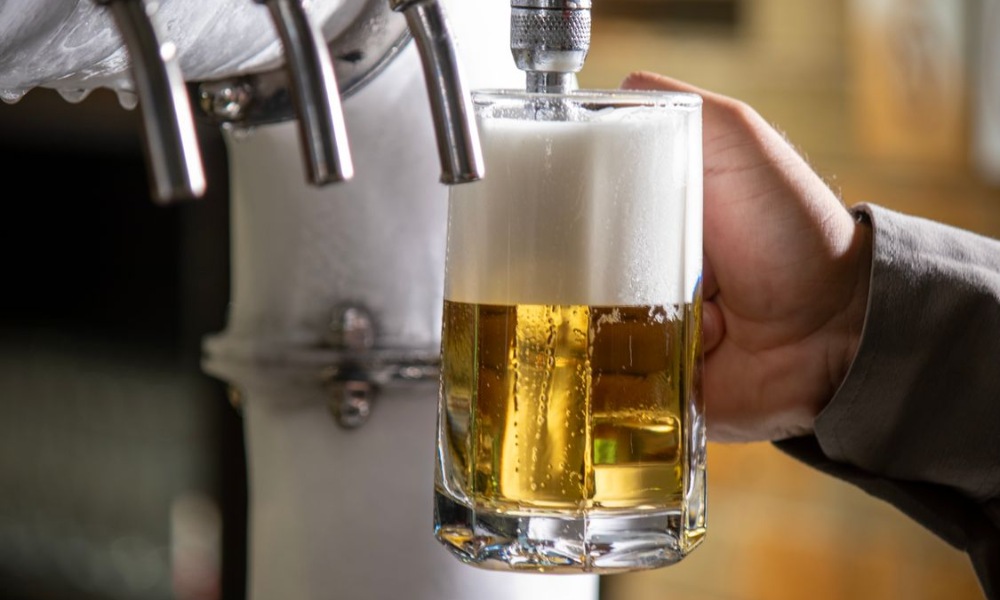
Recurring foam after adjustments, inconsistent pour quality across taps, and vague or missing service records can be signs that a current provider is not meeting the business’s needs. These signs deserve a direct conversation with the provider, and if the pattern continues, a search for a new one.
Watch for:
- Foam that returns within days of a cleaning visit
- Technicians who cannot explain what caused a specific issue
- No written record of past service dates, cleaning cycles, or findings
- Slow scheduling for both routine and emergency requests
- A provider unfamiliar with the venue’s specific setup, such as glycol-cooled long-draw configurations
What Draft System Services Typically Cost
Draft system service costs vary based on the number of taps, system type, site conditions, and scope of work, so there is no single flat rate that applies across Putnam County businesses. A single-tap direct-draw setup and a multi-tap glycol-cooled long-draw system require different labor, equipment, and time, which changes the estimate accordingly.
Factors that typically influence pricing include:
- Total number of lines or taps in the system
- System type, such as direct-draw versus glycol-cooled long-draw
- Site accessibility and layout
- Service frequency and scope, such as routine draft system maintenance versus comprehensive system optimization
- Urgency, including scheduled maintenance versus emergency repair
- Equipment condition and age
Because these variables differ from one venue to the next, an accurate estimate requires a conversation about the specific system and business.
When to Bring In a Professional Draft System Provider
A professional provider is appropriate when a business needs system-wide diagnosis, ongoing scheduled maintenance, or support across installation, cleaning, repair, and consulting in one relationship. In-house staff can handle basic wipe-downs and visual checks, while full line cleaning, pressure calibration, and equipment repair require appropriate training and equipment.
Bring in a professional when:
- The venue is planning a new setup or expansion and needs experienced draft beer system installers
- Line cleaning has been inconsistent, delayed, or undocumented
- Excess foam, flat pours, or off-flavors persist even after standard troubleshooting
- The business operates a long-draw or glycol-cooled system that requires specialized knowledge
- Multiple beverage types run through the same draft infrastructure
Frequently Asked Questions
Should a draft system provider inspect the system before starting regular service?
Yes. An initial inspection gives the provider a chance to understand the system layout, equipment condition, cooling setup, gas configuration, and any existing performance issues. It also creates a baseline that can be used to compare future service findings.
Can a new provider service a draft system installed by another company?
In many cases, yes. A provider can take over an existing system even if another company originally installed it. The new provider should first inspect the equipment, configuration, maintenance history, and any known issues before recommending adjustments or establishing a recurring service schedule.
What should be included in a draft system service agreement?
A service agreement should clearly define the work being performed, service frequency, equipment covered, emergency repair procedures, response expectations, documentation practices, and any services that are excluded. Clear terms make it easier to compare providers and reduce confusion later.
Can draft system maintenance be scheduled outside normal business hours?
Many providers can coordinate maintenance around a venue’s operating schedule, although availability varies by company. Bars, restaurants, and taprooms should ask about early-morning, off-day, or other low-traffic scheduling options before choosing a provider.
Should a business get a system assessment before adding more taps?
Yes. Adding taps can affect cooling capacity, gas pressure, line length, system resistance, and available equipment space. A provider should evaluate the existing setup before an expansion to determine whether the current system can support additional draft lines reliably.
Ready to Choose a Draft System Provider in Putnam County?
Beer Line Cleaning USA supports bars, restaurants, breweries, and hospitality venues throughout Putnam County with installation, cleaning, repair, and consulting delivered by one unified team. Businesses working with a single provider across these services can reduce the accountability gaps that arise from splitting draft system care among multiple vendors.
Businesses ready to evaluate their draft system needs can request a consultation to discuss scope, service frequency, and next steps.