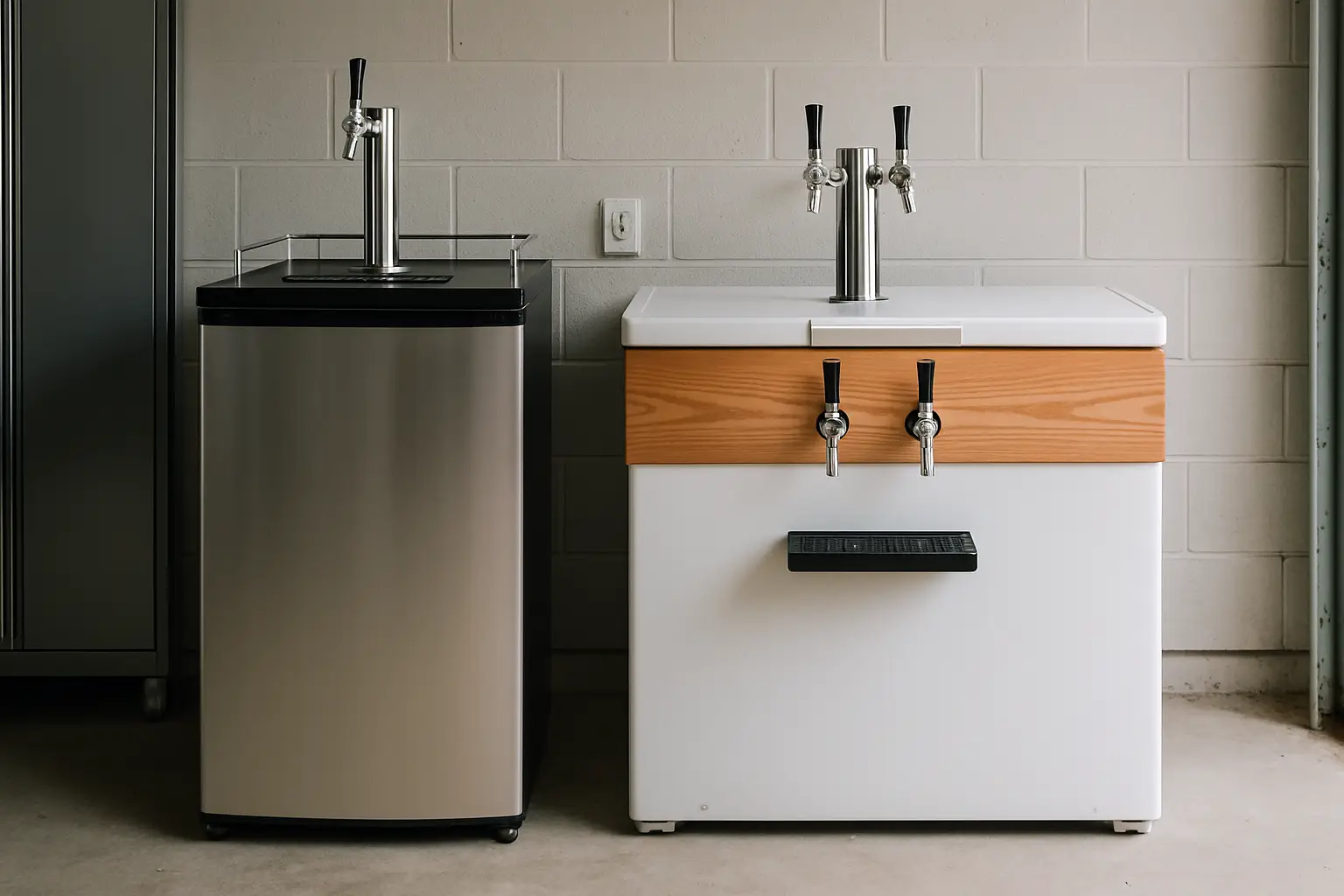
When choosing between a kegerator vs keezer, you’re making a decision that affects your budget, space, and long-term enjoyment. A kegerator is a purpose-built refrigerator designed to store and dispense kegs through an integrated tap system. A keezer is a chest freezer converted into a keg dispenser, typically by adding a collar, CO2 regulator, and faucets. Both serve the same end goal, but they differ significantly in cost, capacity, temperature precision, and long-term maintenance demands.
Table of Contents
- What Each Setup Actually Is
- Cost Comparison in Kegerator vs Keezer
- Capacity, Temperature Control, and Performance
- Maintenance Demands for Each System
- Kegerator vs Keezer: Which Option Fits Which Situation
- Things to Know
Key Takeaways
- Kegerators offer a cleaner, plug-and-play experience but carry a higher upfront cost.
- Keezers typically cost less to build and hold more kegs, but require DIY skills and careful temperature management.
- Chest freezers are not designed to reach refrigeration temperatures without a temperature controller add-on.
- Both systems require regular beer line cleaning to maintain pour quality and prevent bacterial growth.
- Commercial venues should prioritize precision cooling, certified equipment, and professional maintenance over DIY savings.
- The right choice depends on budget, available space, volume needs, and how hands-on the owner wants to be.
What Each Setup Actually Is
A kegerator is manufactured as a complete unit. Brands like Kegco, Edgestar, and Perlick sell models ranging from compact single-tap countertop units to full-size floor-standing dispensers. The refrigeration system is calibrated for beer temperatures, typically between 34°F and 38°F. The tap hardware comes pre-installed or is included in the kit.
According to Future Market Insights (2025), single-tap kegerators are expected to account for 54.0% of the kegerator market share. Full-size units lead the size segment at 61.5%.
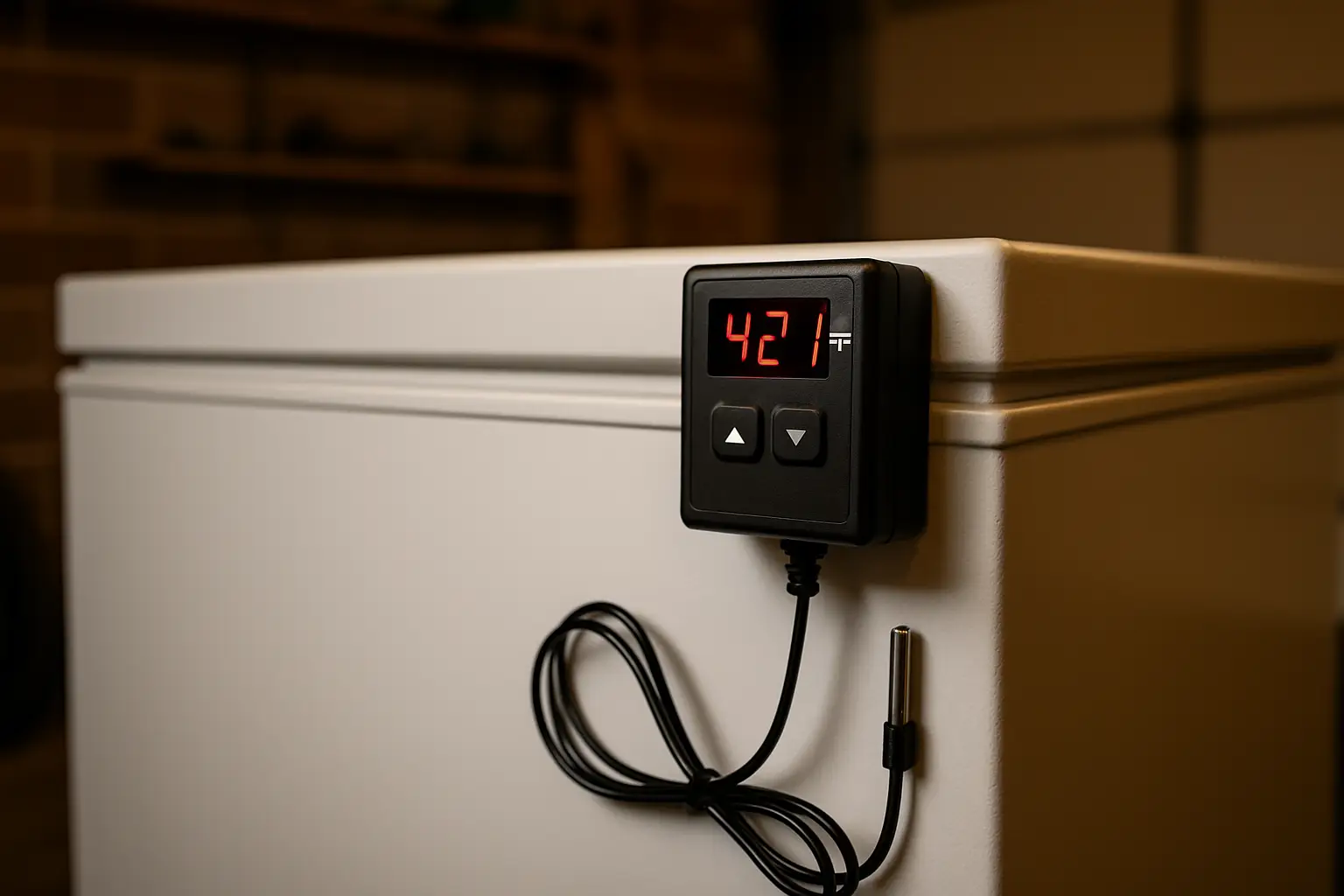
A keezer starts as a standard chest freezer. The owner adds a wooden or PVC collar to the lid to create vertical clearance for kegs. They then mount faucets through the collar and connect a CO2 tank and regulator. An external temperature controller prevents the unit from freezing the beer. The build process takes anywhere from a few hours to a full weekend depending on experience level.
Cost Comparison in Kegerator vs Keezer
This is where the kegerator vs keezer decision often gets made. Entry-level kegerators from reputable brands typically start around $400 to $600 for a single-tap unit. Dual-tap and commercial-grade models range from $800 to over $2,000. That price includes the fridge, tap tower, faucet, beer line, and CO2 hardware.
A keezer build can come in significantly cheaper. A used chest freezer might cost $100 to $200. The collar materials, faucets, regulator, and CO2 tank can add another $150 to $300. This puts a functional two- or three-tap keezer in the $300 to $500 range. However, those savings depend on sourcing used parts and having the tools on hand.
Long-term costs are comparable. Both systems consume similar electricity. Additionally, both require CO2 refills. Furthermore, both require periodic cleaning using beer line cleaning chemicals of draft components. Skipping that maintenance leads to off-flavors, yeast buildup, and potential health concerns regardless of which system is used.
| Feature | Kegerator | Keezer |
|---|---|---|
| Upfront Cost | $400 to $2,000+ | $300 to $500 (DIY) |
| Taps (typical) | 1 to 2 (standard) | 2 to 4 (customizable) |
| Installation Effort | Plug and play | Moderate to high DIY |
| Footprint | Vertical, smaller floor space | Horizontal, wider footprint |
| Aesthetics | Clean, finished look | Functional, less polished |
| Temperature Precision | Built-in thermostat | Requires external controller |
| Warranty | Manufacturer warranty | None (DIY build) |
Capacity, Temperature Control, and Performance
Capacity is one of the clearest advantages the keezer holds. A standard full-size kegerator holds one half-barrel (15.5 gallons) or two sixth-barrel kegs. In contrast, a mid-size chest freezer converted into a keezer can often accommodate two to four sixth-barrel kegs or a combination of formats. This gives homebrewers or small event setups more variety.
Temperature control is where the kegerator has a measurable edge. Its compressor system is engineered to maintain refrigerator-range temperatures without fluctuation. Meanwhile, a keezer’s chest freezer compressor is designed to reach 0°F or below. Therefore, an external temperature controller like an Inkbird or Johnson Controls unit is non-negotiable. Without it, the beer freezes. With it, the system works well, but it adds one more component to monitor and calibrate.

Maintenance Demands for Each System
Both systems share the same core maintenance requirements. Beer lines accumulate yeast, beer stone, bacteria, and mold over time. The Brewers Association recommends cleaning draft lines every two weeks for systems in regular use. That cadence applies whether the system is a polished kegerator in a commercial bar or a DIY keezer in a basement.
Using the correct beer line cleaning kit matters as much as cleaning frequency. Caustic-based cleaners break down organic residue. In addition, acid-based cleaners target beer stone. Using the wrong product or skipping the rinse cycle introduces off-flavors that no keg of fresh beer can mask.
For homeowners new to draft systems, learning how to clean draft beer lines at home makes the process straightforward. These kits typically include a hand pump or pressurized reservoir, cleaning solution, tubing, and fittings sized for standard beer lines.
Anyone setting up a keezer for the first time should review the beer line cleaning process before the first pour. The process is simple once learned. However, the consequences of skipping it are immediate: flat beer, off-aromas, and in commercial settings, potential health code violations.
Kegerators tend to be slightly easier to maintain because their components are standardized. Keezer builds vary by builder, which means maintenance may require custom fittings or non-standard tubing lengths depending on how the collar was built.
Kegerator vs Keezer: Which Option Fits Which Situation
For a home user who wants a clean, finished setup with minimal hassle, a kegerator is the practical choice. It arrives ready to use. Additionally, it carries a warranty and fits neatly into a kitchen or entertainment space without looking like a workshop project.
For a homebrewer who rotates between multiple kegs, a keezer offers better value and flexibility. You can serve several styles at once. Moreover, if you’re comfortable with a weekend build project, the capacity advantage alone makes it worth considering for anyone running more than two taps.
For commercial venues, bars, restaurants, or taprooms in the New York, New Jersey, and Connecticut metro area, neither a consumer kegerator nor a DIY keezer is typically the right answer. Commercial-grade direct-draw or long-draw glycol systems deliver the temperature precision, throughput, and reliability that high-volume service demands. Beer Line Cleaning USA installs, maintains, and consults on professional draft systems across this region. The difference in pour quality between a commercial system and a home setup is significant.
Things to Know
- Chest freezers used for keezers are not rated for refrigerator-range operation. A quality external temperature controller is not optional; it is essential.
- Kegerator warranties typically do not cover damage caused by modifications. Therefore, any customization voids coverage.
- North America accounts for approximately 38% of the global kegerator market, according to Growth Market Reports (2024). This signaling strong domestic demand and wide product availability.
- Both systems require CO2 pressure calibration. Over-carbonated beer foams excessively. In contrast, under-carbonated beer pours flat. Neither problem fixes itself.
- Commercial venues in New York and New Jersey are subject to health department inspection standards. Consumer-grade equipment may not meet these requirements.
Take Action: Build the Right Draft System From Day One
A poorly built or poorly maintained draft system costs more in wasted beer, failed pours, and cleaning downtime than any upfront savings justify. Beer Line Cleaning USA works with bars, restaurants, breweries, and event venues across the NYC metro area to install, service, and optimize professional draft systems. Request a free quote and get expert guidance on the right setup for your space and volume needs. Reach out today to connect with a draft system specialist who knows your market.
Frequently Asked Questions
Q: Can a keezer maintain consistent beer temperature without an external controller?
No. A chest freezer without a temperature controller will freeze the beer, not refrigerate it.
Chest freezers are designed to reach sub-zero temperatures. An external temperature controller, set to around 36°F to 38°F, is required to keep the compressor cycling within the correct range for serving draft beer.
Q: Is a kegerator worth the extra cost over building a keezer?
It depends on how much the user values convenience, aesthetics, and a manufacturer warranty.
For users who want a finished product without a DIY build, the premium is justified. For those comfortable with a weekend project and willing to source parts, a keezer delivers similar performance at lower cost.
Q: How often should beer lines be cleaned in either system?
Beer lines should be cleaned every two weeks for systems in regular use, following Brewers Association guidelines.
Infrequent cleaning leads to yeast growth, bacterial contamination, and off-flavors that affect pour quality. Both kegerators and keezers require the same cleaning frequency.
Q: Can a keezer hold a full half-barrel keg?
Yes, but the chest freezer must be large enough and the collar tall enough to accommodate the keg’s height.
A standard half-barrel keg stands approximately 23.3 inches tall. Most 7-cubic-foot or larger chest freezers with a 4- to 6-inch collar can accommodate one comfortably.
Q: Are consumer kegerators suitable for commercial use?
Generally no. Consumer kegerators are not designed for the throughput, durability, or sanitation compliance that commercial venues require.
Bars and restaurants in states like New York should use NSF-certified commercial draft equipment and schedule professional maintenance to meet health department standards and protect pour quality.
The Bottom Line on Kegerator vs Keezer
The kegerator vs keezer debate does not have a universal winner. Kegerators win on convenience, aesthetics, and temperature reliability. Keezers win on capacity, cost, and flexibility for multi-tap setups. The right choice comes down to your budget, space, and how involved you want to be in the build and ongoing maintenance. Either way, consistent beer line cleaning is non-negotiable for both setups. Neglecting it undermines everything else the system does right. Start with the right equipment, maintain it properly, and the draft experience takes care of itself.