What’s In This Guide
- What Is a Draft Beer System, and What Are Its Main Parts?
- Why Component-Level Knowledge Matters for Bar and Restaurant Operations
- The Core Components of a Draft Beer System
- Common Mistakes and Warning Signs of Component-Level Problems
- How to Evaluate Draft System Components: Step-by-Step
- Cost, Documentation, and Maintenance Considerations
- When to Bring in a Professional Draft System Provider
- Frequently Asked Questions
- Ready to Service or Install Your Draft Beer System?
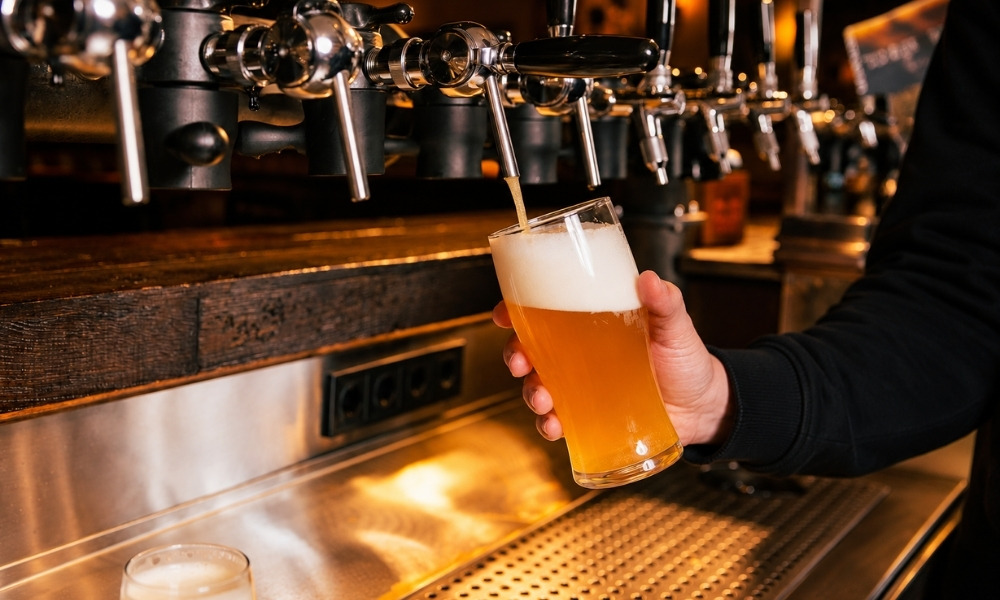
A foamy pour, a flat glass, or a tap that suddenly slows down rarely points to a single obvious cause. Many draft beer problems can be traced to one or more components involving temperature, pressure, flow, or equipment condition. Knowing what each part does makes it easier for bar managers, restaurant owners, and brewery operators to identify issues, communicate with technicians, and plan maintenance before a bad pour reaches a guest.
Quick Facts
- A draft beer system is built from three coordinated subsystems: gas, beer, and cooling.
- Most U.S. breweries use the Sankey “D” coupler. “Coupler” is the industry-standard term for the device that engages the keg valve, allowing gas to enter the keg while beer flows out.
- For direct-draw systems using 100% CO2 for ales and lagers, the Brewers Association lists 12-15 PSI as the ideal pressure range, with the exact setting depending on factors such as temperature, carbonation level, and elevation.
- The shank passes through the cold box wall or tower and connects the beer line to the faucet, providing a secure mounting point for the faucet assembly.
- Regular maintenance and diagnosing issues at the component level help operators prevent costly beer loss and maintain pour quality.
What Is a Draft Beer System, and What Are Its Main Parts?
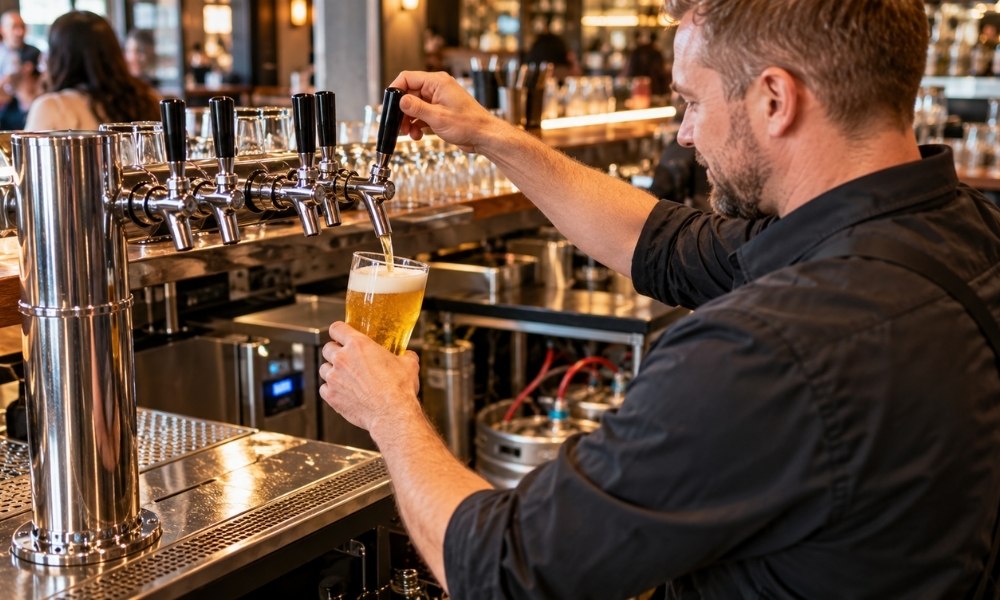
A draft beer system is the connected beer dispensing system that moves beer from a pressurized keg to a faucet while preserving temperature, carbonation, and flow rate. The Brewers Association groups these parts into three subsystems: gas, beer, and cooling, working together as one unit.
Within those subsystems, common commercial components include the keg and keg valve, coupler, beer line, faucet, shank, gas source, gas line, regulator, and refrigeration or other cooling equipment. The exact component set varies by system design, but a problem in any one area can disrupt the pour.
For bar and restaurant operators, this matters because a single symptom, like foam or a slow pour, can come from several different points in the chain. Diagnosing the right component saves time, product, and unnecessary repair calls.
Why Component-Level Knowledge Matters for Bar and Restaurant Operations
Understanding individual pieces of draft beer equipment helps operators make faster, more accurate decisions about service, staffing, and budget. A manager who can describe which component appears to be involved can communicate more effectively with a technician and help reduce unnecessary troubleshooting.
This knowledge also supports quality control. A beverage director tracking recurring foam complaints on one tap, for example, can narrow the search to restriction, a worn shank, or a coupler issue rather than assuming every keg is bad.
Documentation benefits from this understanding too. A written maintenance log that notes which components were inspected, cleaned, or replaced gives multi-location operators and facilities managers a clearer record for vendor accountability and budget planning.
The Core Components of a Draft Beer System
Keg and Keg Valve
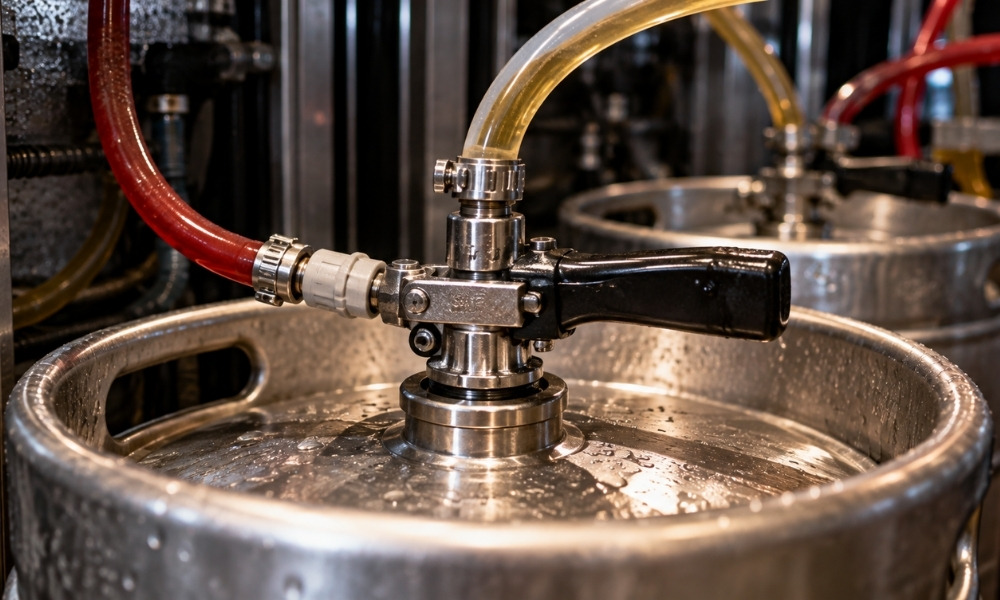
The keg stores beer under pressure and protects it from light and air until it reaches the coupler. Inside the keg, a valve opens when the coupler engages it, letting gas in and beer out through separate paths.
Keg valves should never be removed or serviced in the field. The Brewers Association’s manual notes that a threaded valve can loosen or become unseated during coupler disengagement, creating a hazard that only trained personnel should handle.
Coupler
The coupler is the connector between the gas line, beer line, and keg valve. In the United States, the D-system Sankey coupler is the standard coupler type used for most domestic kegs, attaching directly to the keg valve to allow gas to enter and beer to exit.
Mismatched couplers can cause poor sealing, gas or beer leaks, and little or no beer flow, particularly when a venue serves domestic and imported kegs that use different coupler styles.
Regulator and Gas Supply
The regulator reduces and controls the pressure of CO2 or blended gas supplied to the keg, setting the applied pressure that helps maintain carbonation and move beer toward the faucet. An incorrect pressure setting can contribute to foam, carbonation changes, or poor flow even when other components are functioning properly.
According to the Brewers Association, direct-draw systems using 100% CO2 for ales and lagers typically operate at 12 to 15 PSI, with precise settings depending on factors such as temperature, carbonation level, elevation, and system design.
Beer Line (Tubing)
The beer line carries beer from the coupler to the faucet while creating enough resistance to keep it from moving too fast and shedding CO2. Standard commercial tubing runs 3/16 inch in diameter for shorter direct-draw setups, with barrier tubing used for longer glycol-cooled runs to reduce flavor pickup.
Line length, diameter, and condition directly affect flow rate and foam control. A line that is too short for the system’s pressure allows beer to hit the faucet too fast, which can contribute to foamy pours.
Shank
The shank is the threaded brass or stainless steel mounting piece that passes through the draft tower or cold box wall. It connects the beer line tailpiece to the faucet, providing a sturdy anchor point for the faucet assembly.
In tower-mounted systems, shanks and beer lines must remain properly cooled to keep beer at a consistent temperature through the faucet. If the tower or shank area warms during an idle period, the first pour afterward may produce more foam than subsequent pours.
Faucet
The faucet is the final point of dispense operated by bar staff to pour beer into the glass. Beyond controlling the flow of beer, it holds the tap handle identifying the brand being served.
Faucet type affects both flow and cleaning needs. Standard faucets suit most ales and lagers, while nitro faucets use a restrictor plate to create the cascading bubble effect associated with nitro-dispensed beverages.
Cooling System: Direct-Draw vs. Glycol-Cooled
The cooling subsystem keeps beer at a stable temperature from keg to glass. Direct-draw systems store kegs close to the faucet inside a refrigerated cabinet, while long-draw glycol systems circulate chilled glycol alongside beer lines to maintain temperature over greater distances. Choosing between the two depends on keg-to-tap distance, tap count, and venue layout.
READ MORE: Foamy Beer? Your Kegerator May Not Be the Problem
Common Mistakes and Warning Signs of Component-Level Problems
Many beer tap system issues show up as recurring symptoms rather than obvious equipment failure. Recognizing the pattern helps operators act before the problem affects more taps or more shifts.
- Mismatched coupler and keg valve: Leads to gas leaks, slow pours, or beer that will not flow.
- Worn O-rings and seals: Create small leaks that cause inconsistent pressure and gradual carbonation loss.
- Incorrect line length or diameter: Produces foam when restriction is too low or sluggish pours when it is too high.
- Shank or tower warming: Can explain why the first pour is consistently worse than later ones.
- Regulator or gauge problems: Can cause unstable gas delivery or inaccurate pressure readings, creating pour problems that may be mistaken for a keg issue.
- Undocumented cleaning history: Makes it difficult to tell whether foam or off-flavors stem from buildup or a mechanical issue.
How to Evaluate Draft System Components: Step-by-Step
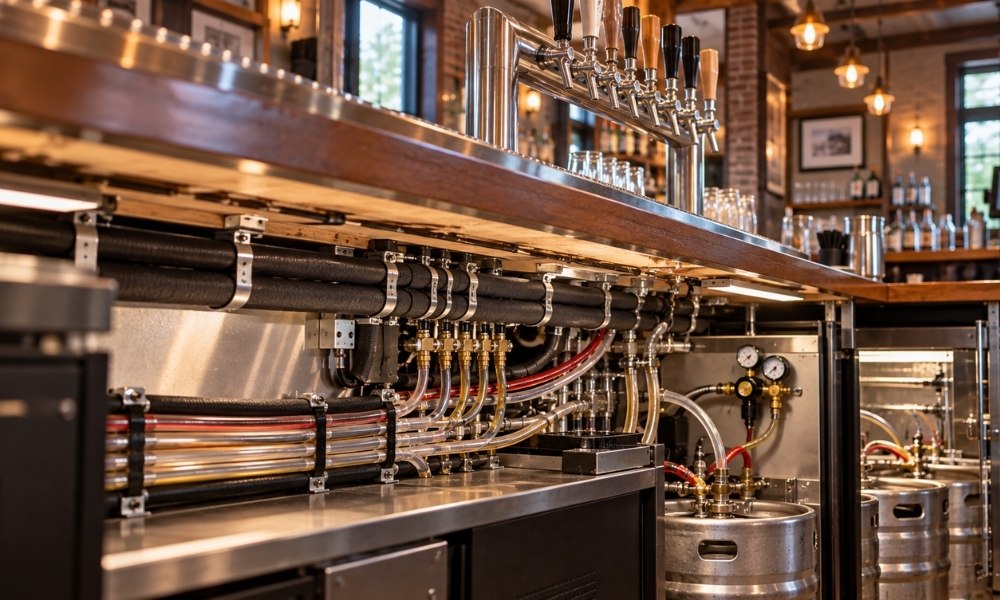
A structured walkthrough helps staff and technicians isolate the source of a problem instead of adjusting pressure repeatedly and masking the real issue.
Step 1: Check Keg and Coupler Fit
Confirm the coupler matches the keg valve type and locks securely. A loose or mismatched connection is one of the quickest potential causes to rule out.
Step 2: Verify Applied Pressure Against Beer Temperature
Compare the regulator’s PSI reading with the pressure required for the beer’s carbonation level, actual liquid temperature, elevation, and system design. Temperature alone is not enough to determine the correct applied pressure, so an incorrect setting may indicate a pressure or system-balance issue.
Step 3: Inspect Beer Line Condition and Length
Look for kinks, discoloration, or visible buildup inside the tubing. Confirm the line length matches the system’s design for the current pressure setting.
Step 4: Examine the Shank and Tower for Heat
Feel for warm spots along the shank and tower, especially near doors or heat sources. A warm shank often explains a foamy first pour even when the keg itself is properly chilled.
Step 5: Disassemble and Check the Faucet
Before removing the faucet, isolate the system from the beer source and release pressure according to the system’s service procedure. Then remove the faucet and check for residue, worn washers, or a sticking shaft. Faucets should be fully disassembled and cleaned as part of routine line cleaning because beer residue can accumulate inside the assembly.
Step 6: Document Findings and Service Dates
Record what was checked, what was found, and when the last full cleaning occurred. This documentation supports future troubleshooting and gives multi-location operators a consistent record across venues.
Cost, Documentation, and Maintenance Considerations
Draft system component costs vary based on the service needed, system size, coupler and line types involved, accessibility, and whether the work involves routine maintenance or replacement of multiple parts. Glycol-cooled long-draw systems generally involve more components and labor than a direct-draw setup, which affects the scope of any service.
Because every venue’s system, tap count, and site conditions differ, providing a fixed price without an inspection would not reflect what a specific business actually needs. An accurate estimate depends on factors such as the number of taps, line length, coupler compatibility, and current component condition.
When to Bring in a Professional Draft System Provider
Component issues often require hands-on inspection when problems persist after checking temperature and pressure. A professional technician can pressure-test lines, inspect shanks and couplers, and spot wear inside the tower.
Hire a specialist when pours remain foamy or flat after basic checks, or when managing glycol systems, long-draw setups, new installs, or multi-location maintenance logs. Evaluating the entire system helps prevent misdiagnosing coupler, keg, shank, or regulator issues.
Frequently Asked Questions
Why does beer foam even when the keg is cold?
Foam can still result from incorrect pressure, warm beer lines or shanks, insufficient line restriction, or a problem at the coupler or faucet. Checking liquid temperature and applied pressure together is usually the best starting point.
Can different beers require different draft system settings?
Yes. Carbonation level, serving temperature, gas blend, and system design can affect the pressure and restriction needed for a stable pour. One pressure setting may not work equally well for every beer on a multi-tap system.
How can you tell if a draft beer regulator is failing?
Possible signs include unstable pressure readings, repeated pressure adjustments, unusually fast or slow pours, or carbonation problems that continue after temperature and line conditions have been checked. A technician can test whether the regulator is holding consistent pressure.
When should draft beer lines be replaced instead of cleaned?
Replacement may be appropriate when tubing is damaged, permanently discolored, retaining unwanted flavors, or no longer responding adequately to routine cleaning. The decision depends on line material, condition, and system history.
Can one faulty component affect more than one tap?
Yes. Problems involving shared gas supply, regulators, cooling equipment, or glycol circulation can affect multiple taps at once. Issues limited to one faucet are more likely to involve that tap’s coupler, beer line, shank, or faucet assembly.
Ready to Service or Install Your Draft Beer System?
Beer Line Cleaning USA works with bars, restaurants, breweries, and hospitality venues throughout Putnam County and the broader New York, New Jersey, and Connecticut region on draft system installation, cleaning, and component-level maintenance.
If a tap is underperforming or a new system is on the horizon, a technician can assess the components directly rather than guessing at the cause.