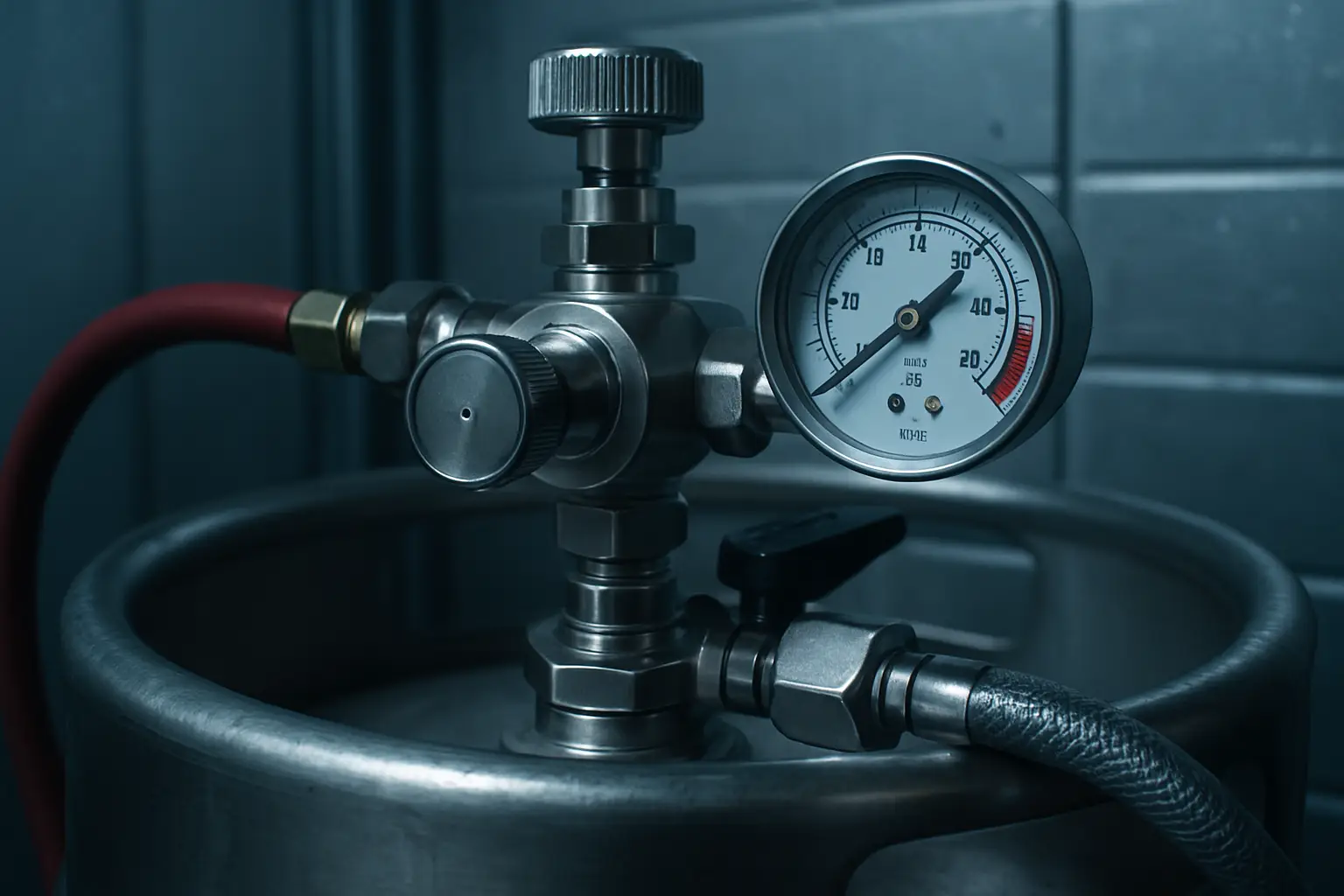
Getting CO2 pressure for keg beer right is one of the most critical factors in serving a quality draft pint. Set it too low and beer pours flat. Set it too high and every glass overflows with foam. Therefore, understanding proper pressure management is essential for any bar or homebrewer.
Table of Contents
- Why CO2 Pressure Matters for Draft Systems
- Recommended PSI by Beer Style
- Temperature, Line Length, and Altitude Adjustments for CO2 Pressure
- Common Pressure Mistakes and How to Avoid Them
- Things to Know
Key Takeaways
- Most ales and lagers pour best at 12 to 14 PSI, while wheat beers and Belgians need 15 to 20 PSI.
- Temperature directly affects carbonation: a warmer keg requires higher pressure to hold the same CO2 volume.
- Altitude adds resistance; at 4,000 feet elevation, you need roughly 2 PSI more than at sea level.
- Stouts served on nitrogen require an entirely different regulator setup, typically 35 to 38 PSI.
- Dirty beer lines can cause foaming that mimics a pressure problem, making regular line cleaning essential.
- Dial in pressure once, then monitor consistently rather than adjusting it frequently.
Why CO2 Pressure Matters for Draft Systems
A draft beer system is a carefully balanced piece of equipment. The CO2 regulator on the gas cylinder maintains a specific pressure inside the keg. This pressure pushes beer through the lines, through the shank, and out the faucet. That pressure must match the beer’s carbonation level, the serving temperature, and the resistance created by the length and diameter of the beer line.
When those three variables align, a bartender pulls a clean, stable pour with the right head. When they are not aligned, problems cascade quickly. Over-carbonated beer wastes product, under-carbonated beer disappoints customers, and either scenario reflects poorly on the venue.
According to Micromatic, for typical ale and lager type beers, the recommended CO2 pressure is 12 to 14 PSI to maintain proper carbonation. That range holds for most American bars and restaurants operating standard kegerators at refrigerated temperatures around 36 to 38 degrees Fahrenheit.
The global draught beer market was valued at USD 43.5 billion in 2025. It is projected to reach USD 76.7 billion by 2034 at a CAGR of 6.5%, according to Straits Research (2025). Additionally, kegged beer specifically is estimated to grow at a CAGR of 7.3%, which means more venues, more draft systems, and more operators who need to understand pressure management from day one.
Recommended PSI by Beer Style
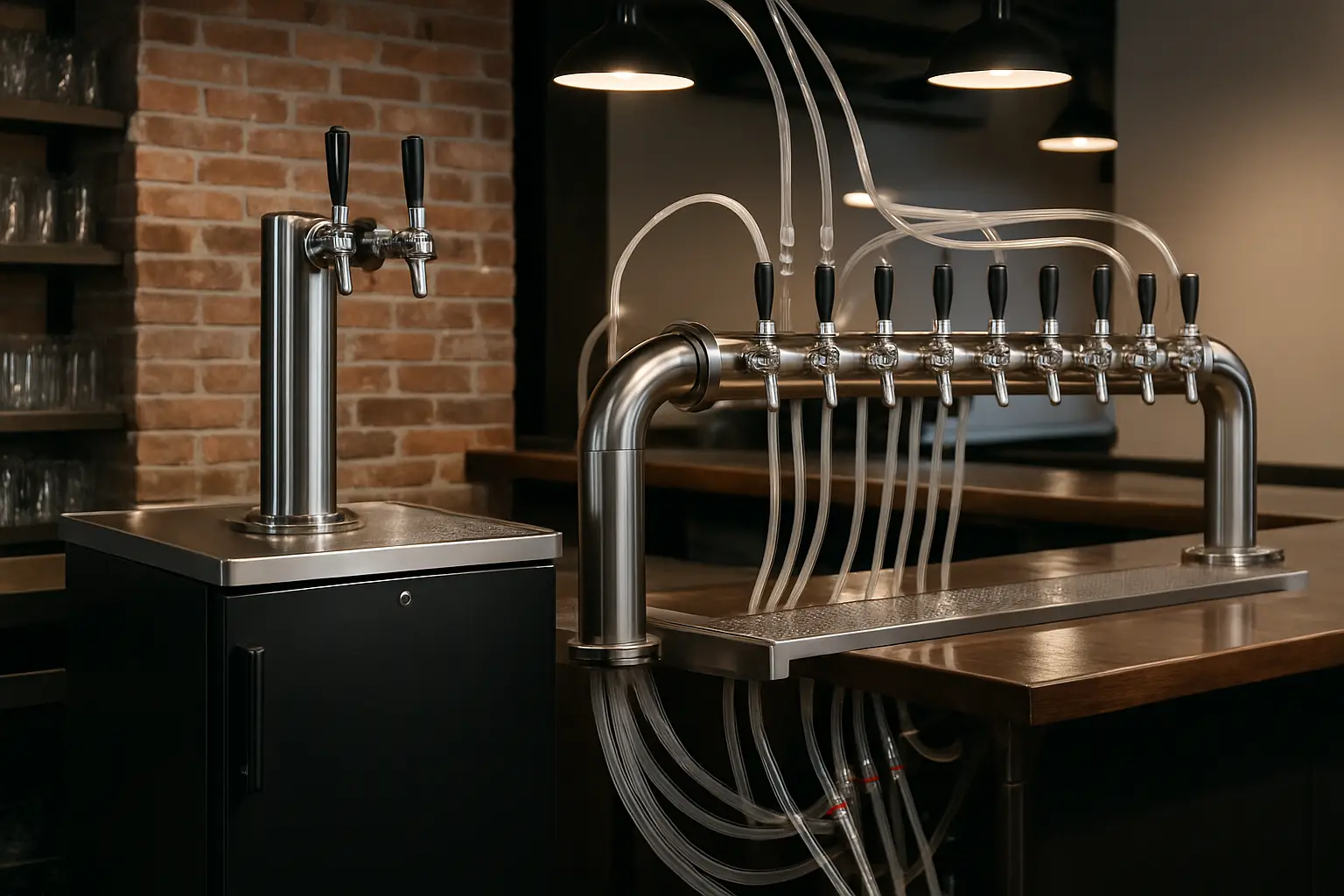
Not every beer style carbonates the same way. The gas pressure must reflect the carbonation profile of each beer. Here is a practical breakdown of PSI ranges by style:
| Beer Style | Carbonation Volumes | Recommended PSI |
|---|---|---|
| American Lager / Ale | 2.1 to 2.6 | 7 to 13 PSI |
| Standard Ale / Lager | 2.2 to 2.7 | 12 to 14 PSI |
| Wheat Beer / Belgian / Sour | 2.8 to 3.5 | 15 to 20 PSI |
| Stout (Nitro) | N/A (nitrogen) | 35 to 38 PSI |
According to Kegworks, for most ales with carbonation volumes of 2.1 to 2.6, operators should set regulators between 7 and 13 PSI. In contrast, wheat beers, Belgian ales, and American sours require 15 to 20 PSI to hold their characteristically high carbonation without going flat in the line.
Nitro stouts represent a separate category entirely. They use a nitrogen and CO2 blend (typically 70/30) at 35 to 38 PSI. This produces the signature creamy, cascading pour associated with beers like Guinness. Using standard CO2 at those pressures on a regular ale would destroy the pour immediately.
For bars or taprooms rotating taps frequently, mixed-gas regulators or individual secondary regulators per keg allow each style to receive its correct pressure. This approach prevents adjacent kegs from being affected by cross-pressure.
Temperature, Line Length, and Altitude Adjustments for CO2 Pressure
CO2 pressure does not operate in a vacuum. Three external variables constantly interact with it.
Temperature is the most significant factor. CO2 dissolves into beer more efficiently at colder temperatures. If a kegerator warms up even a few degrees, the beer will absorb less CO2 at the same PSI. This leads to under-carbonation and flat pours. Therefore, keeping keg storage consistently between 36 and 38 degrees Fahrenheit is standard practice for commercial draft systems.
Line length and diameter create resistance to beer flow. Longer lines or narrower inner diameters require more pressure to push beer to the faucet. In a long-draw or glycol system (common in larger bars where the kegerator sits in a back room), operators often increase pressure to compensate for resistance over distance. This is why system design and pressure calibration go hand-in-hand.
Altitude also affects CO2 pressure for keg beer significantly. The Brewers Association notes that 11.3 PSIG maintains 2.5 volumes of CO2 in beer served at 38 degrees Fahrenheit at sea level. However, at 4,000 feet elevation, that figure rises to 13.3 PSIG to achieve the same result.
Understanding the beer line cleaning process is also directly tied to pressure management. Yeast buildup, biofilm, and mineral scale inside beer lines increase resistance. This throws off the pressure balance even when the regulator is set correctly.
Common Pressure Mistakes and How to Avoid Them
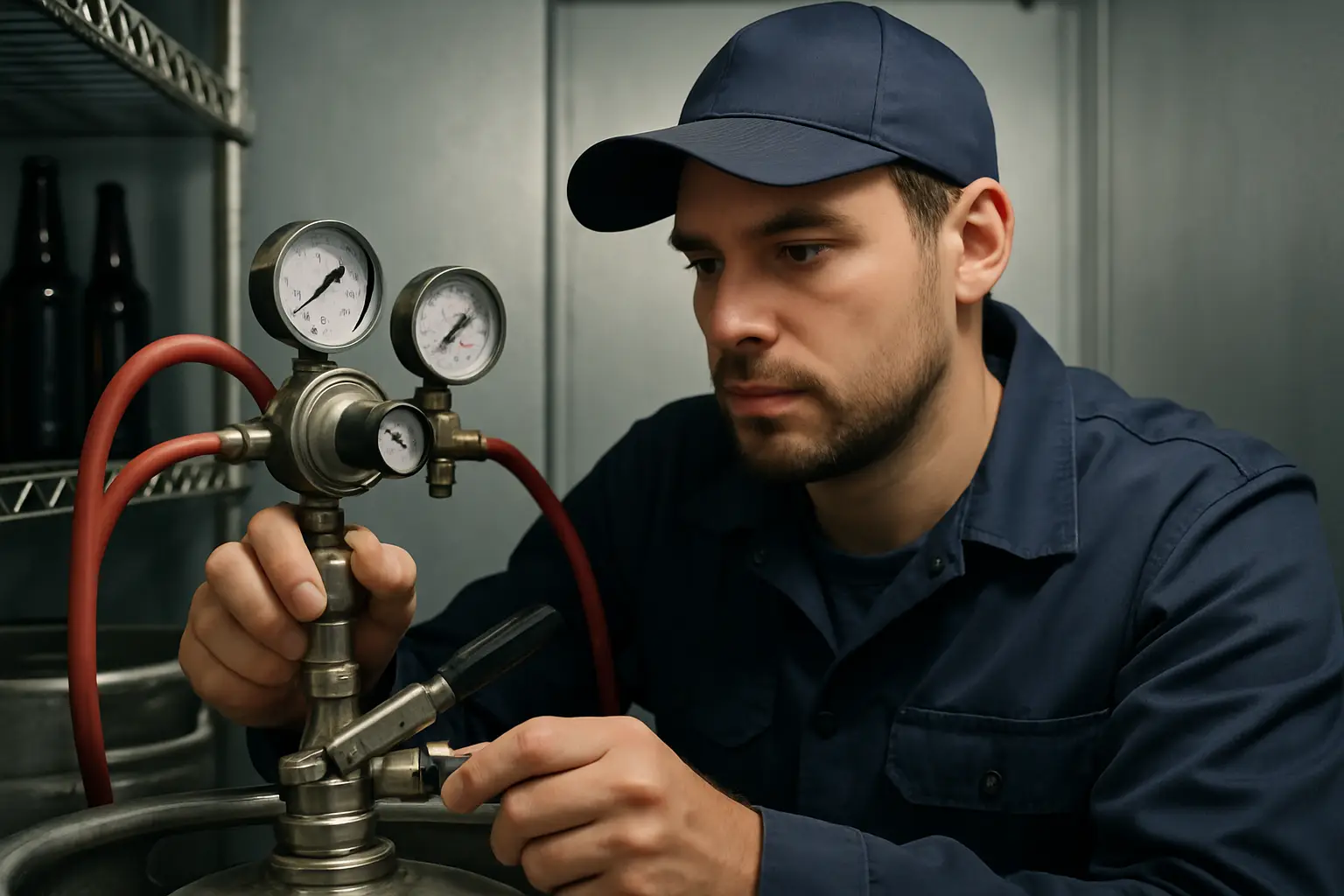
Most pressure problems in commercial draft systems come from a handful of recurring errors:
- Adjusting pressure reactively. Operators notice foam and immediately crank up or down the regulator. Instead, they should diagnose the actual cause first: temperature, line condition, or carbonation level.
- Ignoring line cleanliness. Dirty lines mimic pressure problems. A foamy pour after a keg swap is often a line issue, not a CO2 issue. Using appropriate beer line cleaning chemicals on a consistent schedule removes biofilm and buildup. These substances falsely appear as pressure faults.
- Using one pressure for all kegs. A single regulator set at 12 PSI works for standard ales. However, it under-serves wheat beers and over-serves already highly carbonated craft IPAs.
- Not accounting for new keg agitation. Kegs that were recently moved or shaken hold excess CO2 in suspension. Giving them several hours to settle before adjusting pressure prevents misreadings.
- Skipping equipment checks. Worn washers, loose couplers, and cracked lines all create pressure loss. No regulator adjustment can fix these mechanical issues.
Venues that take a proactive approach significantly reduce waste and service complaints. This includes having a beer line cleaning kit on hand. Additionally, training staff on both pressure settings and sanitation ensures consistent results.
Things to Know
- CO2 pressure and carbonation are not the same thing. Pressure is the tool used to maintain a beer’s existing carbonation level. It does not add carbonation to finished beer quickly.
- A dual-gauge regulator is preferable for commercial setups. One gauge shows tank pressure, the other shows line pressure.
- Temperature changes of even 2 to 3 degrees Fahrenheit can visibly affect pour quality if pressure is not adjusted accordingly.
- Bartenders and managers who learn how to clean draft beer lines at home often gain clearer understanding of how line condition interacts with gas pressure.
- CO2 tanks must be stored upright and chained securely. Liquid CO2 entering the regulator can damage the equipment and skew pressure readings.
Improve Your Draft System with Expert Support
Dialing in CO2 pressure for keg beer is only one part of running a high-performance draft system. Consistent line maintenance, equipment integrity, and system design all determine whether a bar pours profitably night after night. Beer Line Cleaning USA provides commercial draft system cleaning, installation, repair, and consulting across New York, New Jersey, and Connecticut, including the full NYC metro area and Putnam County. If your system is foaming, losing carbonation, or just not pouring right, request a free quote and get a professional assessment before the problem costs more. Contact Beer Line Cleaning USA today to schedule service or a system consultation.
Frequently Asked Questions
Q: What PSI should I set my CO2 regulator to for a standard keg?
For most ales and lagers, 12 to 14 PSI at a serving temperature of 36 to 38 degrees Fahrenheit is the standard starting point. This range, confirmed by Micromatic, keeps carbonation stable without over-pressurizing the keg. Exact settings may vary depending on line length and elevation.
Q: Why is my keg beer foamy even with the correct pressure?
Foamy beer is not always a pressure problem. Dirty lines, warm temperatures, or a recently agitated keg are common culprits. Biofilm and yeast residue inside beer lines increase turbulence, causing foam regardless of regulator settings. A thorough line cleaning often resolves the issue without touching the CO2 dial.
Q: How does altitude affect CO2 pressure for keg beer?
Higher altitude reduces atmospheric pressure, which means more PSI is needed inside the keg to maintain the same carbonation level. The Brewers Association’s data shows that at 4,000 feet elevation, operators need approximately 2 additional PSIG compared to sea level. This maintains 2.5 volumes of CO2 at 38 degrees Fahrenheit.
Q: Can I use the same regulator for nitro stouts and regular beer?
No. Nitro stouts require a blended gas regulator and pressures of 35 to 38 PSI. Standard single-gas CO2 regulators are not designed to deliver at that blend ratio. Using CO2 alone at high PSI on a standard ale would over-carbonate the beer instantly. A dedicated nitro regulator or a dual-gas setup is necessary for taprooms serving both styles.
Q: How often should beer lines be cleaned to avoid pressure-related issues?
The Brewers Association recommends cleaning draft lines at least every two weeks in a commercial setting. Buildup inside lines adds resistance that disrupts pressure balance and creates off-flavors. Regular cleaning ensures that any pressure adjustment the operator makes is actually solving a real gas issue, not compensating for dirty equipment.