Beer line cleaning chemicals are the foundation of any effective draft system maintenance program. Selecting the wrong product, or using the right beer line cleaning chemicals incorrectly, leads to contaminated lines, off-flavored beer, and potential health hazards for customers.
Table of Contents
- Why Chemical Selection Matters for Draft Systems
- The Main Types of Beer Line Cleaning Chemicals
- Caustic vs. Acid Beer Line Cleaning Chemicals: When to Use Each
- Dilution Rates, Contact Time, and Temperature
- Chemical Safety and Regulatory Compliance
- Matching Beer Line Cleaning Chemicals to Your Draft System Type
- Common Mistakes Operators Make with Cleaning Chemicals
Key Takeaways
- Alkaline (caustic) cleaners remove organic buildup like yeast, proteins, and bio-film. Additionally, acid cleaners remove mineral scale and beer stone.
- Most draft system professionals recommend alternating between caustic and acid cleaning cycles to address both types of contamination.
- Proper dilution, contact time, and temperature are just as critical as the chemical choice itself.
- Never mix cleaning chemicals without consulting the manufacturer’s safety data sheet (SDS).
- Regulatory standards from organizations like the Brewers Association set baseline guidelines for cleaning frequency and chemical use in commercial draft systems.
- Professional cleaning services bring calibrated equipment and chemical expertise that reduces waste, safety risk, and product loss.
Why Chemical Selection Matters for Draft Systems
A draft beer line is a controlled environment. Beer travels from a keg through vinyl or stainless tubing. It then passes faucets and couplers before reaching the glass. Every inch of that pathway is susceptible to contamination from yeast residue, bacteria, wild mold, and mineral deposits from water and beer itself.
The Brewers Association’s Draught Beer Quality Manual is one of the most widely cited industry references in the United States. It specifies that beer lines should be cleaned at least every two weeks in commercial environments. However, that schedule only produces clean lines when paired with the correct chemical agent applied correctly.
Choosing the wrong beer line cleaning chemicals can leave contamination behind even after a cleaning cycle is completed. Furthermore, residue from improperly rinsed chemicals can alter the flavor of the next pour. This creates a soapy or metallic taste that frustrates customers and erodes brand trust.
For bars, restaurants, breweries, and taprooms across the New York metro area and beyond, this is not a minor operational detail. It directly affects beer quality, customer experience, and compliance with health codes.
The Main Types of Beer Line Cleaning Chemicals
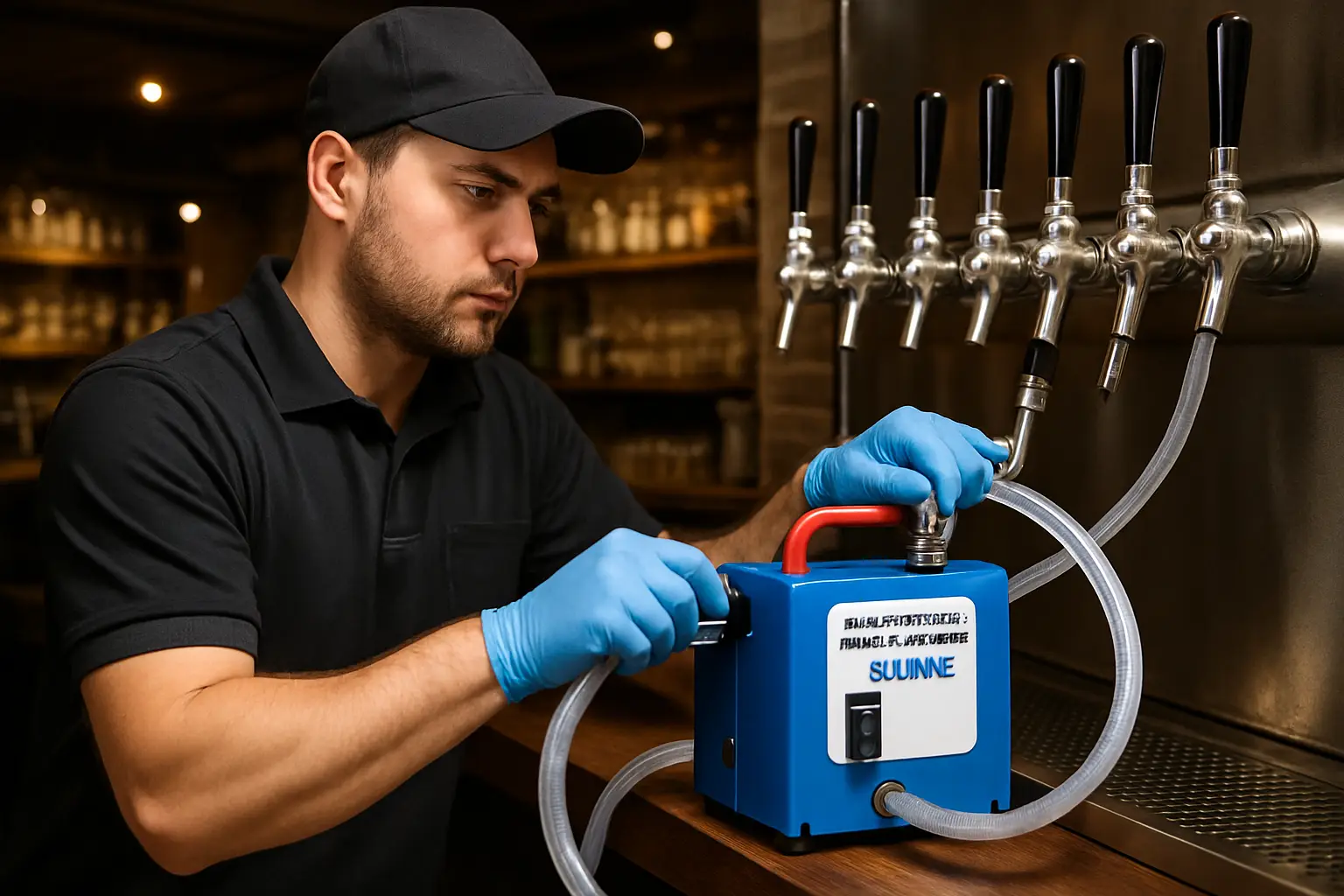
Draft system cleaning chemicals fall into two primary categories: alkaline (caustic) cleaners and acid cleaners. A third category, sanitizers, is sometimes used as a final step after rinsing. However, sanitizers do not substitute for either of the two main chemical groups.
Alkaline (Caustic) Cleaners
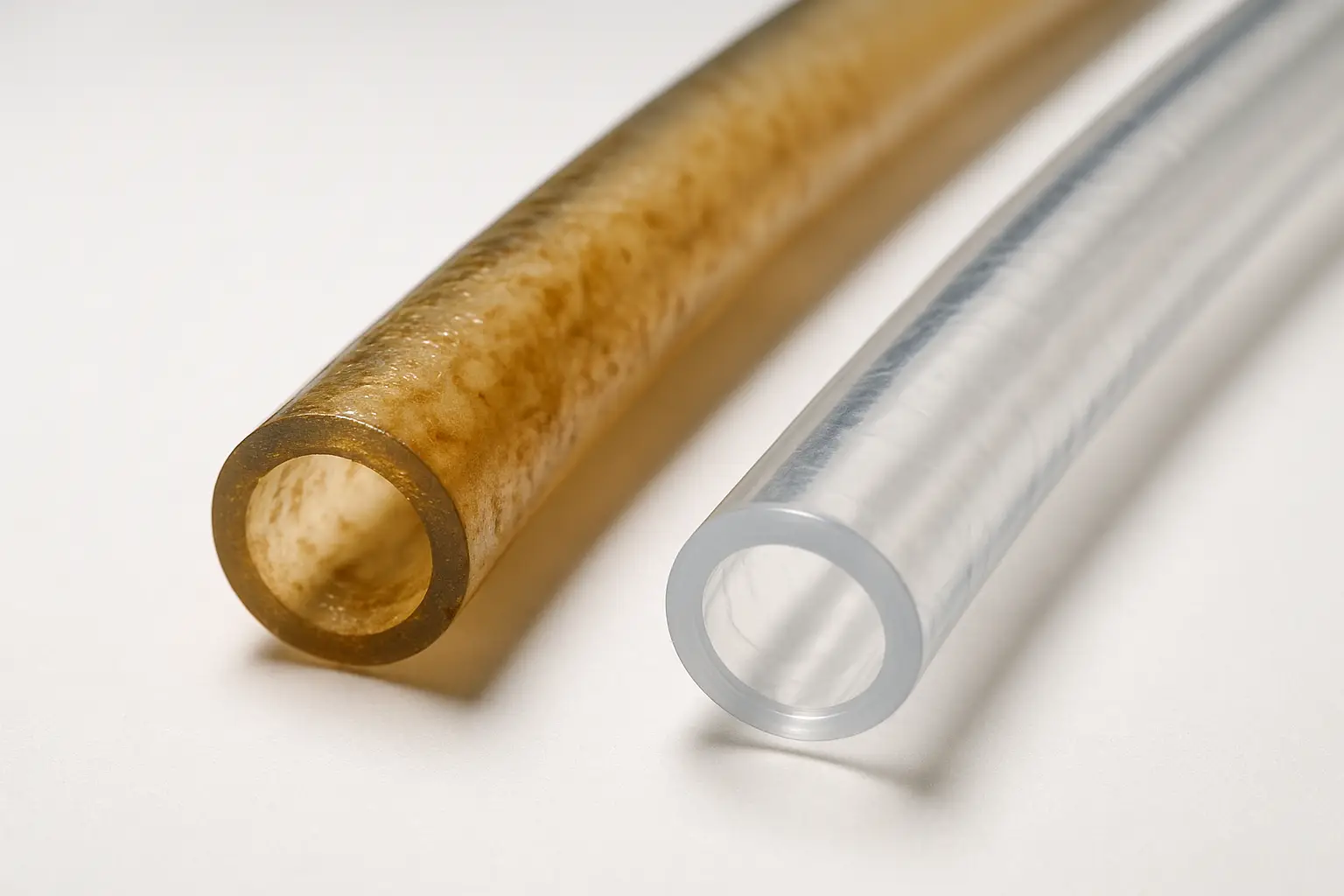
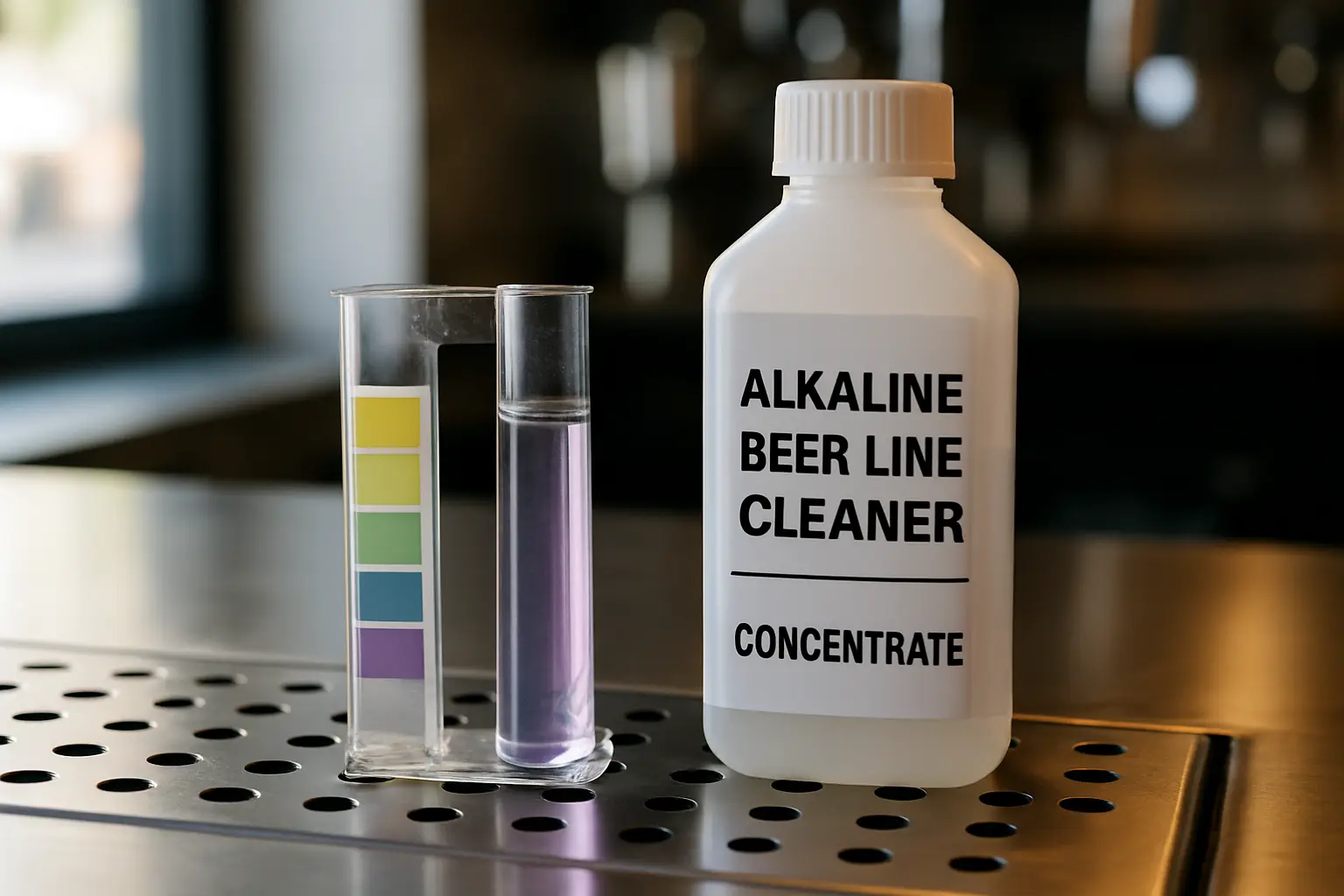
Alkaline cleaners are the most commonly used beer line cleaning chemicals in routine maintenance cycles. They work by breaking down organic matter: yeast, proteins, hop oils, and bacterial biofilm. These cleaners typically contain sodium hydroxide (commonly called caustic soda) or potassium hydroxide as the active ingredient. Manufacturers often combine these with surfactants and chelating agents to improve penetration and rinsing.
Products in this category range from traditional caustic solutions with a pH above 11 to low-caustic or “enhanced” alkaline cleaners. These enhanced options are somewhat safer to handle but still highly effective against organic contamination. Additionally, many commercial-grade alkaline cleaners are sold as concentrates and must be diluted with water before use.
Acid Cleaners
Acid cleaners target inorganic deposits that caustic cleaners cannot remove. Beer stone, the reddish-brown calcium oxalate deposit that forms in lines over time, requires an acid cleaner to dissolve. Moreover, mineral scale from hard water, which is a real concern in many parts of New York and Connecticut, also accumulates in beer lines and components.
Phosphoric acid, tartaric acid, and acid blends are common formulations. These are typically used on a monthly or quarterly basis, alternating with the routine alkaline cleaning cycle. Skipping acid cleaning entirely is a frequent oversight in venues that only use caustic cleaners. As a result, it often results in beer stone buildup that degrades flavor even after lines appear visually clean.
Sanitizers
Sanitizers such as iodophor or peracetic acid solutions are not cleaning agents. Rather, they serve as a finishing step after the line has been cleaned and flushed. They reduce microbial load on already-clean surfaces. Using a sanitizer on a dirty line does not clean it. Therefore, this distinction is critical and frequently misunderstood.
Caustic vs. Acid Beer Line Cleaning Chemicals: When to Use Each
The practical answer to the caustic versus acid question is not either/or. In contrast, it is both, used on separate cycles.
For a standard two-week cleaning schedule in a commercial environment, most operators use an alkaline cleaner every two weeks. Additionally, they use an acid cleaner approximately once a month or every other cleaning cycle. The exact frequency may shift based on water hardness, keg turnover volume, and the types of beer being served. High-hop, fruit, or adjunct beers tend to leave more residue.
Operators running long-draw glycol systems have additional considerations. In fact, glycol beer system installation putnam county services emphasize that long-draw systems use extended tubing runs, often cooled by a glycol trunk line. Those longer contact surfaces give biofilm and beer stone more area to accumulate. For venues researching glycol system options, understanding the chemical demands of a glycol system before installation is essential planning, not an afterthought.
Dilution Rates, Contact Time, and Temperature
Even the highest-quality beer line cleaning chemicals fail when dilution, contact time, or temperature is not properly managed.
Dilution
Alkaline cleaners are typically used at concentrations between 2% and 3% solution by volume. However, this varies significantly by product. Always follow the manufacturer’s SDS and label instructions. Over-diluted solutions lack the chemical strength to dissolve biofilm. Meanwhile, over-concentrated solutions are harder to rinse completely and present a greater safety risk to the operator.
Using a calibrated titration kit to verify solution strength before use is standard practice among professional cleaning technicians. It takes approximately two minutes and eliminates guesswork.
Contact Time
Most caustic cleaning solutions require a minimum of 15 to 20 minutes of contact time circulating through the system to be effective. Static soaking for the same duration is sometimes used for non-recirculating setups. Acid cleaners typically need similar contact times. However, some formulations specify shorter windows.
Rushing through a cleaning cycle by cutting contact time is one of the most common reasons bar operators end up with persistent flavor problems. This occurs despite regular cleaning attempts.
Temperature
Warmer solutions are generally more effective, particularly for caustic cleaners. Therefore, many professional cleaning pumps use heated reservoirs. However, operators should verify the temperature compatibility of their specific lines and components. In fact, some vinyl tubing types may be sensitive to high-temperature solutions over extended use.
Chemical Safety and Regulatory Compliance
Beer line cleaning chemicals, particularly strong caustic solutions, are classified as hazardous materials under OSHA’s Hazard Communication Standard (29 CFR 1910.1200). Employers in the United States must maintain Safety Data Sheets for all hazardous chemicals used in the workplace. Additionally, they must ensure employees are trained in proper handling.
Key safety practices include:
- Wearing chemical-resistant gloves and eye protection when handling concentrated cleaners
- Never mixing alkaline and acid cleaners in the same container or line without a thorough rinse in between
- Storing chemicals in their original containers, away from food contact surfaces
- Ensuring adequate ventilation in the cleaning area
- Disposing of spent cleaning solutions according to local wastewater regulations
In New York and New Jersey, local environmental and health regulations may impose specific requirements on chemical disposal from commercial kitchens and bar operations. Therefore, operators should consult their local health department or wastewater authority for guidance specific to their municipality.
Venues that host events or manage temporary tap setups, such as those described in the putnam county event draft support jockey box guide, should also pay close attention to chemical handling protocols outside a fixed bar environment. Safety infrastructure like eyewash stations may not be immediately available.
Matching Beer Line Cleaning Chemicals to Your Draft System Type
Not every system has the same cleaning requirements. The type of draft setup directly affects which beer line cleaning chemicals are most appropriate and how they should be applied.
| System Type | Primary Cleaner | Acid Cycle Needed? | Typical Cleaning Frequency |
|---|---|---|---|
| Direct-draw (short system) | Alkaline | Yes, monthly | Every 2 weeks |
| Long-draw glycol system | Alkaline | Yes, every 4-6 weeks | Every 2 weeks |
| Jockey box (event use) | Alkaline | Less frequent | After each event |
| Nitro/stout tower | Alkaline + acid | Yes | Every 2 weeks |
| Wine or kombucha tap | Low-caustic alkaline | Periodic | Every 1-2 weeks |
Direct-draw systems are simpler but still require both chemical types over time. Long-draw glycol systems, which span longer distances and use more components, accumulate contamination faster. Consequently, they require more disciplined chemical rotation. For operations considering a new installation, reviewing commercial draft beer system installation questions putnam county can clarify how system design choices affect long-term cleaning requirements.
Jockey boxes used for events get cleaned after every use. However, because they are used intermittently, beer stone accumulation tends to be slower. That said, skipping acid cleaning indefinitely on any system will eventually cause problems regardless of usage frequency.
Common Mistakes Operators Make with Cleaning Chemicals
Even experienced bar managers make recurring errors when it comes to draft line chemical maintenance. Recognizing these patterns is the first step toward correcting them.
Using line-cleaning tablets as a primary solution. Tablet-based cleaners marketed for draft lines vary widely in formulation and chemical strength. Many are not sufficient for heavy commercial environments with high keg turnover. Professional-grade liquid concentrates, used with a dedicated pump, consistently outperform tablet formats in commercial settings.
Failing to account for water quality. Hard water is common throughout much of New York and Connecticut. High mineral content accelerates beer stone formation and reduces the effectiveness of alkaline cleaners. Therefore, operators in hard-water areas often need to clean more frequently and prioritize acid cleaning cycles. Beer Line Cleaning USA’s draft beer system support putnam county services address these regional water quality factors as part of a tailored cleaning program.
Skipping the pre-rinse. Flushing the line with cold water before introducing cleaning solution removes loose debris and reduces the load on the chemical. Skipping this step means the cleaner is partially neutralized by existing beer and residue before it can do its job.
Not testing solution strength. As noted earlier, using a titration kit to verify concentration is standard in professional cleaning. Operators who pour concentrate without measuring are either over-spending on product or under-dosing. Neither outcome serves the system or the business.
Confusing sanitizers with cleaners. A sanitizer applied to a contaminated line does not substitute for an alkaline or acid cleaning cycle. This misunderstanding is especially common in venues that transition from homebrewing practices to commercial operations.
Understanding the distinct roles of alkaline cleaners, acid cleaners, and sanitizers is essential. Combined with correct dilution, contact time, and temperature management, these factors separate a functioning maintenance program from one that merely appears to be working. For commercial operations where consistent beer quality is a business imperative, the investment in getting chemical selection right is straightforward and measurable.
Things to Know
- Beer line cleaning chemicals have a shelf life. Concentrated caustic and acid solutions degrade over time, particularly once opened. Therefore, store them according to manufacturer specifications and use within the recommended period.
- The rinse step after chemical cleaning is not optional. Residual cleaning solution left in the line will end up in the first pours and can cause off-flavors. These range from soapy to metallic, depending on the chemical type.
- Low-caustic or “enhanced” alkaline cleaners are not universally safer for all system components. Some fittings, seals, and couplers made from certain materials can still be damaged by prolonged exposure. Therefore, verify material compatibility before using any new product.
- Water temperature affects chemical performance significantly. Cold water slows the reaction rate of both alkaline and acid cleaners. A solution that performs well at 80°F may underperform in a cold cellar environment at 38°F without adjustments to contact time or concentration.
- Beer style affects contamination type. High-adjunct beers, fruit beers, and heavily dry-hopped IPAs leave more organic residue than clean lagers. Consequently, this may warrant more frequent alkaline cleaning cycles for taps serving those styles regularly.
- Chemical cleaning alone does not address mechanical issues. A faucet with a worn seal or a coupler with a cracked O-ring will continue to harbor bacteria regardless of how good the cleaning chemical is. Physical inspection of all components should accompany every cleaning cycle.
Stop Guessing with Your Draft Line Chemistry — Get It Done Right
Draft line contamination does not announce itself before it affects the beer in a customer’s glass. Bars, restaurants, breweries, and taprooms across the New York metro area, Putnam County, and Fairfield County CT consistently lose product quality and customer confidence when cleaning chemical protocols are inconsistent or incorrect.
Beer Line Cleaning USA provides professional draft line cleaning, chemical consultation, and full system maintenance for commercial beverage operations throughout New York, New Jersey, and Connecticut. The team brings calibrated equipment, verified chemical protocols, and regional water quality knowledge to every service call.
Schedule a professional cleaning consultation with Beer Line Cleaning USA today and establish a chemical maintenance program built around your specific system, your water, and your beer.
Frequently Asked Questions
Q: How often should beer line cleaning chemicals be used in a commercial bar?
Alkaline cleaning should be performed at minimum every two weeks in any active commercial draft environment.
The Brewers Association’s Draught Beer Quality Manual establishes this two-week standard as the baseline for commercial operations. Acid cleaning cycles should be added approximately once per month or every other alkaline cycle to address beer stone and mineral scale. Additionally, caustic cleaners cannot remove these deposits. Higher-volume bars or those serving heavily adjunct beers may need to clean more frequently.
Q: Can you use household cleaners instead of commercial beer line cleaning chemicals?
No. Household cleaners are not formulated for the specific contamination found in draft beer systems and can leave harmful residues.
Commercial beer line cleaners are engineered to break down yeast, proteins, hop oils, and beer stone at controlled pH levels. Moreover, they rinse cleanly from food-contact surfaces. Household products like bleach or dish soap are not designed for this application. Furthermore, they may damage line materials or fittings and can leave flavor-altering residue that contaminates subsequent pours. Using non-approved chemicals in a commercial food service environment may also conflict with local health code requirements.
Q: What is beer stone and which cleaning chemical removes it?
Beer stone is a calcium oxalate deposit that forms inside beer lines and components over time, and it requires an acid cleaner to dissolve.
Alkaline cleaners are effective against organic contamination like yeast and biofilm. However, they cannot break down beer stone. Acid-based cleaners, typically containing phosphoric or tartaric acid, are specifically formulated to dissolve this mineral deposit. If beer stone is left untreated, it creates a rough surface inside the line where bacteria and biofilm can anchor more easily. Therefore, this compounds the contamination problem over time.
Q: Is it safe for bar staff to handle beer line cleaning chemicals without professional training?
Staff can handle these chemicals safely with proper training, appropriate personal protective equipment, and clear protocols, but the risk of injury or misuse without that preparation is real.
Strong alkaline cleaners can cause serious chemical burns to skin and eyes if handled without gloves and eye protection. OSHA’s Hazard Communication Standard requires U.S. employers to train workers on hazardous chemicals present in their workplace. Additionally, employers must maintain accessible Safety Data Sheets. Many commercial operations choose to outsource cleaning to professional services specifically to reduce liability and ensure compliance. This is particularly important for complex long-draw or glycol-cooled systems.
Q: Does the type of beer served affect which cleaning chemicals are needed?
Yes. The style and composition of beer being served directly influences the type and frequency of contamination that accumulates in draft lines.
Fruit beers, high-adjunct ales, and heavily dry-hopped IPAs leave more organic residue than clean lagers or pilsners. Therefore, this increases the demand on alkaline cleaners and potentially requires shorter intervals between cleaning cycles. Nitro-served beers and stouts present their own residue profiles. Operators serving a rotating or diverse tap list should work with a cleaning professional to calibrate their chemical program to the actual beers being served rather than applying a one-size-fits-all schedule.