What’s In This Guide
- What Is a Jockey Box, and When Does a Rental Make Sense?
- Why Draft Service Planning Matters for Putnam County Events
- Basic Jockey Box Rental vs. On-Site Draft Support
- Signs Your Event Needs More Than a Basic Rental
- Planning Checklist for High-Volume or Multi-Day Draft Service
- What to Look for When Choosing an Event Draft Support Provider
- Frequently Asked Questions
- Plan Draft Support for Your Next Putnam County Event
Event organizers and venue managers across Putnam County often start beverage planning with the same question: rent a jockey box, or bring in a full draft support team? For a small backyard gathering, a rental usually covers it. For a multi-tap festival, a multi-day fundraiser, or a corporate event with a large guest list, the equipment is only part of the job.
Knowing where a basic rental stops being enough, and where on-site draft support becomes the more practical choice, helps organizers avoid foam waste, warm pours, and last-minute equipment problems on event day.
Quick Facts
- Jockey box rentals suit small, single-tap, single-day pours; larger events need more ice and staffing.
- Guest count, beverage variety, and event length help determine whether a rental or on-site support is the better fit.
- Foam and flat pours often trace to temperature, pressure, ice supply, or equipment setup issues.
- Public food and beverage service may require local health department coordination, while serving or selling alcohol may also require authorization from the New York State Liquor Authority.
- Line cleaning before and after events protects flavor and equipment.
What Is a Jockey Box, and When Does a Rental Make Sense?
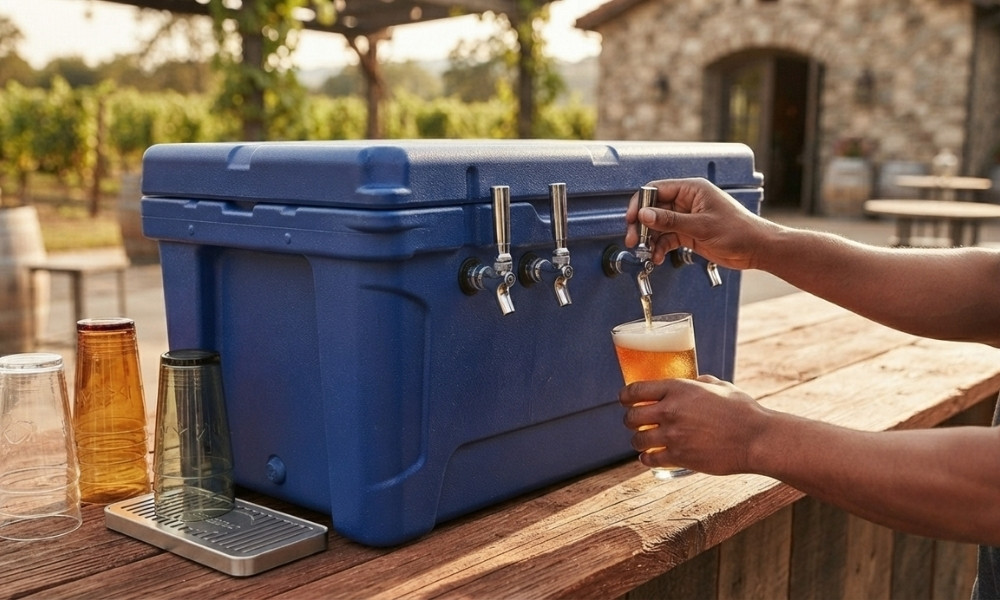
A jockey box is a portable draft beer system built around an insulated cooler, a chilled coil or cold plate, and a CO2-powered tap. It draws beer from a keg, cools it as it passes through ice-submerged coils, and dispenses it through a mounted faucet, all without electricity.
Because it needs no electrical refrigeration, a jockey box can work as a portable beer tap in many locations where a keg, CO2 tank, and sufficient ice can be safely set up, including parking lots, parks, backyards, and event tents.
- A cooler or insulated box packed with ice
- Stainless steel coils or a cold plate that chill beer on the way to the faucet
- A CO2 tank and regulator to push beer through the line
- One or more faucets, depending on how many beverages are served
For a single-tap setup serving one beverage over a few hours, a basic jockey box rental, a keg, and a sufficient supply of ice generally cover the job. Someone still needs to watch ice levels and adjust CO2 pressure if pours start foaming, but the equipment does most of the work on its own.
▶ READ MORE: What is a Jockey Box Draft Beer System?
Why Draft Service Planning Matters for Putnam County Events
Draft service planning affects guest experience, product waste, staff workload, and event budget just as much as venue selection or catering. A jockey box that runs out of ice mid-event, or pours foam because pressure was never adjusted, becomes a visible problem in front of guests.
For organizers and venue managers, the stakes generally break down into a few categories:
- Guest experience: Warm or foamy pours are among the fastest ways a beverage station can draw complaints at a wedding, fundraiser, or corporate event.
- Product waste: Foam from an unbalanced jockey box wastes beer and drives up the number of kegs needed for the same guest count.
- Staff bandwidth: Someone has to monitor ice, CO2, and pour quality throughout service, and at larger events that job competes with other staffing priorities.
- Documentation and compliance: Depending on the event, temporary food service may require coordination with the local health department. Events serving or selling alcoholic beverages should also confirm whether a permit or other authorization is required from the New York State Liquor Authority.
These factors weigh more heavily as event size, tap count, or service duration increases, which is why the same jockey box that works fine for a backyard party can fall short at a multi-tap festival or a two-day fundraiser.
Basic Jockey Box Rental vs. On-Site Draft Support
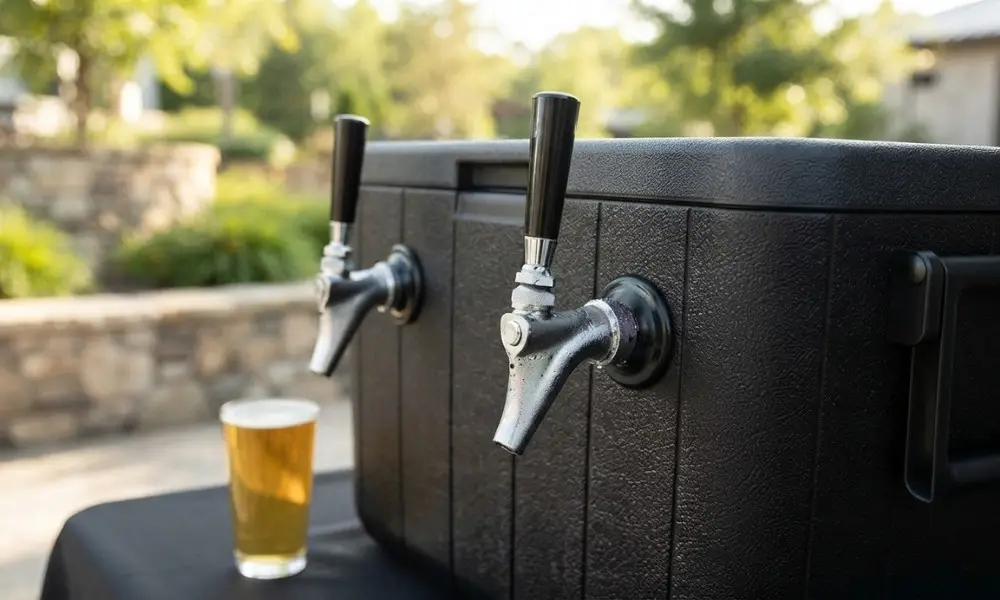
A basic portable draft beer system rental provides the equipment and leaves setup, monitoring, and cleanup to event staff. On-site draft support adds trained personnel who manage the system throughout the event and handle line cleaning afterward.
|
Factor |
Basic Jockey Box Rental |
On-Site Draft Support |
|
Setup |
Pickup or drop-off, self-assembled |
Delivered, connected, and calibrated on-site |
|
Ice and CO2 monitoring |
Managed by event staff |
Monitored and replenished by technicians |
|
Multiple taps or beverages |
Self-coordinated |
Managed across kegs, lines, and beverage types |
|
Troubleshooting foam or pressure |
Left to whoever is at the table |
Addressed on-site by trained staff |
|
Line cleaning after service |
Typically the renter’s responsibility |
Handled as part of the service |
|
Best fit |
Small, short, single-tap gatherings |
Multi-tap, multi-day, or high-volume events |
Small, single-day gatherings with one beverage and a modest guest list rarely need more than a rental. Once an event adds multiple taps, runs longer than a few hours, or expects a large or steady crowd, the coordination involved tends to outgrow what a self-managed rental can reasonably cover.
Signs Your Event Needs More Than a Basic Rental
An event typically outgrows a basic jockey box rental when guest volume, beverage variety, or event length exceeds what one or two staff members can monitor. Common signs include:
- Multiple beverage types on tap. Decide how many beverage types will be served, such as beer, wine, cocktails, kombucha, or cold brew, and how many separate lines they require.
- Multi-day events. Festivals or fundraisers spanning more than one day require overnight ice management, line sanitation between sessions, and consistent pour quality across multiple service windows.
- High guest counts. Continuous, high-volume pouring puts more strain on ice supply and coil temperature than a rental unit is typically set up to handle unattended.
- Limited access to power or water. Remote sites without utilities complicate cleaning, ice replenishment, and CO2 exchange, which favors a team that plans logistics in advance.
- No dedicated staff to monitor the system. If nobody on-site is responsible for checking ice, pressure, and pour quality throughout the event, foam waste and inconsistent pours become more likely.
Common mistakes that follow from these gaps include running out of ice mid-event, skipping post-event line cleaning, and underestimating how many kegs a jockey box setup can realistically serve before pours start to suffer.
Planning Checklist for High-Volume or Multi-Day Draft Service

Planning draft service for a larger Putnam County event works best as a step-by-step process rather than a last-minute equipment order.
- Confirm guest count and expected pours per hour to estimate keg quantity and tap count.
- Map keg-to-tap distance and site access, including whether power, water, and shade are available near the service area.
- Plan ice supply and a replenishment schedule for the full length of the event, including overnight coverage for multi-day service.
- Confirm applicable food-service requirements with the local health department and any alcohol-service requirements with the New York State Liquor Authority.
- Assign a point of contact for on-site troubleshooting if pours start running foamy, flat, or slow.
- Schedule line cleaning before and after the event to protect flavor and reduce the risk of carrying contamination into the next use.
Events that check most of these boxes without a dedicated team in place are strong candidates for professional on-site draft support rather than a self-managed rental.
What to Look for When Choosing an Event Draft Support Provider
Selecting a provider for event draft support comes down to a handful of factors that affect how smoothly service runs on the day. Reviewing these before booking helps avoid surprises once a jockey box or portable draft system is already on-site.
Experience With Multi-Tap and High-Volume Setups
A provider’s familiarity with multi-tap coordination matters more once an event moves beyond a single beverage or a small guest list. Ask about the range of event sizes and tap configurations a provider has supported in the past.
Cleaning and Sanitation Practices
How a provider handles line cleaning before and after service says a lot about overall reliability. Look for a provider who can speak clearly about their cleaning routine, rather than treating it as an afterthought.
Equipment Condition and Maintenance
The condition of jockey boxes, kegs, and CO2 equipment affects pour quality throughout an event. A provider should be able to describe how equipment is inspected and maintained between uses.
Responsiveness During Live Service
Foam, pressure, or flow issues can come up mid-event, and how quickly a provider responds often determines how much product and guest experience is affected. Providers who offer some form of on-site or on-call support during service generally provide more reassurance than those who simply drop off equipment.
Range of Equipment and Beverage Support
Events serving more than one beverage type need a provider who can accommodate multiple lines and equipment types. Confirming what a provider can support beyond a standard portable beer tap setup helps avoid last-minute gaps in coverage.
Frequently Asked Questions
How far in advance should Putnam County organizers book event draft support?
Booking timelines vary depending on event size, tap count, and equipment availability, but earlier planning generally gives a provider more flexibility to coordinate delivery, staffing, and any beverage variety needed. Organizers planning multi-tap or multi-day events benefit most from confirming details well ahead of the event date.
What is a jockey box compared with a kegerator for event use?
A jockey box functions as a portable beer tap that chills beer using ice and CO2 pressure without requiring electrical refrigeration. A kegerator relies on electrical refrigeration, which limits placement to locations with power access but can suit events with a fixed setup area. The right choice depends on venue access, event duration, and site conditions.
How is pricing typically determined for event draft support?
Pricing depends on factors such as event length, number of taps, beverage variety, and the level of on-site monitoring required. Because these details vary from one event to the next, organizers generally get the most accurate picture by requesting a quote based on their specific plans.
Does hiring an event draft support provider mean no event staff are needed at the beverage station?
Not necessarily. A provider typically manages equipment performance, such as ice, pressure, and pour quality, but event staff may still be needed for tasks like serving guests, checking IDs, or managing the line. Coordinating roles ahead of time helps avoid gaps in coverage during service.
Can the same provider support recurring events, like a multi-week festival or market series?
Many draft support arrangements can extend across recurring events, though setup needs may shift slightly between sessions depending on venue, guest count, or seasonal factors. Confirming recurring service details in advance helps keep equipment and scheduling consistent from one event to the next.
Plan Draft Support for Your Next Putnam County Event
Beer Line Cleaning USA helps bars, breweries, and event organizers throughout Putnam County coordinate portable draft beer system rentals and on-site support for a range of event sizes.
From jockey box rentals and draft setup to pour monitoring, line cleaning, and equipment breakdown, our team helps keep your draft system running smoothly throughout the event.
Contact us to discuss your event and book draft support.