Table of Contents
- What a Metallic Taste in Draft Beer Actually Means
- Chrome Faucets: When the Plating Wears and Brass Shows Up
- Chemical Residue: When the Cleaning Is the Problem
- Old Lines and Worn Components
- Water: The Overlooked Variable
- How to Pinpoint the Source
- Frequently Asked Questions
- Get Professional Help Eliminating Metallic Flavors in NY, NJ, and CT
A metallic taste in draft beer is easy for guests to notice and hard for staff to explain. The keg is in date, the brewery’s beer was sound, and yet the pint tastes like a handful of coins. In many New York, New Jersey, and Connecticut bars, the cause sits somewhere between the coupler and the glass: worn chrome faucets, leftover cleaning chemicals, aging lines, or the water that touches the system.
Key Takeaways
- Worn chrome plating can expose brass, a known source of metallic flavor.
- Incomplete rinsing can leave chemical residue in draft lines.
- Aging lines can hold off-flavors, harbor buildup, and compromise beer quality over time.
- Water high in minerals like iron or copper can introduce metallic notes into the pour.
- Verify pH levels, inspect hardware, and check line age to identify the source.
What a Metallic Taste in Draft Beer Actually Means
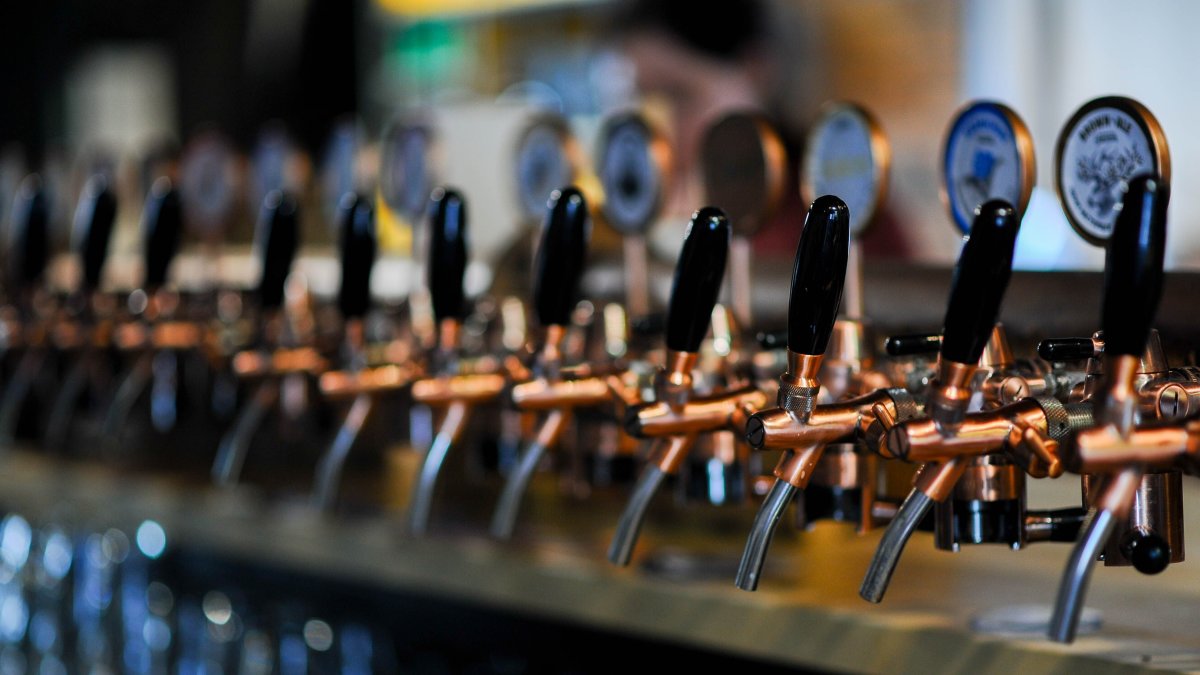
Guests describe it as coin-like, tinny, or blood-like. The Brewers Association lists a metallic “copper penny” note among the common off-flavors a draft system can produce, alongside sourness and buttery notes.
That matters because metallic flavor often comes from the draft system rather than the beer itself. Beer picks it up on the way to the glass, from metal it touches, residue it meets, or water it mixes with. Four areas are the most common places to look:
- Chrome-plated faucets and other plated brass parts
- Cleaning chemical that was not fully rinsed
- Old or worn beer lines and fittings
- Water quality in rinse and purge steps
Chrome Faucets: When the Plating Wears and Brass Shows Up
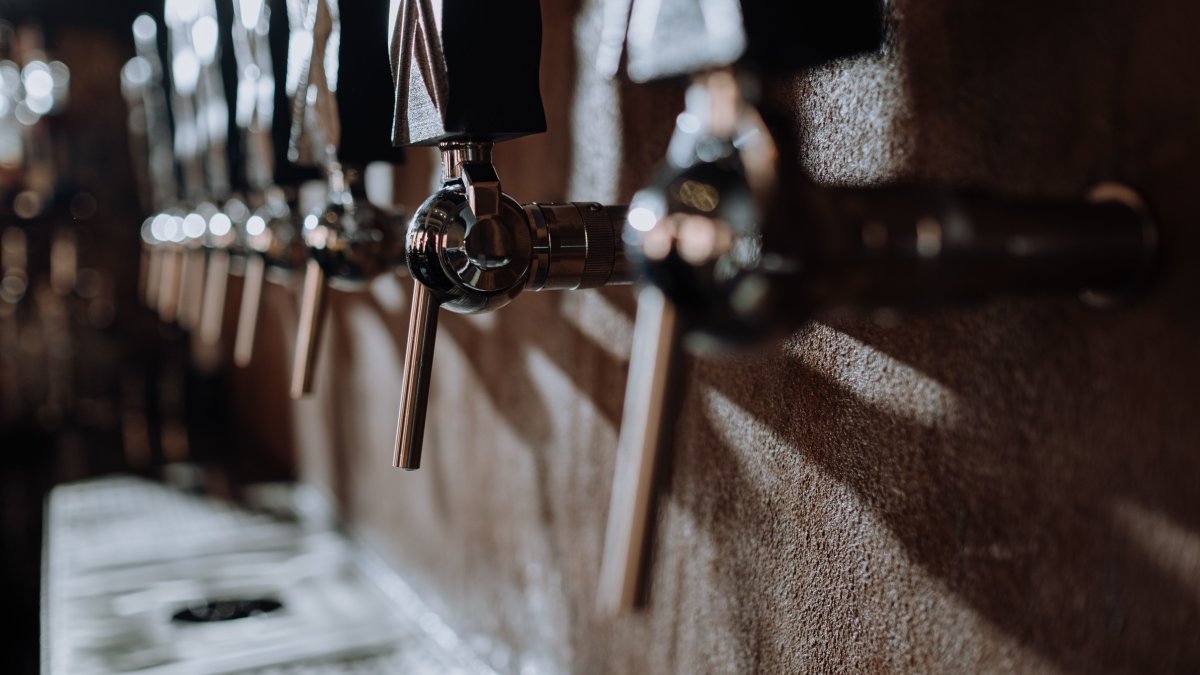
Chrome itself is not the problem. Chrome-plated brass is. The Brewers Association explains that chrome has no negative effect on beer, but any contact with the brass underneath makes the beer pick up a metallic off-taste. Brass is also harder to clean than stainless steel.
The plating rarely fails where you can see it. Cleaning cycles and beer flow gradually expose the brass on the inside of the part, which means a faucet can look polished on the outside while the lever, plunger, and barrel interior are already compromised.
Where to Look
Check every beer-contact surface, not just the faucet face:
- Faucet barrels, shafts, and levers
- Shanks, including any that were drilled out to a larger bore
- Wall brackets, tail pieces, and couplers in older systems
- Any spot with dull gold or yellow patches, pitting, or flaking plating
How to Fix It
Replace plated parts as soon as brass appears. Polishing does not solve it, because the exposure is on the surface the beer touches. The Brewers Association recommends stainless steel for faucets, shanks, and fittings wherever possible, since it stays inert against beer and cleans more easily. Stainless versions are available for faucets, shanks, tail pieces, and wall brackets.
A pattern worth noting: when one tap tastes metallic and its neighbors do not, hardware is the first suspect.
Chemical Residue: When the Cleaning Is the Problem
Clean lines are non-negotiable, but a cleaning that is not fully rinsed can create its own off-flavor. Caustic and acid line cleaners are strong chemicals by design. If any remains in a line, faucet, or coupler, the next beer through can taste harsh, soapy, bitter, or metallic.
Why Residue Gets Left Behind
- Rinse time is cut short during a busy week
- Faucets, couplers, and FOB devices are rinsed on the line but not broken down
- Cleaner is mixed too strong, which takes longer to flush
- No one tests the rinse water at each tap
How to Verify a Clean Rinse
- Flush every line thoroughly with clean water following the chemical wash cycle.
- Test the rinse water at each faucet using pH strips or a meter, matching it directly to your source water.
- Reconnect the kegs and draw beer through until clear, discarding the initial volume to ensure no rinse water remains.
- Log the cleaning date, chemical type used, and final pH reading in your maintenance records.
Safety note: If chemical residue is suspected, stop serving from that tap until it has been rinsed and tested. Line cleaning chemicals can cause injury if mishandled, and the Brewers Association states that line cleaning should be performed by trained personnel. A technician who tests every tap’s final rinse removes the guesswork. Once the final rinse tests clean, tapping the keg without foam helps confirm the first pours run clear.
Old Lines and Worn Components
Old lines are not typically the direct source of a metallic taste on their own. What they do is hold the conditions that make every other cause worse, and make the real source harder to find.
Vinyl beer line is porous. The Brewers Association recommends replacing it every one to two years because it is susceptible to bacterial and flavor contamination, and notes that beer sitting in vinyl can change flavor overnight. Older long-draw systems with single-wall polyethylene are a bigger concern: that material lets oxygen in, lets CO₂ out, and is difficult to clean. Barrier tubing is the approved line for long-draw runs.
Aging lines also come with aging hardware. Plated wall brackets, worn seals, and buildup at fittings sit in the same system, so a line replacement is a good time to inspect every connection, including the seals on each of the keg coupler types in use.
What to Do
- Replace vinyl jumper and direct-draw lines on a schedule, not when complaints arrive
- Use clear tubing where possible so buildup can be seen
- Keep to the two-week cleaning cycle the Brewers Association recommends
- Add periodic acid cleaning to remove beer stone that caustic cleaning does not touch
Water: The Overlooked Variable

Water touches a draft system more often than most operators realize. It is used to flush beer before cleaning, to rinse chemical afterward, to clear jockey box plates and coils, and to rinse glassware.
Iron and copper are two major flavor-producing metals in drinking water, and people describe their taste as metallic, bitter, or astringent. Both can enter water through corroded pipes, and iron can occur naturally in groundwater. In a bar, that can mean older plumbing, a private well, or a building where water sits in unused lines.
An honest caveat: Brewers Association draft guidance does not rank water as a leading cause of metallic taste, so treat it as a rule-out step rather than a first assumption. Here is how to check it:
- Taste the water used for rinsing, straight from that tap
- Review the local water quality report, or have the water tested if the building uses a well
- Purge rinse water completely before service. For jockey boxes and cold plates, the Brewers Association advises running beer through the system to clear leftover water
If the water itself tastes off, no amount of line cleaning will fix the pour. A technician can discuss point-of-use filtration options for the system. Water quality also matters on non-beer lines, including a cold brew kegerator setup.
How to Pinpoint the Source
Patterns narrow the search quickly. Use this table before replacing anything.
|
What You Notice |
Likely Cause |
First Check |
|
One tap tastes metallic, others do not |
Faucet, shank, or line on that tap |
Inspect for exposed brass |
|
Every tap turns metallic after a cleaning |
Chemical residue or rinse water |
Test rinse pH at each tap |
|
Rinse water or tap water also tastes metallic |
Iron or copper in the water supply |
Review the water report or test the source |
|
Older system, no recent hardware or line changes |
Worn plating, aging lines |
Check line age and part condition |
More than one cause can overlap. A faucet with worn plating on a system that was rinsed carelessly can taste worse than either problem alone. Logging findings tap by tap also keeps records ready for a draft system health inspection checklist.
Frequently Asked Questions
Can the beer or keg itself cause a metallic taste?
Yes, though it is less common than a system cause. Raw materials, oxidation, and handling before delivery can all contribute. Comparing the same beer on a different tap, at another account, or in another package helps separate a beer issue from a system issue.
Does beer temperature make a metallic taste more noticeable?
It can. Warmer beer may make off-flavors easier to detect as volatile aromatics release, making off-flavors and metallic notes far more pronounced to guests.
Can the wrong dispensing gas make draft beer taste metallic?
Gas problems more often show up as stale, papery, or flat beer than as metallic. Compressed air and contaminated gas can both spoil flavor, so beverage-grade gas matters. If hardware, rinsing, and lines check out, the gas supply is the next place to look, starting with the setup of the primary and secondary dual-gauge CO2 regulator.
How long does it take to fix a metallic taste in draft beer?
It depends on the cause. A worn faucet can be swapped quickly, while a residue problem may need a full re-rinse and testing, and aging lines may need replacement. Starting with a single-tap inspection narrows down which fix applies.
Why do guests notice a metallic taste more in light beers?
Lagers and other lighter styles have a clean, neutral profile, so off-notes stand out. Darker or heavily hopped beers can mask the same issue. When off-note complaints come primarily from light-beer drinkers, the system is still the likely culprit rather than the beer style itself.
Get Professional Help Eliminating Metallic Flavors in NY, NJ, and CT
Hardware, residue, line age, and water usually point to the same conclusion: this is a system problem, and a system problem needs a system-level check. A tap-by-tap inspection can identify worn plating, verify rinse results with pH testing, and flag lines that are past their service life.
Beer Line Cleaning USA provides professional draft system cleaning for bars, restaurants, breweries, hotels, and event venues across New York, New Jersey, and Connecticut. Our technicians fully disassemble and clean lines, faucets, couplers, and connectors for beer, wine, cold brew, and kombucha systems.
Dealing with off-flavors or complaints from guests? Talk to a draft system expert and get your lines checked.
Related Post