Table of Contents
- What a CO₂ Regulator Does in a Draft System
- Primary CO₂ Regulators: The First Stage of Control
- Secondary Regulators: Different Pressures From One Gas Supply
- Dual-Gauge Regulators: What Each Gauge Tells You
- How to Read the Gauges on a CO₂ Beer Regulator
- Multi-Pressure Setups for Bars and Restaurants
- Choosing a CO₂ Regulator That Fits Your System
- Warning Signs a Regulator Needs Attention
- Keeping Regulators Reliable
- Frequently Asked Questions
- Get Your Gas System Inspected
A CO₂ regulator is the gatekeeper between a high-pressure gas cylinder and every keg in your system. It takes pressure that would rupture a beer line in seconds and steps it down to a steady, usable level. When it works, nobody notices. When it drifts, leaks, or sits on the wrong setting, the symptoms show up in the glass as foam, flat pours, and wasted product.
Bar owners and managers across Putnam County and the NYC metro area often chase those symptoms at the keg, the line, or the faucet when the hardware at the top of the gas line deserves a look first. Knowing the difference between primary, secondary, and dual-gauge regulators makes that diagnosis faster and makes purchasing decisions easier.
Key Takeaways
- A CO₂ regulator reduces cylinder pressure to a controlled serving pressure.
- Dual-gauge models show cylinder contents and delivery pressure separately.
- Secondary regulators let one gas supply serve several pressure settings.
- A CO₂ beer regulator must match your gas type and cylinder fitting.
- Gauge drift, leaks, and creep signal it is time for service.
What a CO₂ Regulator Does in a Draft System
Beer is carbonated to a specific level at the brewery, and the gas pressure applied at the keg is what keeps that CO₂ dissolved until the beer reaches the glass. The Brewers Association’s carbonation guidance ties dispensing pressure directly to beer temperature and carbonation volume. Gas pressure that is too high pushes extra CO₂ into the beer. Pressure that is too low lets it escape.
Even with the correct pressure, tapping technique can affect the pour. Understanding how to tap a keg without creating excess foam helps staff avoid unnecessary waste and troubleshoot pouring problems.
A regulator makes that control possible. Inside the body, a diaphragm and spring balance the incoming cylinder pressure against the pressure you set with the adjustment knob. The result is a consistent output that holds steady while the cylinder slowly empties.
Primary CO₂ Regulators: The First Stage of Control
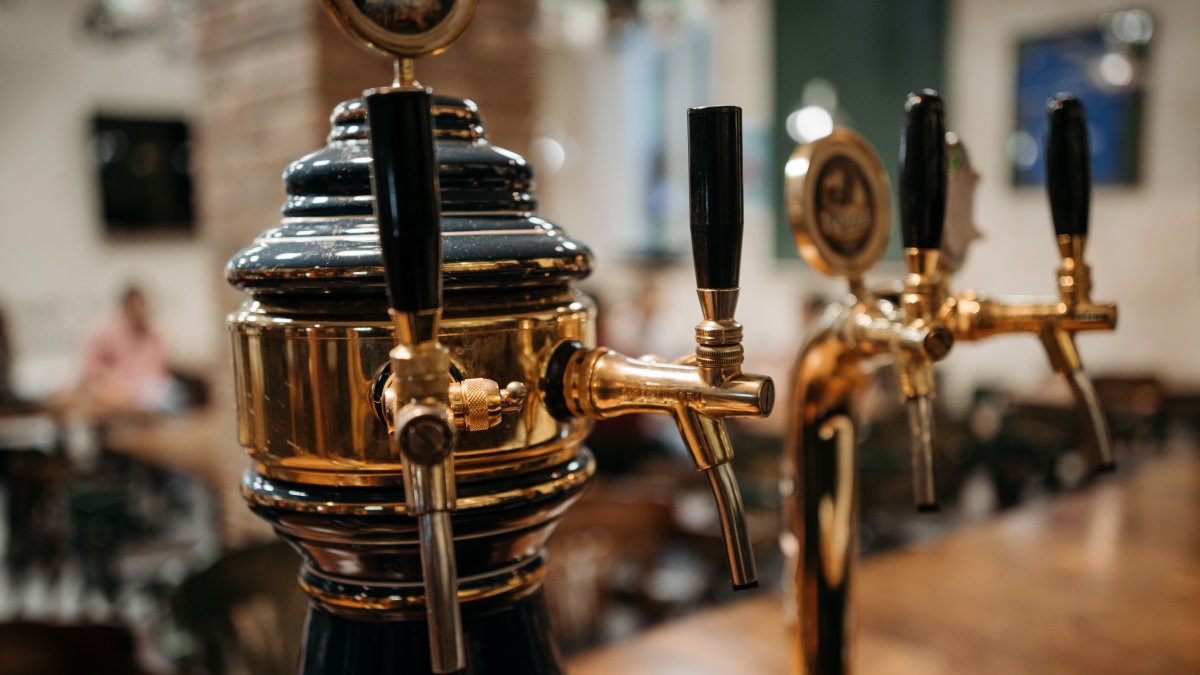
The primary regulator mounts directly to the gas cylinder. It is the first point of pressure reduction, and in a simple direct-draw system or a standard kegerator regulator setup, it is often the only one.
Primary regulators typically include:
- A cylinder inlet fitting. CO₂ cylinders in the United States use a CGA 320 connection, which is why a CO₂ regulator will not thread onto a nitrogen or blended gas cylinder.
- An adjustment knob or screw. Turning it sets the delivery pressure.
- A shutoff valve. This stops gas flow to the lines without touching the cylinder valve.
- A pressure relief valve. It vents safely if the delivery side overpressurizes.
- A check valve. It prevents beer or gas from backing up into the regulator.
For a single keg or a small bank of kegs that all want the same pressure, one well-maintained primary regulator does the job. The limits appear when different products need different settings.
The regulator is only one part of the connection between the gas supply and the keg. Staff should also understand the different keg coupler types used across beer systems to ensure the keg and dispensing setup are compatible.
Secondary Regulators: Different Pressures From One Gas Supply
A secondary regulator sits downstream of the primary regulator, usually on a gas manifold or at a group of kegs. The primary sends gas at an elevated, steady pressure. Each secondary then reduces that pressure again to match the needs of its own keg or zone.
This matters in any bar that pours a mix of products. A crisp lager, a highly carbonated wheat beer, a cider, and a draft cocktail or kombucha rarely share an ideal serving pressure. Running them all off a single primary setting means at least some of them will pour poorly.
Pressure is only one part of a balanced draft system. The length and resistance of each line also matter, which is why calculating the right beer line length for balanced pours can help prevent inconsistent dispensing.
A secondary regulator also helps when:
- Line lengths vary. A tap at the far end of a long run may need a different pressure than one near the cooler.
- Kegs sit at different temperatures. A warmer keg in a cooler corner may need adjusting independently.
- A problem keg needs isolating. You can tune one line without disturbing the rest of the system.
Many bars build this out with a primary regulator feeding a manifold, with a secondary regulator and shutoff on each branch. Technicians can document each branch setting so staff never guess.
Dual-Gauge Regulators: What Each Gauge Tells You
The dual-gauge regulator is the most common style in kegerators and small commercial systems. It is a primary regulator with two gauges on one body, and each gauge answers a different question.
|
Gauge |
Also Called |
What It Shows |
How to Use It |
|
Cylinder gauge |
High-pressure gauge |
Pressure inside the CO₂ cylinder |
Confirms the cylinder is connected and charged. Weigh the cylinder to know how much CO₂ is left. |
|
Delivery gauge |
Low-pressure gauge |
Pressure being sent to the kegs |
Verify it matches your target serving pressure and holds steady. |
Dual-gauge vs. dual-stage: Dual-gauge describes the two displays. “Dual-stage” (or “two-stage”) describes the internal design.
|
Term |
What It Describes |
Key Difference |
Best Fit |
|
Dual-gauge |
Two pressure displays on one body |
Shows cylinder and delivery pressure separately |
Kegerators and small commercial systems |
|
Dual-stage |
Two pressure-reduction steps inside the body |
Holds delivery pressure more consistently as the cylinder empties |
Systems that run for long stretches without anyone adjusting settings |
A regulator can be one, the other, or both.
How to Read the Gauges on a CO₂ Beer Regulator
Step 1: Identify Which Gauge Is Which
Most dual-gauge units place the cylinder (high-pressure) gauge on the side facing the tank and the delivery (low-pressure) gauge on the side facing the kegs. Check the printed scale on each face before reading, since the two ranges are very different.
Step 2: Compare the Delivery Gauge to Your Target Pressure
The delivery gauge shows the pressure applied to the keg, and it should match the setting you intended. A reading above or below target is often the first clue behind foamy or flat pours.
Step 3: Confirm the Delivery Reading Holds Steady
Once set, the needle should stay put. If it creeps upward on its own, the CO₂ regulator needs service (more on that below).
Step 4: Interpret the Cylinder Gauge Correctly
The cylinder gauge is trickier, and it is where many operators get caught off guard. CO₂ is stored as a liquid with gas above it. As long as liquid remains, the cylinder gauge reads a nearly constant pressure that depends on cylinder temperature, often in the range of 800 PSI at room temperature. It stays there until the liquid is gone, then drops quickly. By the time the needle falls, the cylinder is nearly empty.
Step 5: Weigh the Cylinder to Measure What Remains
The cylinder gauge is not a fuel gauge. To know how much CO₂ remains, weigh the cylinder and compare it to the tare weight stamped on the collar. The difference is your usable supply.
Step 6: Log Readings to Prevent Mid-Service Gas Loss
Bars that track delivery pressure and cylinder weight in a simple log avoid running out during a busy shift, which also protects the beer from the air exposure that follows a gas failure. Keeping oxygen out of the keg matters for freshness, which is one reason a steady gas supply is worth monitoring.
Multi-Pressure Setups for Bars and Restaurants
Once a bar grows past a handful of taps, one pressure for every line stops being realistic. Three setups cover most commercial situations.
Primary Plus Secondary Regulators
A single primary feeds a manifold, and each branch gets its own secondary regulator. This is the most flexible arrangement for mixed menus and the most common upgrade for venues adding taps.
Separate Gas Sources by Product
Nitrogen-blend taps, such as nitro stouts or nitro cold brew, use a different gas than standard CO₂ lines. They require their own regulator, cylinder, and fittings and never share a CO₂ regulator. Blended gas cylinders use different connections (commonly CGA 580), so the mismatch is physical as well as functional.
Long-Draw and Glycol Systems
Systems that run beer a long distance from the keg cooler to the tap often need higher applied pressure to move product, sometimes paired with blended gas to avoid over-carbonating the beer. These systems benefit from secondary regulation because small mistakes in pressure and temperature are magnified over long runs. A technician can balance the whole system rather than adjusting one tap at a time.
For longer runs, glycol draft beer systems keep beer lines consistently chilled as beer travels from the cooler to remote taps. Proper temperature control works alongside pressure balancing to support consistent pours.
For venues pouring wine, cocktails, kombucha, or cold brew on draft, the same principle applies: each product has its own gas and pressure needs, and the regulator layout should reflect that.
Choosing a CO₂ Regulator That Fits Your System
A few checks prevent most purchasing mistakes.
- Gas type and fitting. Confirm the regulator is built for CO₂ and matches the cylinder connection.
- Delivery range. The adjustable range should comfortably cover your serving pressures, not sit at the very top or bottom of the scale.
- Gauge quality. Clear, legible gauges with appropriate ranges make daily checks easier for staff.
- Body material. Brass is common and durable. Stainless suits environments with more moisture or corrosion risk.
- Built-in safety features. A relief valve and check valve are worth having on any commercial regulator.
- Mounting and space. Walk-in keg rooms, under-bar cabinets, and back-bar setups each leave different amounts of clearance.
Residential-grade kegerator regulators can work on small commercial systems, but a busy bar asks more of its hardware. Higher usage and more taps call for commercial-grade parts and a layout built around the actual keg count.
The number of kegs a venue keeps on hand also affects its operating costs. Knowing how much a keg of beer typically costs can help bar owners plan inventory and compare the costs of different draft offerings.
Warning Signs a Regulator Needs Attention
Regulators wear out slowly, so problems tend to look like beer issues first. Watch for:
- Delivery pressure that creeps upward. This usually points to a worn seat or diaphragm inside the regulator.
- Gauges that stick, bounce, or disagree with expected readings. A failing gauge makes every other decision unreliable.
- Audible or detectable leaks at fittings, washers, or the body. CO₂ leaks waste gas and disrupt system pressure.
- Foam or flat beer on multiple taps at once. When several lines misbehave together, the shared gas source is a prime suspect.
- Cylinders that empty faster than usual. A slow leak is often the cause.
CO₂ is also an asphyxiant in enclosed spaces. Leaks in a small cooler, cellar, or keg room are a safety concern as well as a cost issue, and the Brewers Association manual covers gas safety for retailers. Cylinders should always be secured upright, and persistent leaks call for a qualified technician rather than a DIY fix.
Keeping Regulators Reliable
A few habits extend regulator life and catch problems early:
- Check both gauges at each keg change. It takes seconds and builds a record of normal readings.
- Log cylinder weights. Weighing beats guessing.
- Inspect washers, O-rings, and fittings. Small seals are the first parts to fail.
- Document each secondary regulator’s setting. Written settings stop well-meaning staff from changing what works.
- Schedule periodic professional inspections. Technicians can test delivery accuracy, check for leaks, and balance the system as a whole.
Regulator checks fit naturally into draft system repairs and maintenance, alongside line cleaning, faucet service, and gas pressure verification. Handling them together catches problems that single-component fixes miss.
Frequently Asked Questions
How long does a CO₂ regulator last?
Service life depends on usage, environment, and maintenance. Regulators in busy commercial settings generally wear faster than home units. Erratic gauges, pressure creep, and leaks are better replacement indicators than age alone.
Can a CO₂ regulator be used with nitrogen or blended gas?
No. Different gases use different regulators and cylinder fittings, and they are rated for different pressure ranges. Nitro and blended-gas taps need a regulator made for that specific gas.
What is regulator creep, and why does it matter?
Creep is a slow, unintended rise in delivery pressure, even when the adjustment knob has not moved. It can over-carbonate beer and cause foam. It usually signals internal wear and calls for repair or replacement.
Does altitude change how a regulator should be set?
Altitude changes the pressure needed to keep beer properly carbonated, so the delivery setting may need adjusting for locations well above sea level. The regulator itself works the same way. Most Northeast bars sit low enough that it is a minor factor.
Should the cylinder valve stay open when the bar is closed?
Practices vary, but many operators close the cylinder valve during extended shutdowns to limit waste from slow leaks. Whatever the routine, cylinders should be secured upright and checked for leaks. A technician can recommend a routine that fits your system.
Get Your Gas System Inspected
If your gauges disagree, your pressure keeps drifting, or your taps pour inconsistently no matter how often staff adjust the settings, the regulator may be the weak link. At Beer Line Cleaning USA, we inspect, repair, and rebalance commercial draft systems across New York, New Jersey, and Connecticut, from single-tap bars to multi-pressure long-draw installations.