Table of Contents
- What a Cold Brew Kegerator Setup Includes
- Nitro Cold Brew Kegerator Gas and Pressure Settings
- Gas Cylinder Safety in a Café Kitchen or Cooler
- Line Cleaning for Coffee on Tap
- Food Safety and Health Department Rules for Cold Brew on Tap
- Common Pour Problems at a Nitro Tap
- What Affects the Cost of a Cold Brew Kegerator Setup
- Frequently Asked Questions
- Get Your Coffee-on-Tap Setup Right From Day One
A cold brew kegerator turns one batch of coffee into a fast, repeatable pour that keeps a café line moving. It also asks more of your setup than a drip brewer ever did. Nitrogen cylinders, regulators, stout faucets, and food-contact lines all have to work together, and a weak link shows up in the cup as flat texture, off flavors, or a pour that never cascades.
Getting the equipment, gas, and cleaning routine right before opening day protects your product and the first impression of your coffee program. That holds whether your café is in Brooklyn, Westchester, or Fairfield County.
Key Takeaways
- A cold brew kegerator needs a stout faucet and nitrogen supply.
- Nitrogen cylinders demand secure storage and good ventilation.
- Pressure settings come from equipment specs, not guesswork.
- Coffee oils and proteins make weekly line cleaning the baseline.
- Confirm cold brew handling rules with the local health department.
What a Cold Brew Kegerator Setup Includes
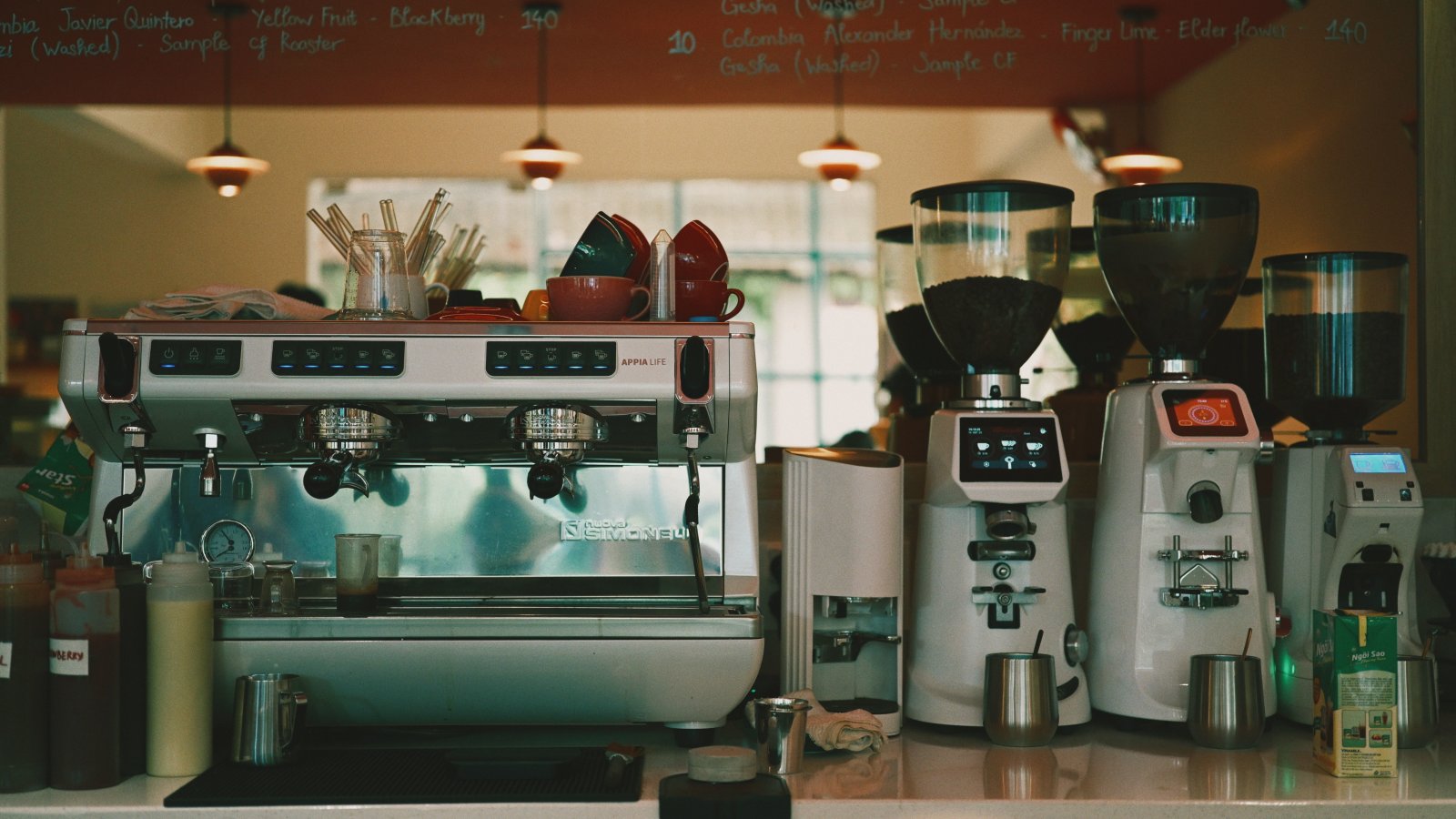
A nitro cold brew kegerator starts with the same refrigeration and tap hardware as a beer system, then adds a gas supply and a specialized faucet. Each piece affects how the coffee pours.
- Refrigeration: A commercial kegerator, under-counter cooler, or walk-in that holds a steady cold temperature. The Brewers Association lists 34 to 38°F as the dispensing range for draught beer, and coffee benefits from the same stability.
- Kegs: Stainless steel kegs sized to your daily volume. Nitro service raises pressure demands and nitro dispensing often involves higher-rated pressure vessels, so confirm each keg’s pressure rating with the supplier.
- Gas supply: A nitrogen cylinder paired with a nitrogen-specific regulator.
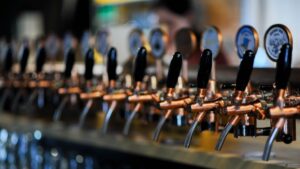
- Stout faucet: A faucet with an internal restrictor plate, which creates the cascading, creamy pour.
- Beverage lines and fittings: Food-grade lines sized to the manufacturer’s specification, kept short and cold so coffee does not warm up between pours.
- Tower or tap point: The warmest spot in most systems, so it needs attention to insulation and airflow.
Some systems add an inline nitro infuser between the keg and the faucet, so the coffee takes on nitrogen as it flows. Others pre-charge the keg and let it rest before the first pour. Both approaches work, but they change how you set pressure and how quickly a new keg is ready.
For installations with longer distances between the cooler and tap, glycol draft beer systems maintain consistent beverage temperatures by circulating chilled glycol through insulated lines.
Nitro Cold Brew Kegerator Gas and Pressure Settings
Nitrogen gives Nitro cold brew its tight, creamy cascade. Cold brew is not carbonated, so many coffee setups run on pure nitrogen. CO₂ would add fizz and a sharper bite that most nitro drinkers do not expect.
Nitro beer is a different case because it already holds dissolved CO₂. For coffee, equipment makers vary: some specify pure nitrogen, others a nitrogen-heavy blend. The spec sheet for your infuser, faucet, or kegerator kit settles the question.
Serving pressure depends on the same documentation. Published instructions for coffee infusers and nitro kegerator kits range from roughly 28 PSI to the mid-40s, depending on the equipment. That spread is the reason to avoid a universal number.
A few habits keep pressure under control:
- Use a nitrogen regulator. A CO₂ regulator is the wrong tool for the job.
- Raise pressure in small steps. Let the system settle before the next change.
- Change one setting at a time. Adjusting pressure, temperature, and the faucet at once hides the real cause of a problem.
- Record the settings that work. A written baseline helps new staff and speeds up troubleshooting.
Nitro coffee runs on nitrogen-specific equipment, but regulator logic carries over from CO₂ systems, and primary, secondary, and dual-gauge CO₂ regulators show how different configurations control gas delivery in a draft system.
Gas Cylinder Safety in a Café Kitchen or Cooler
Nitrogen is colorless and odorless, and it makes up most of the air you breathe. That is exactly why it gets underestimated. A café is not a chemical plant, but the physics still applies: a leak in a small, closed room can displace oxygen.
Basic practices reduce the risk:
- Secure cylinders upright with a chain or strap, and move them with a cart.
- Choose ventilated storage. Avoid tight closets and unventilated cellar spaces for cylinders.
- Leak-test fittings with an approved solution after every cylinder change.
- Ask the installer about monitoring if gas must live in a walk-in cooler or other enclosed space.
- Train every staff member who swaps cylinders or keg connections.
This is general safety information. Follow the equipment manufacturer, your gas supplier, and local codes for your specific space.
Line Cleaning for Coffee on Tap
Coffee leaves a different kind of residue than beer. Oils, proteins, and sugars cling to keg walls, couplers, lines, and faucet parts, and cold brew’s low acidity gives spoilage organisms an easier path. For beer lines, the Brewers Association’s Draught Beer Quality Manual sets a two-week cleaning cycle. Coffee systems have their own requirements, so follow the equipment manufacturer’s schedule and keep a written log of every service.
A sound cleaning routine follows the same logic as a professional commercial line cleaning process: chemical contact time, full disassembly of wear points, and a thorough rinse.
- Empty and vent the keg safely before disconnecting.
- Flush the lines with cool, clean water to clear leftover coffee.
- Circulate an alkaline cleaner labeled for coffee equipment, using the contact time on the label.
- Disassemble the faucet and coupler. Scrub the restrictor plate and inspect gaskets and O-rings.
- Rinse until no cleaner remains, following the product’s verification instructions.
- Sanitize with a food-contact sanitizer and drain as directed.
- Reconnect, discard the first pour, and log the service. Record the date, the person, and the products used.
Daily habits matter too. Wipe and rinse the faucet at close, and sanitize the coupler at every keg change.
Food Safety and Health Department Rules for Cold Brew on Tap

Regulation for retail cold brew is still developing. The National Coffee Association told Daily Coffee News that no FDA regulation specifically covers retail-dispensed cold brew, such as nitro poured from a keg, and that this has created confusion for retailers and local health inspectors alike.
In practice, expectations can differ from one jurisdiction to the next. Because cold brew is low in acidity, an inspector may ask about hold times, storage temperature, and sanitation records.
Before opening, ask the local health department how it treats kegged cold brew. Then keep documentation ready: keg fill dates, cooler temperature checks, and cleaning logs. This is general information, not legal advice.
Common Pour Problems at a Nitro Tap
Most pour issues trace back to gas, restriction, or residue. Manufacturer troubleshooting sheets point to the same short list of causes.
|
What You See |
Likely Cause |
First Check |
|
Thin pour with no cascade |
Low pressure, empty cylinder, or closed valve |
Regulator setting and cylinder valve |
|
Slow or sputtering flow |
Clogged restrictor plate |
Disassemble and clean the stout faucet |
|
Inconsistent back-to-back pours |
Pressure or infusion not keeping pace |
Regulator, infuser, and keg temperature |
|
Sour or stale taste |
Residue in lines or an aged keg |
Cleaning log and keg fill date |
Poor connection technique and mismatched equipment can also cause inconsistent pours, so learning how to tap a keg without creating excess foam pays off at every keg change.
What Affects the Cost of a Cold Brew Kegerator Setup
Costs vary by project, so any number is an estimate until the space is assessed. A single-tap countertop style may sit toward the $ end of the range, while a multi-tap walk-in or long-draw build can climb toward $$$$.
Keg pricing can also influence the overall beverage program budget. Understanding how much a keg of beer typically costs can provide a useful reference when comparing beverage supply expenses.
These factors move the estimate:
- Number of taps and the beverages they serve
- Refrigeration type: under-counter kegerator, keg cooler, or walk-in
- Distance from keg to tap, which affects line routing and cooling
- Gas needs: cylinders, regulators, and storage location
- Site conditions: power, drainage, access, and any needed modifications
- Existing equipment that can be reused or must be replaced
- Timeline and urgency
The distance between the keg and tap also affects line balance and resistance. Calculating the correct beer line length for balanced pours is a core step when planning a draft installation.
Frequently Asked Questions
Can one cold brew kegerator serve both still and nitro coffee?
Often, yes, but the dispensing hardware has to match each beverage. Nitro service needs a nitrogen supply and a stout faucet, while still-cold brew pours through a standard faucet at lower pressure. Separate taps or a dedicated configuration usually keep both pouring correctly.
Can you add milk or syrup to a coffee keg?
Dairy and sweeteners raise spoilage risk and make lines harder to clean, so many operators add them at the cup instead. If you plan to keg a flavored or dairy-based drink, confirm handling and shelf life requirements with the local health department and the equipment manufacturer first.
What keg size works best for a café?
Match the keg to how quickly you pour it, not to the largest size that fits. A keg that empties while the coffee is still fresh keeps flavor consistent and reduces waste. Daily volume, tap count, and cooler space all point toward the right size.
How long can cold brew stay in a keg?
It depends on the recipe, brewing method, storage temperature, and the shelf life your food safety plan sets. Because requirements for retail cold brew vary by jurisdiction, confirm hold times with the local health department and label every keg with its fill date.
Can a draft beer system be converted to pour cold brew?
Sometimes. A stout faucet, nitrogen supply, and coffee-safe cleaning routine are the starting points. Many operators prefer dedicated lines so coffee oils and beer flavors do not carry over. A technician can assess the existing layout before any conversion begins.
Get Your Coffee-on-Tap Setup Right From Day One
Adding nitro cold brew to your menu should not mean guessing at gas pressure or improvising a cleaning schedule. Beer Line Cleaning USA designs, installs, and services draft systems for cafés, restaurants, bars, and venues across New York, New Jersey, and Connecticut, and our team has completed 3,000+ installations.
We plan the layout, set up the gas supply with professional draft system installation, and keep your lines clean after opening day.