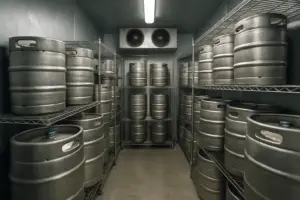
Beer line cleaning is the single most important maintenance task for any draft system. Learning how to clean beer lines properly protects your product quality and prevents serious contamination issues. Without a consistent cleaning routine, bacteria, yeast, mold, and beer stone accumulate inside the lines. This produces off-flavors, cloudy pours, and potential health risks for customers.
Table of Contents
- Why Dirty Beer Lines Are a Serious Problem
- How Beer Lines Get Contaminated
- The Two Main Cleaning Methods
- Step-by-Step: How to Clean Beer Lines with a Hand Pump Kit
- Cleaning Schedules Recommended by Industry Standards
- Comparison: DIY Cleaning vs. Professional Service
- What Happens if You Skip Cleaning
- Special Considerations for Glycol and Long-Draw Systems
- Things to Know
- Stop Losing Product and Customers to Dirty Draft Lines
- Frequently Asked Questions
- The Bottom Line on How to Clean Beer Lines
Key Takeaways
- Beer line cleaning should follow a consistent, documented maintenance schedule rather than being performed only when quality problems become noticeable.
- Recirculating power cleaning and static-soak cleaning are the two primary approaches, with system configuration influencing which method is appropriate.
- Complete sanitation includes the lines, faucets, couplers, and other components that come into contact with beer.
- Cleaning effectiveness depends on the correct chemical concentration, contact time, water conditions, and thorough rinsing.
- Neglected draft systems can affect beer flavor, appearance, pour quality, and overall customer experience.
- Professional beer line cleaning can help businesses maintain consistent procedures and properly service more complex draft systems.
Why Dirty Beer Lines Are a Serious Problem
Beer is a biological product. It contains living yeast, organic compounds, and dissolved CO2 that interact with every surface inside a draft system. Polyvinyl chloride (PVC) and other tubing materials are porous at a microscopic level. Therefore, they become hospitable environments for microbial growth when not maintained properly.
The Brewers Association publishes draft quality standards. Additionally, they identify four main categories of contamination in beer lines: bacteria, wild yeast, mold, and beer stone (calcium oxalate deposits). Each contaminant produces different defects in the finished pour. These range from sour or vinegary notes to hazing and excessive foam.
These are not minor inconveniences. For a bar or restaurant, they translate directly into wasted kegs, negative reviews, and unhappy customers.
Food service inspections may evaluate the cleanliness and sanitary condition of beverage dispensing equipment. Bars operating in Putnam County and the broader NYC metro area should maintain their draft systems in accordance with applicable local health requirements and recognized industry sanitation practices. Professional draft beer system support in Putnam County
How Beer Lines Get Contaminated
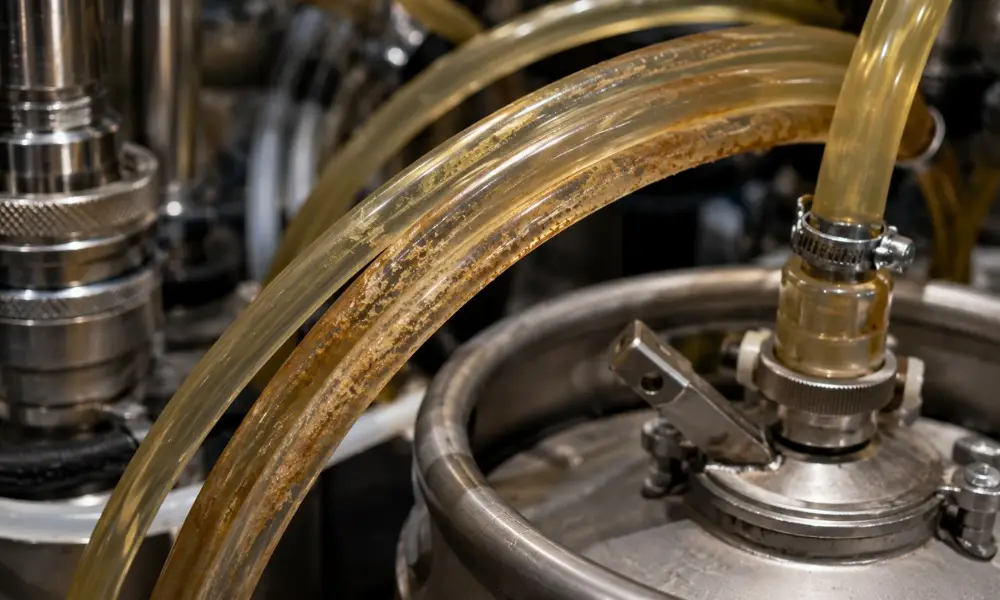
Understanding contamination helps operators appreciate why a fixed cleaning schedule matters. Beer residue clings to the interior walls of tubing after every pour. Over time, this residue builds into a biofilm. This is a structured community of microorganisms embedded in a protective matrix that standard rinsing cannot remove.
Key contributors to contamination include:
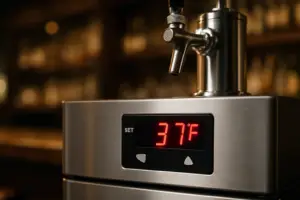
- Warm line temperatures: Lines running above 38°F accelerate microbial growth significantly.
- Low volume taps: Lines with infrequent pours allow beer to sit stagnant. This speeds up oxidation and bacterial activity.
- Improper coupler seals: A worn or cracked coupler allows outside air and contaminants into the system.
- Skipped or delayed cleanings: Even one missed cycle allows biofilm to become established.
Beer stone is a separate but related problem. It forms when calcium and oxalate ions in beer precipitate out. These ions bond to the line walls, creating hard, yellowish-gray scale. This scale both harbors bacteria and restricts flow. Unlike biofilm, beer stone requires an acid-based cleaning solution to dissolve it properly.
The Two Main Methods for How to Clean Beer Lines
Operators learning how to clean beer lines will encounter two primary methods in professional and commercial settings.
1. Recirculating Power Cleaning
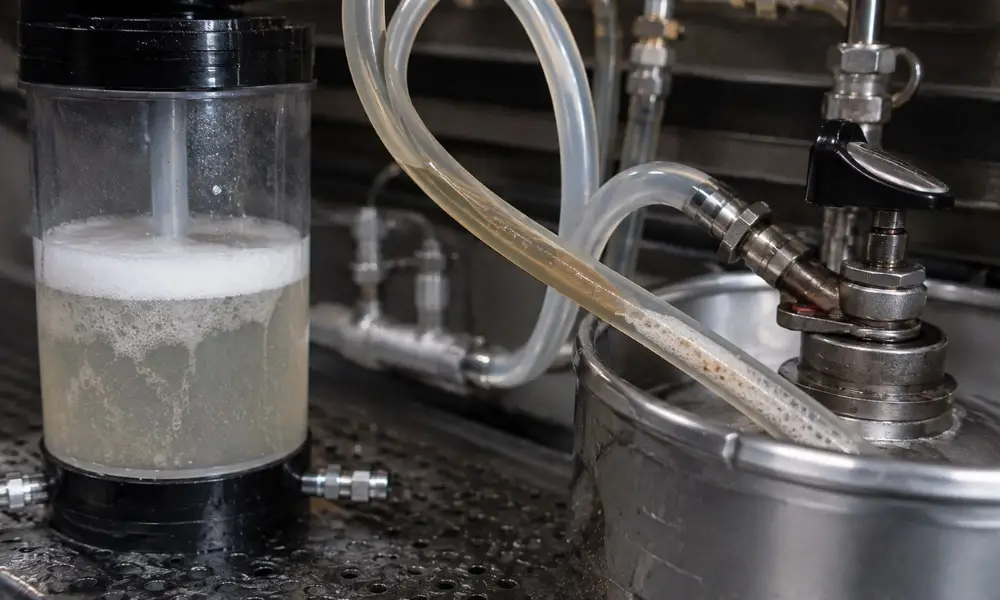
This is the method used by professional draft line cleaning services. A powered pump circulates cleaning solution through the lines continuously for a set period, typically 15 to 20 minutes per line. The recirculation action creates turbulence inside the line, which physically scrubs biofilm from the walls in addition to the chemical action of the solution. This method is more thorough, faster for multi-tap systems, and better suited to long-draw installations with significant line lengths.
2. Hand Pump (Static Soak) Cleaning
This method is common in smaller operations and for DIY cleaning attempts. A hand pump kit pushes cleaning solution through the line and allows it to soak for a defined contact time, usually 15 to 20 minutes, before flushing. It requires no electricity and can be effective on short, direct-draw systems when performed correctly, though both methods require the same core chemical protocol: an alkaline cleaner for routine cleaning and a periodic acid wash to address beer stone. Most manufacturers of beer line cleaning chemicals recommend following their specific dilution ratios precisely, as under-dilution reduces effectiveness and over-dilution can damage equipment or leave residues.
Step-by-Step: How to Clean Beer Lines with a Hand Pump Kit
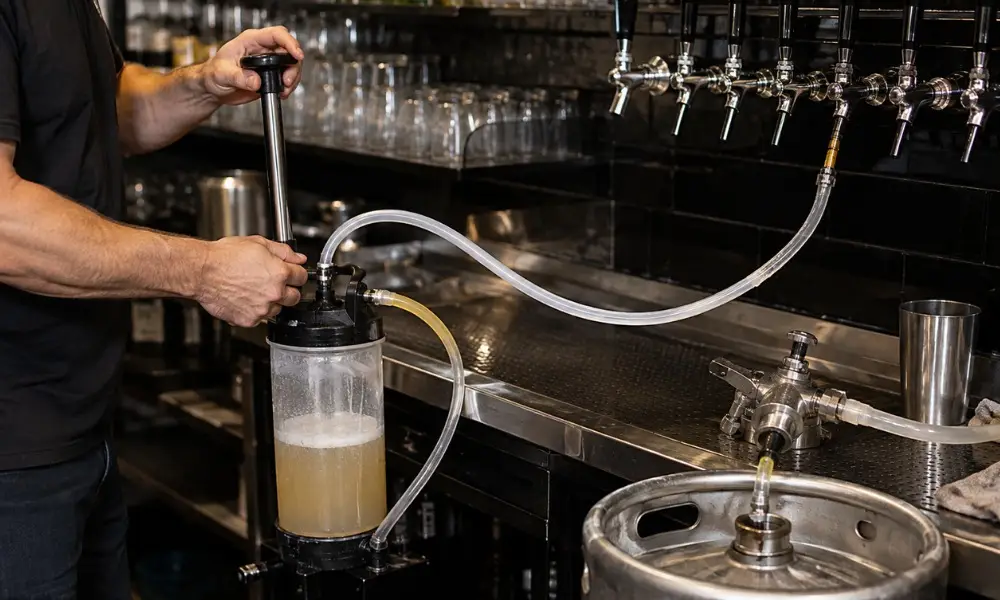
For operators maintaining a small direct-draw system, the following process reflects standard industry practice. This is not a substitute for professional cleaning on complex or long-draw systems.
- Disconnect the coupler from the keg and close the CO2 supply.
- Connect the cleaning kit to the faucet shank and the coupler end of the line.
- Flush the line with cold water to remove residual beer.
- Prepare the cleaning solution according to the chemical manufacturer’s dilution instructions. Use an alkaline cleaner (typically caustic-based) for routine cleaning.
- Push the cleaning solution through the line until it flows out the faucet end. Close the faucet.
- Allow the solution to soak for the contact time specified by the chemical manufacturer, usually 15 to 20 minutes.
- Flush thoroughly with clean water, passing at least two gallons through to remove all chemical residue.
- Inspect faucets and couplers for buildup. Disassemble and brush-clean faucet parts in the cleaning solution.
- Reconnect to the keg and resume service. Pour and discard the first few ounces to flush any remaining water from the line.
Every 13 weeks, substitute an acid-based beer line cleaner for the alkaline solution. This periodic acid wash addresses beer stone accumulation. Follow the same contact-time and flushing protocols as the routine alkaline cleaning.
How to Clean Beer Lines: Recommended Schedules by Industry Standards
The Brewers Association Draft Quality Manual specifies that beer lines should be cleaned every two weeks (14 days) as a baseline. This recommendation applies to standard ale and lager systems. High-volume operations, lines serving high-gravity or adjunct beers, and warmer environments may require weekly cleaning.
Key scheduling benchmarks:
- Every 2 weeks: Full alkaline line cleaning for all active taps.
- Every quarter (13 weeks): Acid wash to remove beer stone deposits.
- Monthly or as needed: Full disassembly and brush cleaning of faucets, couplers, and keg connections.
- Immediately: Cleaning after a line has been idle for more than two weeks, after a spillage into the system, or after a known contamination event.
Comparison: DIY Cleaning vs. Professional Service
| Factor | DIY Hand Pump Cleaning | Professional Recirculating Service |
|---|---|---|
| Equipment cost | $50-$200 for basic kit | Included in service fee |
| Labor time per session | 45-90 minutes | 20-45 minutes (pro efficiency) |
| Effectiveness on short lines | Moderate to good | High |
| Effectiveness on long-draw systems | Low | High |
| Chemical consistency | Variable (user-dependent) | Consistent (trained technician) |
| Documentation provided | None | Service logs, compliance records |
| Faucet/coupler inspection | Often skipped | Standard part of service |
| Acid washing cycle | Frequently overlooked | Scheduled automatically |
For bars, restaurants, taprooms, and venues across the New York metro region, professional draft system service can help maintain consistent cleaning, reliable pours, and proper equipment performance. Businesses that also use portable draft setups can refer to this Putnam County event draft support and jockey box guide for additional considerations when managing beer service at events. Professional support can be especially useful for multi-tap systems, long-draw glycol setups, and other configurations that require more specialized maintenance
What Happens if You Skip Cleaning
The consequences of neglecting beer line maintenance are cumulative and accelerating. In the first two to three weeks beyond a scheduled cleaning, biofilm begins to establish. By four to six weeks, the flavor impact is detectable to trained palates. Beyond that, contamination affects pour quality in ways that even casual drinkers notice.
Practical consequences include:
- Off-flavors: Sour, vinegary, or musty notes that do not reflect the brewer’s intended product.
- Excessive foam: Contamination disrupts CO2 behavior, producing over-carbonation and waste.
- Cloudy beer: Yeast and bacterial matter suspend in the pour, creating visual defects.
- Keg waste: A contaminated system can ruin an entire fresh keg within hours of tapping.
- Health risk: While beer’s alcohol content limits some microbial risks, certain bacteria can survive in draft systems. In consequence, these bacteria may pose concerns for immunocompromised individuals.
- Regulatory consequences: Health inspections that identify unsanitary draft equipment result in citations or mandated closures.
Special Considerations for Glycol and Long-Draw Systems
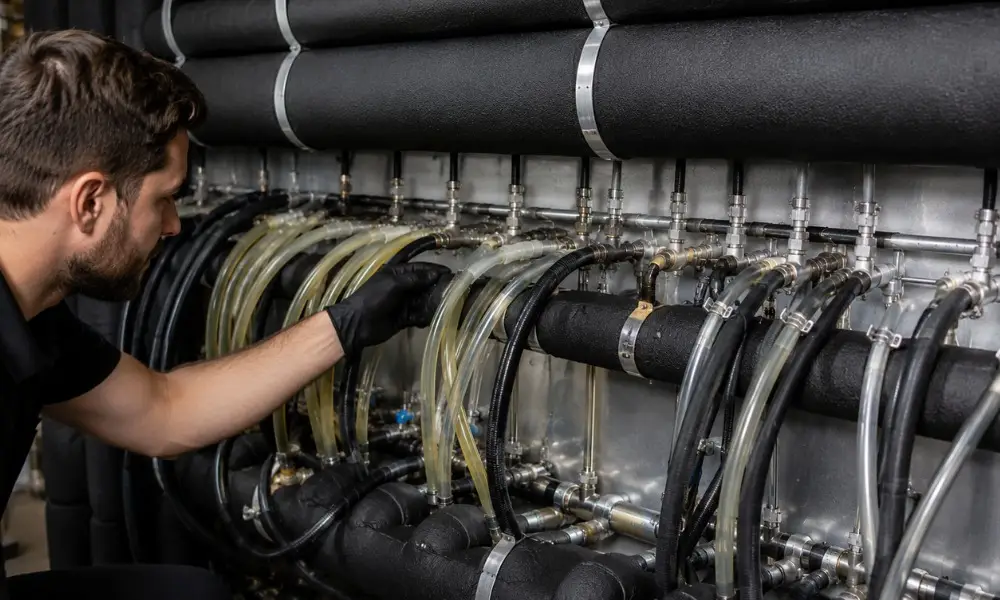
Long-draw systems are fundamentally different from direct-draw setups. In a long-draw installation, beer travels through hundreds of feet of tubing from a remote cooler to the faucet. A glycol chilling system running alongside the beer lines keeps everything cold. These systems are standard in large venues, hotel bars, stadiums, and multi-level establishments throughout New York City and Westchester.
Cleaning a glycol-cooled long-draw system requires:
- Higher-powered recirculating equipment to generate adequate flow through long line runs.
- Careful management of the glycol loop, which itself requires periodic maintenance and concentration checks separate from the beer line cleaning process.
- Trained technicians who understand the specific trunk line configuration. These experts know the location of line regulators and the correct sequencing of line isolation valves.
Operators planning a new glycol system can review this glycol beer system installation guide for Putnam County to better understand the equipment, setup, and ongoing maintenance these systems may require. Those evaluating a broader commercial draft setup can also reference these commercial draft beer system installation questions for Putnam County to see how system design, line configuration, and equipment choices can influence long-term maintenance needs.
The glycol reservoir itself requires checking for proper concentration. This typically runs a 30-35% propylene glycol-to-water ratio for food-safe applications. Additionally, you should inspect the reservoir for contamination annually or per manufacturer guidelines. This is entirely separate from beer line sanitation but equally important to system performance.
Beer Line Cleaning USA serves bars, restaurants, breweries, taprooms, cafes, hotels, and event businesses across New York, New Jersey, and Connecticut. The primary focus is Putnam County and the NYC metro area including Westchester, Brooklyn, Queens, and Fairfield County, CT. Their technicians handle the full range of draft system maintenance. This includes routine two-week line cleanings, complex glycol system servicing, and equipment rentals for events.
Understanding how to clean beer lines is essential knowledge for any operator serving draft beverages. Whether the system is a single-tap kegerator behind a café counter or a 40-tap long-draw installation in a Manhattan sports bar, the principles remain the same. Consistent schedules, correct chemicals, proper technique, and professional support for anything beyond basic direct-draw maintenance are essential.
Things to Know
- The Brewers Association’s Draft Quality Manual is the most widely referenced industry standard in the United States for beer line cleaning protocols. Following its two-week cleaning cycle is the baseline, not a suggestion.
- Alkaline and acid cleaners serve different purposes and are not interchangeable. Using only an alkaline cleaner without periodic acid washing leaves beer stone intact. This intact beer stone harbors bacteria even after routine cleaning.
- Faucets and couplers must be disassembled and brush-cleaned separately. Running solution through the lines without cleaning the hardware at each end leaves a significant source of contamination untreated.
- Tap water temperature and mineral content affect cleaning outcomes. Hard water common in parts of New York can interfere with chemical performance. This requires adjusted dilution ratios or additional rinsing steps.
- A line that smells clean is not necessarily sanitary. Biofilm can be odorless in early stages. Visual and chemical inspection, not smell alone, should guide sanitation decisions.
- New glycol and long-draw systems require a cleaning protocol established at installation, not improvised after the fact. The complexity of these systems means that the cleaning method appropriate for a simple direct-draw setup will not provide adequate sanitation.
Stop Losing Product and Customers to Dirty Draft Lines
Contaminated beer lines cost operators money on every pour. You waste kegs, face customer complaints, and risk avoidable health inspection citations. All of these problems are entirely preventable with a consistent, professionally executed cleaning program. Beer Line Cleaning USA serves bars, restaurants, breweries, taprooms, hotels, and event businesses across New York, New Jersey, and Connecticut. We bring commercial-grade equipment and trained technicians directly to your system on a schedule that meets industry standards.
Contact Beer Line Cleaning USA today to schedule your first cleaning or set up a recurring service plan for your draft system.
Frequently Asked Questions
Q: How often should beer lines be cleaned in a bar or restaurant?
A: The Brewers Association recommends cleaning beer lines every two weeks as a minimum standard for commercial operations. This two-week interval applies to active taps serving standard ales and lagers. High-volume accounts, taps serving high-gravity or fruit-adjunct beers, and systems operating in warmer environments may require weekly cleaning. Additionally, lines that have been idle for more than two weeks should be cleaned before returning to service. This applies regardless of where they fall in the regular schedule.
Q: What chemicals are used to clean beer lines, and are they safe?
A: Beer line cleaning uses food-grade alkaline solutions for routine sanitation and food-grade acid solutions periodically to dissolve beer stone deposits. Both chemical types are formulated specifically for beverage system use. Moreover, they are considered safe when used at manufacturer-recommended dilutions and followed by thorough water flushing. Operators should always consult the Safety Data Sheet (SDS) for any chemical used. Additionally, wear appropriate protective gloves and eyewear during handling. Ensure lines are fully flushed before returning to service.
Q: Can a bar owner clean their own beer lines, or is a professional service necessary?
A: Owners of small, direct-draw systems with short line runs can perform effective cleaning using a hand pump kit. However, they must follow correct chemical protocols and scheduling. In contrast, long-draw glycol systems, multi-trunk installations, and high-tap-count systems require recirculating equipment and trained technicians. Attempting to hand-pump clean a 100-foot long-draw line will not generate sufficient turbulence to remove established biofilm. For those operations, professional service is not a luxury but a practical requirement for maintaining pour quality and sanitation standards.
Q: How long does a professional beer line cleaning take?
A: A professional recirculating line cleaning typically takes between 20 and 45 minutes for a standard multi-tap system. Larger or more complex installations may take longer. The time varies based on the number of taps, total line footage, the degree of contamination present, and whether faucet and coupler disassembly is included in the service. A professional service that also inspects and cleans hardware at each session will take longer than one that only pushes solution through the lines. However, the more thorough approach produces better sanitation outcomes and is worth the additional time.
Q: What are the signs that beer lines need to be cleaned immediately, outside of the regular schedule?
A: Immediate cleaning is warranted when poured beer shows unusual sourness, vinegary off-flavors, persistent cloudiness, or excessive foam that cannot be attributed to CO2 pressure or temperature issues. Other indicators include a visible slime or discoloration at the faucet mouth. Additionally, a sulfur or musty odor when the tap is opened signals problems. Furthermore, a fresh keg performing noticeably worse than expected within the first few pours indicates contamination. Any of these signs points to active microbial contamination in the system. In these cases, a standard alkaline cleaning may need to be followed immediately by an acid wash and a full hardware inspection before service resumes.
The Bottom Line on How to Clean Beer Lines
Consistent, chemically correct beer line cleaning is one of the highest-return maintenance investments a draft beverage operation can make. It protects product quality, reduces waste, supports regulatory compliance, and preserves the reputation that bars, restaurants, taprooms, and venues work hard to build. The two-week cleaning standard exists because the science of biofilm formation makes it necessary, not because it is arbitrary industry convention.
For operators across Putnam County, Westchester, New York City, and the broader tri-state region, Beer Line Cleaning USA provides the professional expertise, commercial equipment, and consistent scheduling that keeps draft systems performing at their best. Reach out directly to discuss a cleaning plan suited to your system type and volume.