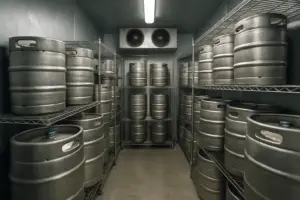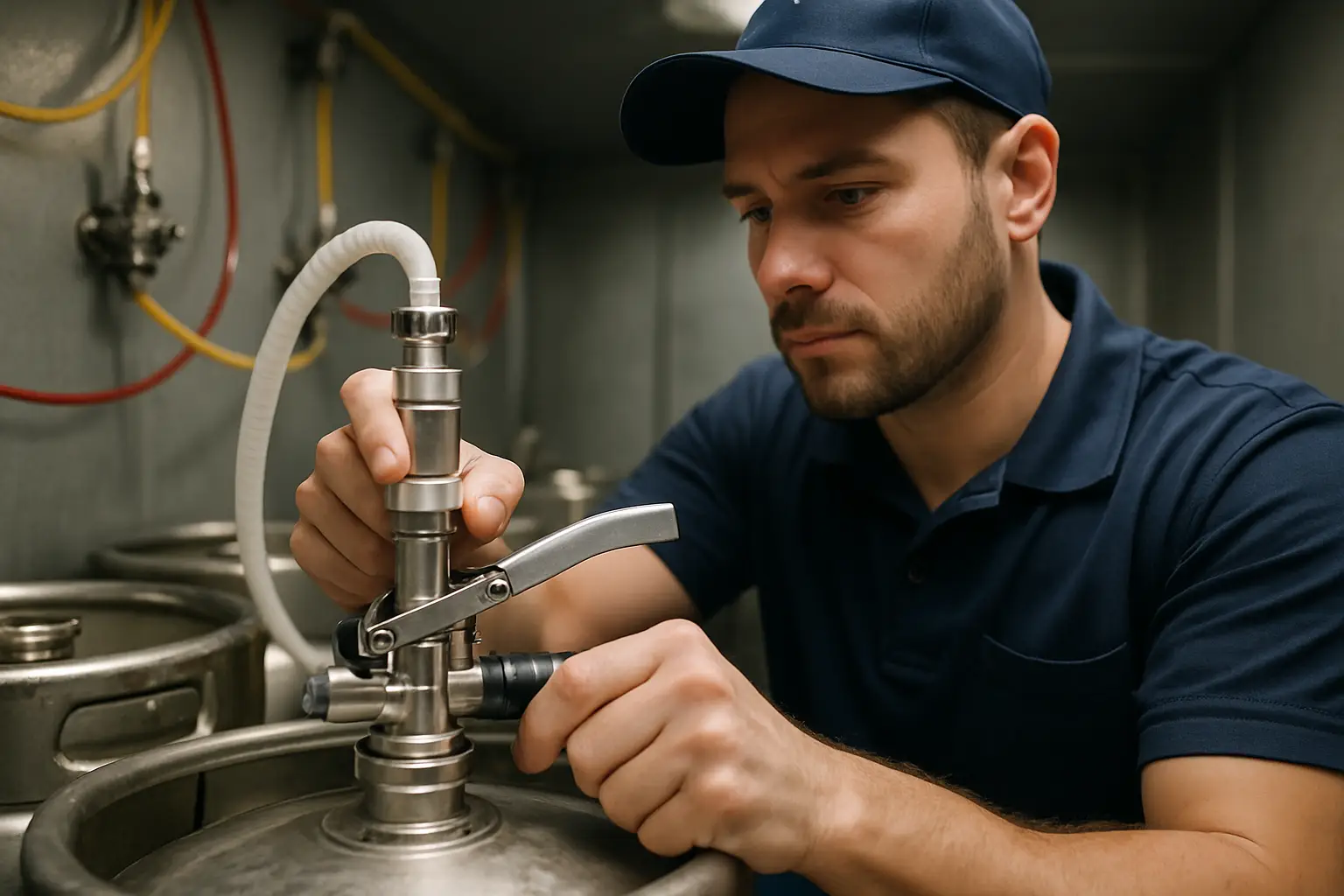
The beer line cleaning process is a structured maintenance routine that removes yeast, bacteria, and beer stone buildup from draft system tubing using chemical solutions and pressurized water. Done correctly and on schedule, it protects beer flavor, reduces waste, and keeps a draft system compliant with industry standards. Understanding this process is essential for any operator serious about serving quality draft beer.
Table of Contents
- Why the Beer Line Cleaning Process Is Not Optional
- How the Beer Line Cleaning Process Works Step by Step
- Beer Line Cleaning Process Frequency and Its Effect on Draft Sales
- Chemicals and Equipment Used in the Beer Line Cleaning Process
- Common Mistakes That Undermine the Beer Line Cleaning Process
- Things to Know
Key Takeaways
- The beer line cleaning process should be performed every two weeks to protect beer quality and maximize sales.
- A structured process involves purging lines, circulating alkaline cleaner, rinsing thoroughly, and reassembling the system.
- According to Draftline Technologies and Brewers Association studies (cited 2025), moving from a four-to-eight-week cycle to a two-week cycle increases draft beer sales by 4 to 7%.
- Draft beer waste runs between 20 and 30% of total draft volume across bars and restaurants, according to Flote (2026), and poor line hygiene is a contributing factor.
- Most establishments either clean in-house or use a third-party service; only 5% of respondents to a Brewers Association survey reported doing no cleaning at all.
- Automated cleaning systems are gaining traction, with 24% of new brewery investments directed toward fully automated fermentation and cleaning systems, per 360 Research Reports (2024).
Why the Beer Line Cleaning Process Is Not Optional
Beer is a perishable product. Once it flows through a draft line, it leaves behind organic residue: yeast cells, wild bacteria, mold, and calcium oxalate deposits commonly called beer stone. These contaminants accumulate in layers over time. Additionally, no amount of cold temperature alone stops their growth.
The consequences are measurable. According to Market Reports World (2026), line cleaning compliance stands at just 64% globally, directly affecting flavor consistency and brand perception. Furthermore, one industry survey cited by Bernick’s found that more than 90% of bars had substandard cleaning practices. For operators who take pride in their pours, that figure represents both a reputational risk and a missed revenue opportunity.
For bars, restaurants, breweries, and taprooms across the New York metro area and beyond, the stakes are even higher. Consumers in competitive markets are quick to notice an off-flavored pint. Operators who rely on draft beer system support putnam county services understand that cleaning is not a back-of-house afterthought. Rather, it is front-of-house quality control.
How the Beer Line Cleaning Process Works Step by Step
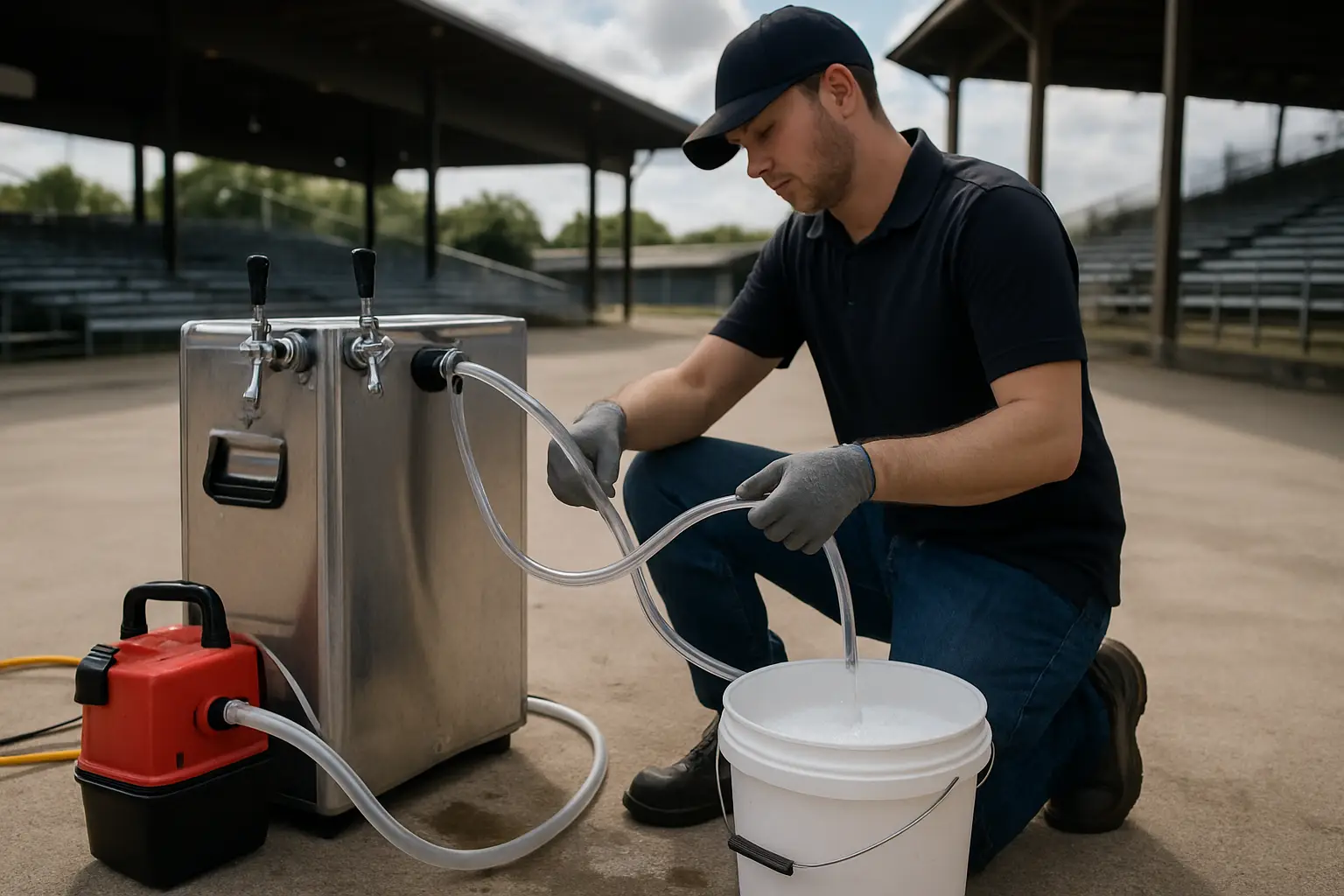
A properly executed beer line cleaning process follows a consistent sequence. While specific products and equipment vary, the core steps remain the same across professional operations.
1. Disconnect and collect waste beer
The line is taken off service. Remaining beer in the line is pushed out using CO2 or a hand pump. The waste is collected and discarded properly. This is not the time to save product.
2. Flush with clean water
A water flush removes residual beer and prepares the line to receive chemical solution. Moreover, this step prevents excessive neutralization of the cleaning agent.
3. Circulate alkaline cleaning solution
An alkaline detergent, typically caustic-based, is pumped through the lines and left to soak for a specified dwell time, usually 15 to 20 minutes. Therefore, this step breaks down organic buildup including yeast and bacteria.
4. Rinse thoroughly
The chemical is flushed out completely with clean water. In contrast, any residue left behind will affect beer flavor and potentially present a health concern.
5. Apply acid rinse if applicable
On a periodic basis, an acid-based rinse follows the alkaline wash to remove beer stone deposits. This step is not always performed at every cleaning but is critical for long-term system health. For example, this is particularly important in long-draw glycol systems.
6. Reassemble and verify
Couplers, faucets, and tubing connections are reinstalled. A sample pour is taken to confirm the beer tastes clean. Additionally, the line must be free of chemical odor before reopening service.
Operators running complex long-draw systems should also review commercial draft beer system installation questions putnam county resources. Understanding how system design affects cleaning demands is essential.
Beer Line Cleaning Process Frequency and Its Effect on Draft Sales
Industry guidance from the Brewers Association recommends cleaning beer lines every two weeks. The data behind that recommendation is compelling.
According to studies by the Brewers Association and Draftline Technologies (cited 2025), moving from a four-to-eight-week cleaning cycle to a two-week schedule increases draft beer sales by 4 to 7%. Conversely, extending cleanings out to five to eight weeks causes a measurable 7% drop in draft sales. The mechanism is straightforward: contaminated lines produce off-flavors. Customers notice and order less draft or switch to bottles.
A Brewers Association survey found that 79% of respondents relied on in-house employees for cleaning. Furthermore, 16% contracted a third-party line cleaner, and 5% performed no cleaning at all (BA, 2020 to 2024). Third-party cleaning typically delivers more consistent results because technicians bring calibrated equipment, proper chemicals, and documentation.
For event-based operators or venues running temporary setups, the cleaning protocol does not change. Anyone running a temporary tap setup should review the putnam county event draft support jockey box guide. Understanding how cleaning applies to portable equipment like jockey boxes is crucial. These are just as vulnerable to contamination as permanent systems.
Chemicals and Equipment Used in the Beer Line Cleaning Process
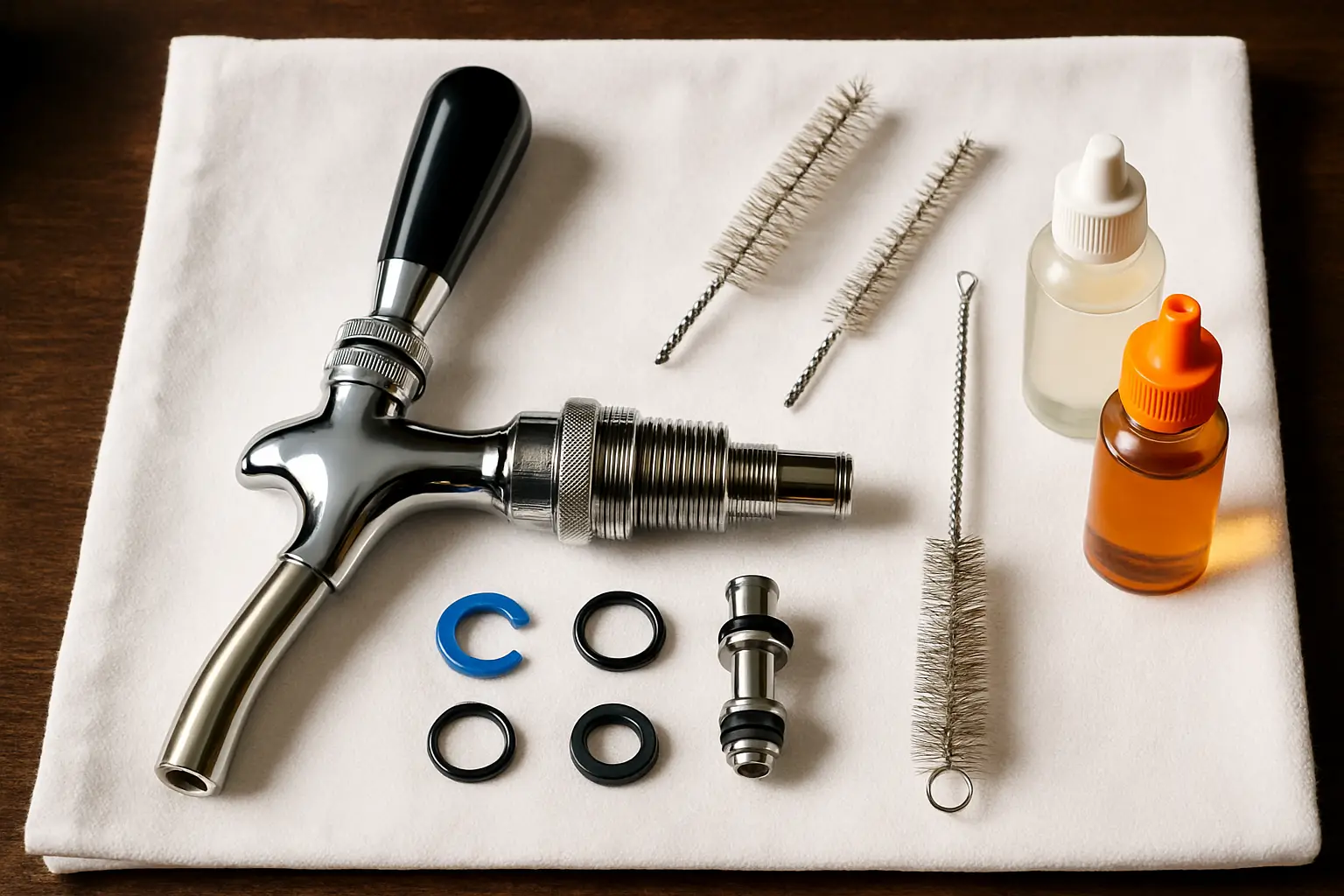
| Item | Purpose | Notes |
|---|---|---|
| Alkaline cleaner (caustic) | Removes organic buildup: yeast, bacteria, mold | Core of every cleaning cycle |
| Acid cleaner | Dissolves beer stone (calcium oxalate) | Used periodically, not every cycle |
| Cleaning pump or pressure system | Circulates solution through lines | Hand pumps or electric recirculating pumps |
| Cleaning couplers | Connects cleaning supply to keg ports | Must match coupler type (A, D, S, etc.) |
| Collection bucket | Captures waste solution | Required for proper disposal |
| Test strips or titration kit | Verifies chemical concentration | Prevents under- or over-dosing |
Chemical concentration matters significantly. Too little cleaner and the cycle is ineffective. Moreover, too much cleaner and residue may linger even after rinsing. Professional technicians use test strips or titration kits to verify concentration before circulating solution.
For facilities running glycol-cooled long-draw systems, the cleaning process must account for added complexity. These systems feature trunk line insulation and remote coolers. Those operators benefit from dedicated glycol beer system installation putnam county expertise. This expertise addresses both system design and ongoing maintenance demands.
Common Mistakes That Undermine the Beer Line Cleaning Process
Even well-intentioned operators can compromise results by cutting corners. The most frequent errors include:
- Skipping the acid rinse step entirely. As a result, beer stone accumulates until it visibly flakes into poured beer.
- Using incorrect chemical concentrations because measurements are eyeballed rather than tested.
- Rushing dwell time, which prevents the cleaner from fully breaking down biofilm.
- Failing to clean faucet bodies and keg couplers as part of the same cycle. Therefore, contamination remains at both ends of the line.
- Returning a line to service without a test pour. Consequently, the first customer receives chemical-tainted beer.
Things to Know
- Beer line cleaning is not the same as a quick water rinse. Only chemical solutions break down biological contamination.
- The beer line cleaning kit market was valued at USD 859.6 million in 2025. Furthermore, it is projected to reach USD 1,614.9 million by 2036, reflecting just how seriously the industry treats this maintenance category (Future Market Insights, 2026).
- Cleaning records should be documented. Many state health inspections in New York and New Jersey treat draft line maintenance logs as part of food service compliance review.
- Faucets, couplers, and FOBs (foam-on-beer detectors) must be disassembled and cleaned manually. Line-only cleaning leaves those components contaminated.
- The broader brewing and beverage cleaning products market is forecast to reach $7.26 billion by 2030. In addition, it is driven by stricter quality standards and growing taproom culture (IndustryARC, 2024).
Take Control of Your Draft Program Today
Beer Line Cleaning USA works with bars, restaurants, breweries, taprooms, hotels, and event venues across New York, New Jersey, and Connecticut. We deliver professional, documented line cleaning on a consistent schedule. Operators who partner with a dedicated cleaning service stop guessing and start serving better beer from day one.
Request a free quote and find out how Beer Line Cleaning USA can build a maintenance schedule around your specific system. Reach out today and get a customized cleaning plan for your operation.
Frequently Asked Questions
Q: How often should beer lines be cleaned?
The Brewers Association recommends cleaning beer lines every two weeks.
This schedule keeps bacterial and yeast buildup from reaching levels that affect flavor. Extending the interval beyond two weeks is associated with measurable declines in beer quality and draft sales, according to Draftline Technologies research cited in 2025.
Q: Can I clean beer lines myself, or do I need a professional?
In-house cleaning is possible but requires proper chemicals, equipment, and training to be effective.
A Brewers Association survey found that 79% of establishments handle cleaning with their own employees. However, third-party professionals bring calibrated equipment and documentation. This is especially valuable for complex long-draw or glycol systems.
Q: What chemicals are used in the beer line cleaning process?
Alkaline (caustic) cleaners handle organic buildup, while acid cleaners target beer stone deposits.
These two chemical types address different contamination categories and are typically used on alternating schedules. Concentration must be tested before use to ensure effectiveness and prevent residue from affecting the next pour.
Q: What happens if beer lines are not cleaned regularly?
Uncleaned lines develop biofilm layers that produce off-flavors, visible haze, and potential health risks.
Research published in ScienceDirect found that simulated aging of draft beer line tubing significantly increases biofilm contamination over time. The result at the tap is beer that tastes sour, buttery, or vinegary, regardless of how fresh the keg is.
Q: How long does the beer line cleaning process take?
A standard two-line cleaning cycle typically takes between 25 and 45 minutes per line, depending on system length and complexity.
Longer glycol long-draw systems require more time due to extended tubing runs and additional components. Establishments with large tap counts or complex systems should schedule cleaning during off-peak hours to minimize service interruption.
The Bottom Line on the Beer Line Cleaning Process
Consistent execution of the beer line cleaning process is one of the highest-return maintenance habits any draft beer operator can adopt. The steps are straightforward, the chemistry is well-established, and the sales data clearly supports a two-week cycle. What separates high-performing draft programs from struggling ones is rarely the beer on the menu. Rather, it is the discipline applied behind the bar.
Operators who want to stop guessing and start pouring cleaner, better-tasting pints should connect with a professional cleaning service. Choose a service that understands draft systems at a technical level. The next step is simple: request a consultation and get a maintenance plan that fits the operation.