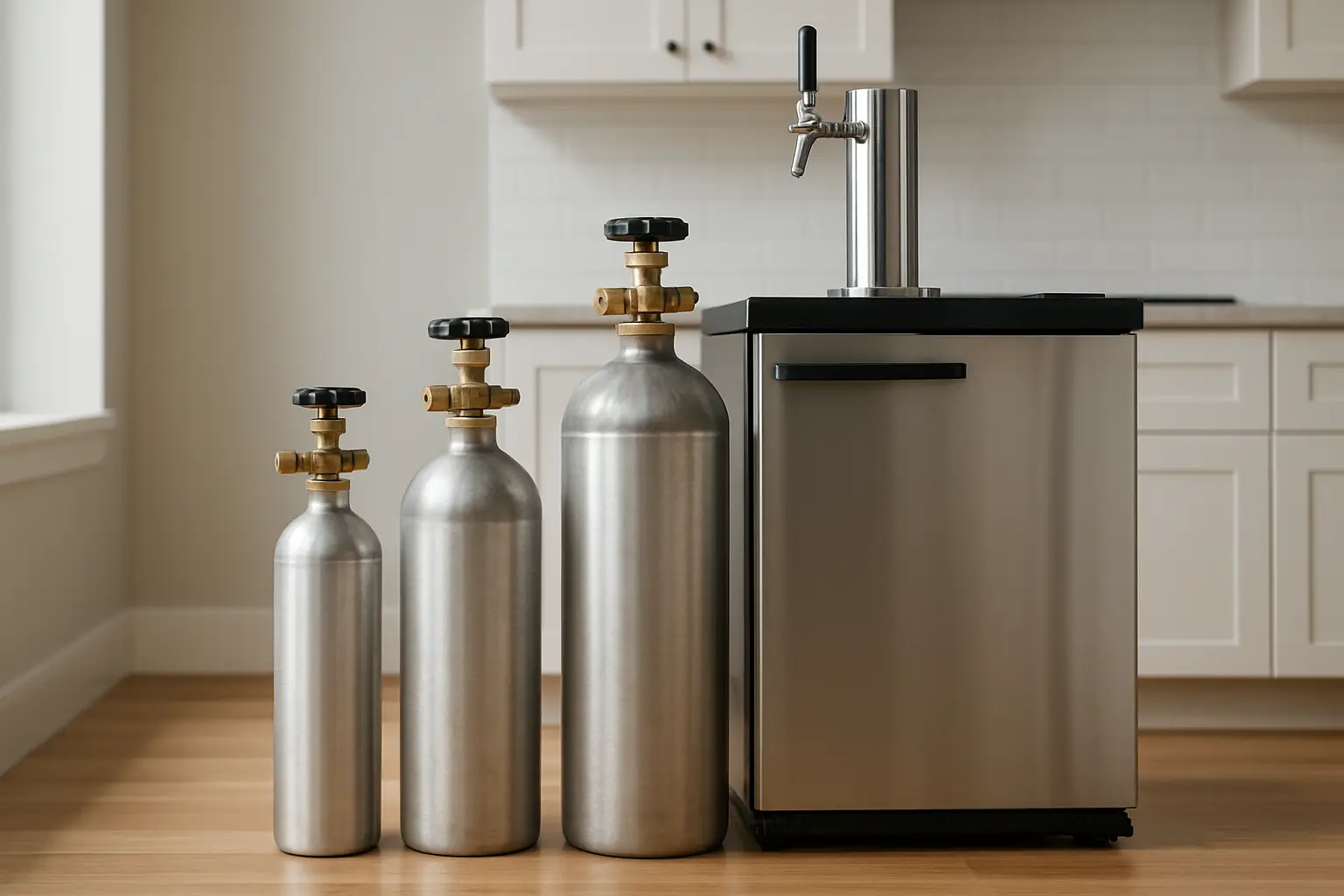
Selecting the right CO2 tank size for kegerator use depends on keg volume, available space, and refill frequency. Additionally, most home setups run on a 5 lb tank, while commercial operations typically opt for 10 lb or 20 lb cylinders to reduce downtime between refills.
Table of Contents
- Why CO2 Tank Size for Kegerator Matters More Than Most People Realize
- CO2 Tank Size for Kegerator Breakdown: 5 lb, 10 lb, and 20 lb Compared
- How to Choose the Right CO2 Tank Size for Kegerator
- Maintenance Considerations That Affect CO2 Tank Size for Kegerator Efficiency
- Things to Know
Key Takeaways
- The 5 lb CO2 tank size for kegerator use remains the most popular choice for home kegerators and fits most under-counter units.
- A 5 lb tank can dispense approximately 6 to 8 half barrels before requiring a refill.
- Larger tanks (10 lb, 20 lb) reduce refill frequency but require more physical space and may not fit inside the kegerator cabinet.
- CO2 waste from leaks and poor regulator settings is a leading cause of premature tank depletion.
- Commercial venues should factor in keg turnover rate and operating hours when selecting tank size.
- Clean draft lines preserve carbonation and reduce unnecessary CO2 use during dispensing.
Why CO2 Tank Size for Kegerator Matters More Than Most People Realize
CO2 controls carbonation levels. It maintains line pressure. Therefore, it directly affects pour quality. Choose a tank that is too small for the volume being dispensed, and refill trips become a constant inconvenience. Furthermore, select one that is too large and the cylinder may not fit in the kegerator compartment or exceed safe indoor storage thresholds.
The kegerator market has expanded substantially in recent years. Additionally, according to Value Market Research (2025), the global kegerator market reached USD 2.26 billion in 2025. The residential segment commanded a 66.48% market share. This concentration reflects a growing base of home enthusiasts navigating CO2 sizing decisions for the first time without professional guidance.
For commercial operators, the stakes are higher. Inconsistent CO2 pressure translates to foamy pours. Off-flavor beer and wasted product result from poor pressure control. In contrast, commercial venues need the correct beer line cleaning process. This approach is equally critical to selecting the right tank size and maintaining foundational system performance.
CO2 Tank Size for Kegerator Breakdown: 5 lb, 10 lb, and 20 lb Compared
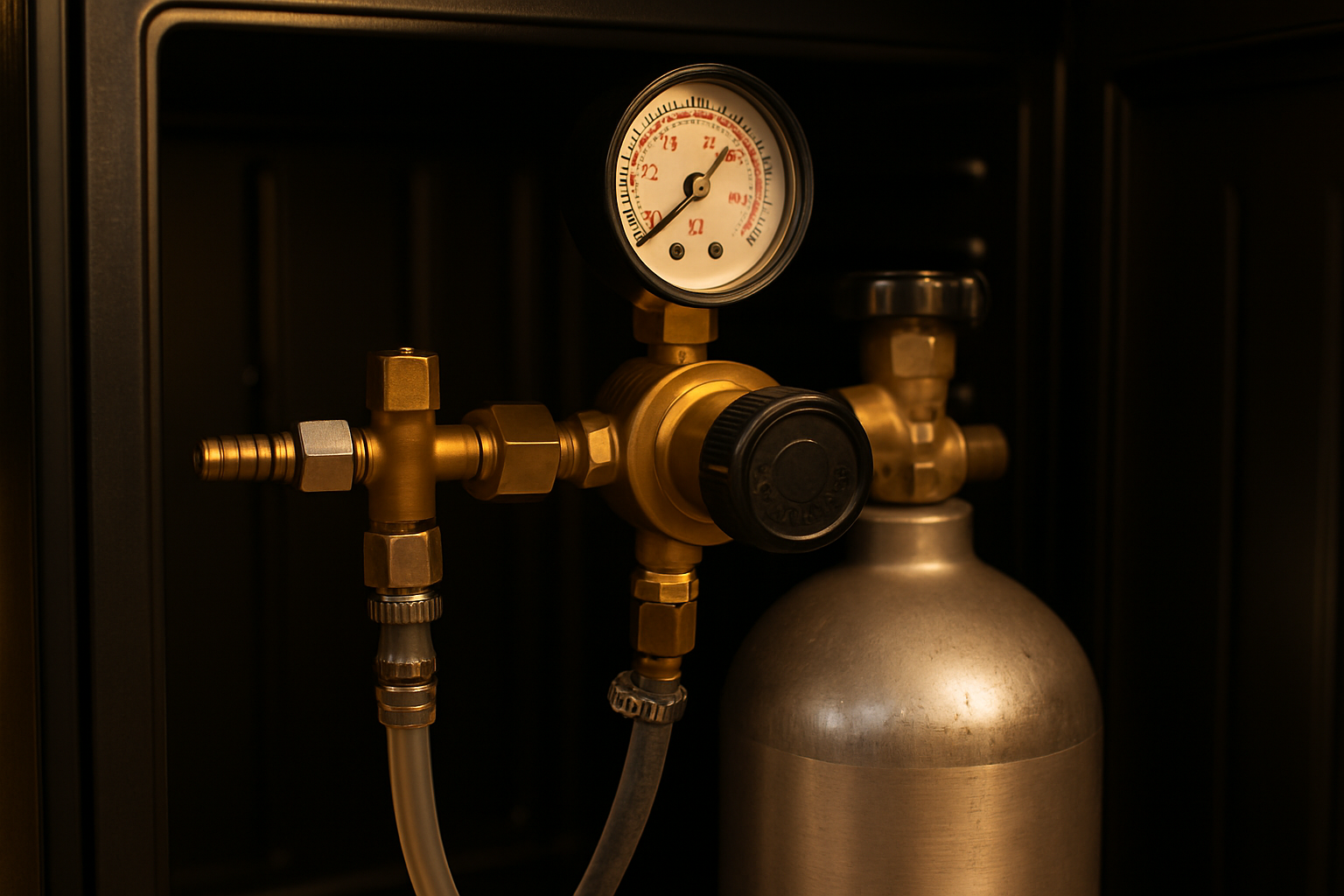
CO2 tanks are measured by the weight of CO2 they hold, not total cylinder weight. Industry guidance from Renny’s Draft Solutions and CryoFX provides practical frameworks for understanding the three most common sizes used in kegerator applications:
| Tank Size | Approx. Height | Approx. Diameter | Best Use Case |
|---|---|---|---|
| 5 lb | 18-20 inches | 5 inches | Home kegerators, small setups |
| 10 lb | 22-24 inches | 6 inches | Home or light commercial use |
| 20 lb | 28-30 inches | 7-8 inches | Commercial bars, high-volume venues |
The 5 lb CO2 tank size for kegerator systems remains the most popular choice for home use. Per guidance from Storables and KegWorks, a 5 lb tank can typically dispense 6 to 8 half barrels before needing a refill. This capacity is more than sufficient for a casual home user.
The 10 lb tank doubles that capacity. Additionally, it increases the physical footprint only slightly. Many users who entertain frequently or run a dual-tap kegerator find stepping up to the 10 lb size cuts refill frequency in half without creating storage problems.
The 20 lb tank is better suited to commercial environments. Moreover, it can dispense significantly more volume before requiring a refill. However, its height often exceeds the internal space of standard home kegerator cabinets. Therefore, it typically must be stored externally and chained or secured to a wall per safety regulations.
How to Choose the Right CO2 Tank Size for Kegerator
Choosing the correct CO2 tank size for kegerator use involves three key variables:
1. Keg Volume and Turnover
A half-barrel keg holds 15.5 gallons of beer. If the kegerator is dispensing one keg per month, a 5 lb tank is likely sufficient. In contrast, higher turnover, such as multiple kegs per week in a commercial setting, calls for 10 lb or 20 lb capacities. Alternatively, consider a manifold system tied to an external bulk CO2 supply.
2. Physical Space
Many kegerator units are designed to house a 5 lb cylinder inside the cabinet. Furthermore, larger tanks must sit outside the unit. This setup requires CO2 line extensions and appropriate ventilation. Per guidance from Alizee Cylinders, users should always measure internal cabinet height before purchasing a larger tank. Additionally, consider investing in a complete beer line cleaning kit to maintain the system.
3. Refill Accessibility
In urban markets like New York City and the surrounding metro area, CO2 refills are generally accessible through homebrew shops and gas suppliers. In more rural locations, longer distances between refill stations make larger tank sizes more practical. Therefore, minimize how often refills are needed.
Maintenance Considerations That Affect CO2 Tank Size for Kegerator Efficiency
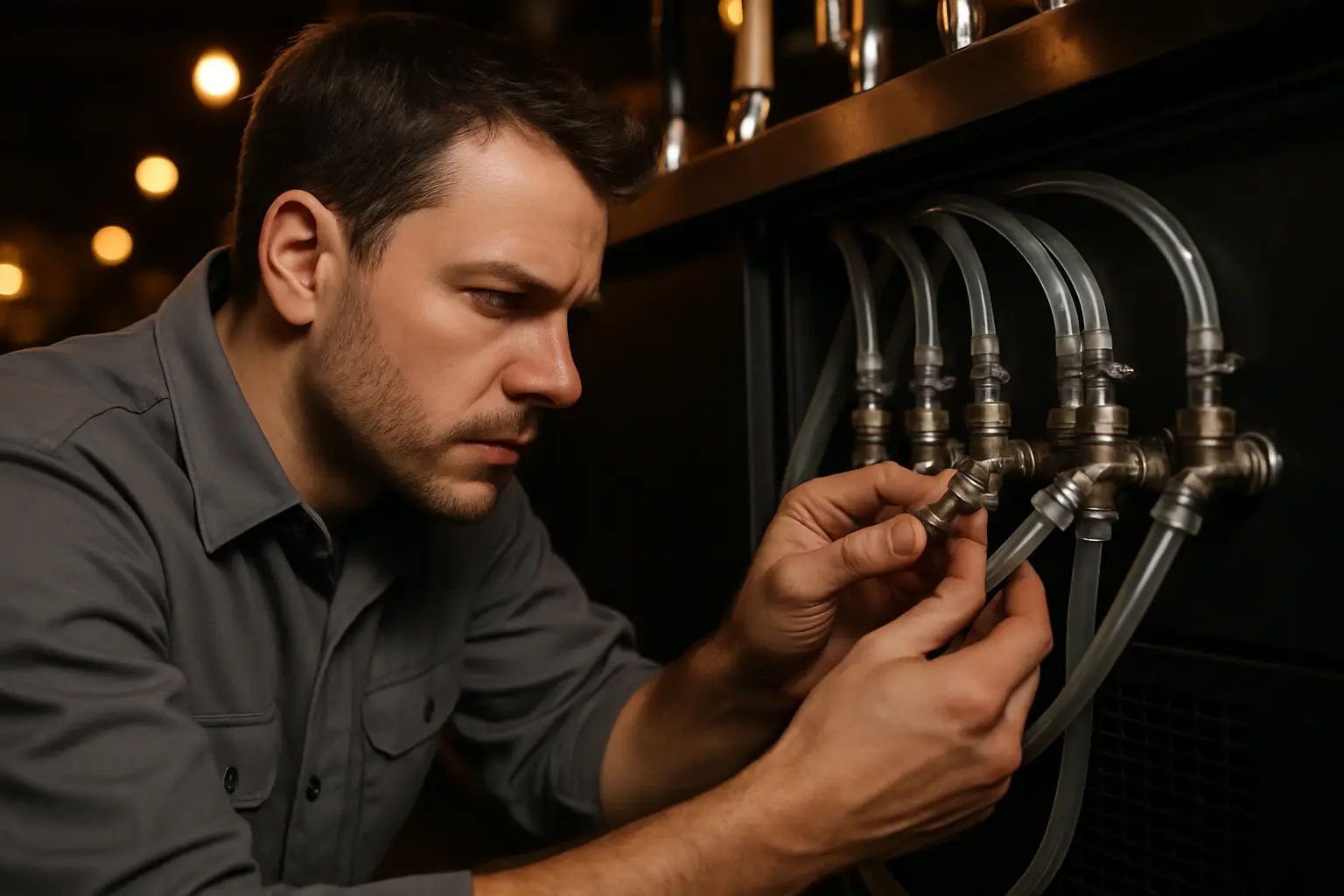
CO2 consumption is not purely a function of keg volume. Moreover, draft system condition plays a significant role. Leaking fittings cause issues. Worn seals create problems. Dirty beer lines force the regulator to work harder. All of these factors accelerate CO2 depletion and distort pour quality.
Using the correct beer line cleaning chemicals is essential for preserving system integrity. Furthermore, buildup inside the lines creates resistance. This affects carbonation and flow rate. For home operators who want step-by-step guidance, understanding how to clean draft beer lines at home is a practical starting point. This knowledge reduces pressure fluctuations that can otherwise deplete CO2 faster than expected.
Commercial venues should follow a structured maintenance approach. Additionally, align practices with industry recommendations, typically every two weeks. This maintains both pour quality and CO2 efficiency. In addition, a consistent maintenance schedule extends equipment life and improves overall performance.
Things to Know
- CO2 tank weight listed on labels refers to the gas inside, not the total cylinder weight. A full 5 lb tank weighs closer to 10 to 15 lbs total depending on the cylinder.
- Tanks must be hydrostatically tested every 5 years in the United States. Many refill stations will refuse to fill an out-of-date cylinder.
- CO2 and nitrogen (or blended gas) are not interchangeable. Stout-style beers often use a nitrogen mix, which requires a separate regulator and tank.
- Running a tank completely empty can allow moisture into the cylinder. This accelerates internal corrosion and may compromise future fills.
- Regulator quality matters as much as tank size. A low-quality regulator can allow CO2 to bleed continuously even when the system is idle, wasting gas regardless of tank capacity.
Start Dispensing Better Beer With the Right System Support
Beer Line Cleaning USA works with bars, restaurants, taprooms, breweries, and event venues across New York, New Jersey, and Connecticut. Furthermore, they keep draft systems running cleanly and efficiently. A poorly maintained system undermines even the most carefully selected CO2 setup.
Contact Beer Line Cleaning USA to request a free quote on draft system cleaning, maintenance, or equipment consultation. Tell the team about your current setup and they will identify exactly what your system needs.
Frequently Asked Questions
Q: Can I use a 20 lb CO2 tank inside a standard home kegerator?
Most standard home kegerator cabinets cannot accommodate a 20 lb tank internally due to height restrictions.
A 20 lb cylinder typically stands 28 to 30 inches tall. This exceeds the internal space of most residential units. However, you can store it externally with an extended CO2 line. The tank must be secured upright and kept in a ventilated area.
Q: How long does a 5 lb CO2 tank last in a kegerator?
A 5 lb tank generally lasts through 6 to 8 half-barrel kegs under normal dispensing conditions.
Actual duration varies based on line condition, regulator accuracy, and whether leaks exist in the system. In contrast, poorly maintained setups may exhaust a tank significantly faster.
Q: Does temperature affect CO2 tank performance?
Yes, cold temperatures reduce CO2 pressure inside the tank, which can affect dispensing consistency.
Keeping the tank in a stable temperature environment helps. Additionally, using a quality dual-gauge regulator allows operators to monitor and compensate for pressure changes before they affect pour quality.
Q: How much does it cost to refill a CO2 tank in the US?
Refill costs vary by location and tank size, but typically range from $15 to $50 for common home kegerator sizes.
Prices depend on the local supplier and whether the user exchanges the cylinder or refills the same one. Moreover, urban areas like NYC often have more competitive pricing due to supplier density.
Q: Is it safe to store a CO2 tank inside a kegerator?
Yes, storing a properly sealed CO2 tank inside the kegerator cabinet is generally safe for residential use.
The tank should be secured upright. Additionally, the valve should remain closed when not in use. Furthermore, the space should allow for basic air circulation. Commercial facilities should consult local fire and safety codes for any applicable storage regulations.
The Bottom Line on CO2 Tank Size for Kegerator Use
Selecting the right CO2 tank size for kegerator systems is a practical decision rooted in volume, space, and maintenance habits. For most home users, the 5 lb tank is the sensible default. In contrast, commercial operations dispensing multiple kegs weekly should step up to 10 lb or 20 lb capacities. This approach reduces operational interruptions. Additionally, all operations benefit from understanding the fundamentals of maintaining clean lines with proper equipment and the right beer line cleaning chemicals.
Regardless of tank size, system cleanliness remains the overlooked factor. It determines how efficiently CO2 is used. Operators who invest in proper maintenance consistently get more from every fill.