
Table of Contents
- What Makes a Guinness Keg Different From a Standard Keg?
- Which Coupler Does a Guinness Keg Need?
- What Beer Gas Does a Guinness Keg Require?
- How Does a Stout Faucet Create the Cascade?
- What Does a Guinness Kegerator Setup Look Like?
- How Do You Run the Two-Part Pour Step by Step?
- How Should You Train Staff on Guinness Pour Standards?
- What Causes Common Guinness Draft Problems?
- Why Does Line Cleaning Matter for a Guinness Keg?
- Frequently Asked Questions
- Get Your Guinness Line Poured Right From the First Keg
A Guinness keg does not behave like a standard domestic keg. It uses a different valve, a different gas, a different faucet, and a pour that takes about two minutes. Get one of those wrong and the pint shows it right away: thin head, harsh bubbles, or a glass that sits flat before it reaches the guest.
For bar owners, restaurant managers, and anyone building a Guinness kegerator or a commercial Guinness beer tap, the fix is not complicated. It is a matter of matching four components correctly: the U-system coupler, the beer gas, the stout faucet, and the pour technique your staff uses every shift.
Key Takeaways
- A Guinness keg requires a U-system coupler, not a standard D-system.
- Nitrogen beer gas, commonly 75/25 or 70/30, replaces straight CO2.
- A stout faucet with a restrictor disc creates the cascade.
- The two-part pour builds the head and takes about two minutes.
- Pour training and routine line cleaning keep every pint consistent.
What Makes a Guinness Keg Different From a Standard Keg?
Guinness Draught is a nitrogenated beer. It carries far less dissolved CO2 than a typical lager or IPA, and nitrogen creates the small, dense bubbles behind the creamy head. The Brewers Association notes that these qualities are only preserved through careful handling at dispense, which covers the gas blend, serving pressure, faucet, and pour.
That is why a standard CO2 setup cannot simply be pointed at a Guinness keg, since nitro tap equipment differs from standard draft hardware. A properly configured system changes four things:
- The coupler: U-system instead of the common American D-system
- The gas: a nitrogen and CO2 blend instead of straight CO2
- The faucet: a stout faucet with an internal restrictor disc
- The pour: a two-part method instead of a single continuous fill
Each one is covered below, in the order they appear in the system.
Which Coupler Does a Guinness Keg Need?

A Guinness keg uses a U-system valve, so it requires a U-system coupler. Distributors usually list the U-system coupler as the correct fit for Guinness, while other nitro stouts may use a different system. A standard American D-system coupler will not seat on a Guinness keg valve.
The coupler is where the gas line and the beer line both connect to the keg, so a poor fit or a worn seal affects the entire pour. Before the first keg arrives, confirm these points:
- The keg valve type printed on the keg or listed by the distributor
- That the coupler body, probe, and seals are in good condition
- That the gas and beer connections are tight and leak-free
- That the coupler is sanitized and cleaned on the same schedule as the rest of the system
If a venue pours several nitro or imported stouts, do not assume one coupler covers them all. Valve types vary by brand, and a mismatch is one of the most common reasons a new Guinness setup fails on day one.
What Beer Gas Does a Guinness Keg Require?
Guinness Draught is dispensed with a blend of nitrogen and carbon dioxide, usually called beer gas or Guinness gas. Published guidance varies slightly by source and system design.
A 75% nitrogen and 25% CO2 blend is the most widely cited mix, and Guinness’s own draught quality specification points to a 70/30 blend at roughly 32 to 40 PSI for kegs stored at 46 to 50°F and chilled in-line. Always confirm the exact blend and pressure with the Guinness distributor serving your account.
Three practical points matter more than the exact percentage:
- Straight CO2 will not work. It over-carbonates the beer and strips the smooth mouthfeel that defines the style.
- Straight nitrogen will not work either. Nitrogen barely dissolves in beer, so the CO2 in the blend is what keeps the keg properly carbonated.
- Pressure runs much higher than a standard system. Nitrogen is inert and insoluble, so more pressure is needed to push beer through the restrictor disc.
Beer gas also needs its own regulator setup. Cylinder valve fittings differ between nitrogen blends and CO2, so using an ordinary CO2 regulator without the correct adapter is a mistake. Cylinders should be secured upright and handled by someone trained to do so.
How Does a Stout Faucet Create the Cascade?
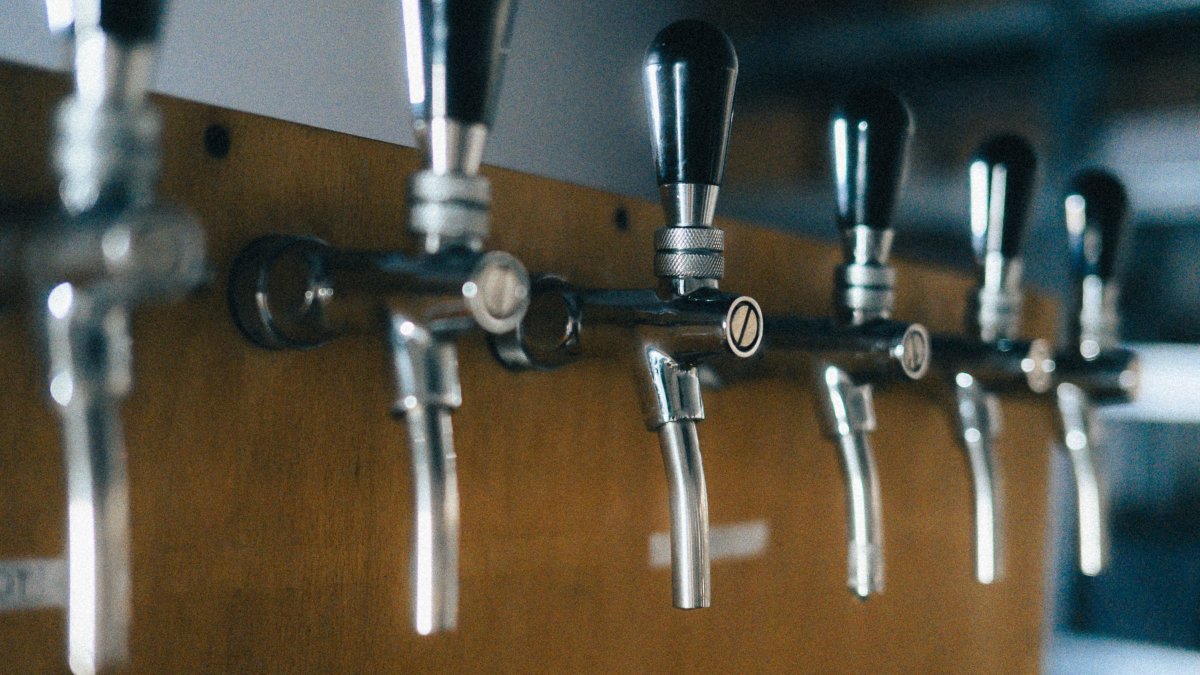
The stout faucet is what turns a high-pressure flow into a creamy pour. Inside the spout sits a restrictor disc with tiny holes. As the beer and dissolved nitrogen are forced through it, the nitrogen breaks out as millions of micro-bubbles.
A few things are worth knowing before you install one:
- A stout faucet is not a standard faucet. A regular faucet cannot create the same effect, and the two are not interchangeable on a nitro line.
- The faucet also isn’t a creamer faucet. They are built differently and should not be swapped.
- The restrictor disc needs regular cleaning. Buildup can clog the small holes, which changes the flow and the head. Micro Matic advises that the disc stay in place and be cleaned frequently.
If a Guinness beer tap suddenly pours with large bubbles, sputters, or runs slow, the faucet is often the first place to look, since stout, creamer, and standard beer faucet types each behave differently.
What Does a Guinness Kegerator Setup Look Like?

A standard kegerator ships with a D-system coupler and a CO2 regulator, so it needs conversion to serve Guinness properly. A Guinness kegerator conversion generally adds:
- A U-system coupler
- A nitrogen-capable regulator, or a regulator adapter
- A cylinder of beer gas
- A stout faucet installed on the tower or shank
Temperature deserves attention too. Guinness is typically served in the low 40s °F, which is warmer than many lager systems run. A kegerator set for a cold lager may need an adjustment, and cold beer on a nitro line can change how the head forms.
Venues planning a new build can get that layout right from the start with professional draft system installation for stout and nitro lines.
How Do You Run the Two-Part Pour Step by Step?
The two-part pour is the method most associated with Guinness. The first fill builds the beer, the rest allows the surge to settle, and the second fill finishes the head.
- Start with a clean, cool, dry glass. Residue from detergent or grease collapses the head, so glassware hygiene matters as much as the tap.
- Tilt the glass to 45 degrees under the faucet, with the spout close to the glass but never touching it or the beer.
- Pull the handle fully toward you and fill to about three-quarters, straightening the glass as it fills.
- Set the glass down and let the surge settle. The beer darkens and the head forms as the nitrogen releases.
- Top off by pushing the handle away from you. This slows the flow through the restrictor and lets the head rise to a gentle dome without spilling.
- Serve once the pint is settled and the head is dense and even.
The settle step is where most mistakes happen. Staff who rush it serve a pint with a thin or uneven head, and staff who skip the tilt create too much foam on the first pour.
How Should You Train Staff on Guinness Pour Standards?
A correct system still delivers a poor pint if every bartender pours differently. Pour training turns a technical setup into a repeatable result.
- Train every new bartender on the full sequence before they serve guests, including the angle, the settle, and the top-off.
- Pour with a timer during practice sessions until the rhythm becomes natural.
- Keep Guinness glassware separate from greasy kitchenware and rinse thoroughly.
- Teach the faucet position. Fully forward or fully back each have a purpose, and half-pulled handles cause turbulence.
- Check the first pour of each shift. A bad first pull often points to a warm line, a dirty faucet, or a pressure problem.
- Log gas pressure, cooler temperature, and cleaning dates so problems can be traced instead of guessed at.
Consistency is also a revenue issue. A pint that pours foamy or thin gets discarded, and wasted beer adds up across a busy week.
What Causes Common Guinness Draft Problems?
|
Symptom |
Likely Cause |
|
Large, loose bubbles |
Worn or dirty restrictor disc, wrong faucet, or pressure too low |
|
Thin or fast-collapsing head |
Dirty glassware, wrong gas blend, or rushed top-off |
|
Slow or sputtering pour |
Clogged disc, kinked line, or pressure mismatch |
|
Flat or lifeless taste |
Wrong gas, gas leak, or low cylinder |
|
Sour or off aroma |
Dirty lines, faucet, or coupler |
If symptoms continue after the basics are checked, the cause is usually in the line, the regulator, or the hardware rather than the keg itself, and sour flavors can also trace back to carryover from a previous product.
Why Does Line Cleaning Matter for a Guinness Keg?
Nitro lines collect buildup just like any other draft line. Yeast, bacteria, and beer stone create rough surfaces that disrupt flow and can lead to off-flavors like buttery diacetyl in the pour. The Brewers Association Draught Beer Quality Manual is the standard reference for cleaning intervals and system care, and a two-week cleaning cycle is widely followed across the industry.
For Guinness, the faucet and restrictor disc deserve special attention because they sit at the point where the pour is made. The coupler, the line, and the faucet should all be disassembled, cleaned, and reassembled correctly. Treating the nitro line as an afterthought is a quick way to lose the quality that justified the setup.
Frequently Asked Questions
How long does a Guinness keg last once it is tapped?
It depends on keg freshness, storage temperature, gas supply, and line cleanliness. A sealed gas system with steady cooling keeps beer fresher than one with leaks or warm spots. Follow the brewer’s date guidance and rotate stock.
Should a Guinness keg rest after delivery before it is tapped?
Yes. Moving a keg stirs up the contents, so letting it sit upright at serving temperature helps avoid unstable pours. Venues in New York, New Jersey, and Connecticut with tight cooler space should plan delivery timing around it.
How many pints does a Guinness keg hold?
A 15.5-gallon half barrel holds about 124 sixteen-ounce pours in theory. Real yield runs lower once foam, spillage, and line loss are counted. Confirm keg size with the distributor.
Can nitro cold brew or kombucha share a line with Guinness?
Sharing risks flavor carryover and complicates cleaning. Many operators dedicate a separate line to each product, much like restaurants running wine kegerator systems. A draft technician can map out the layout.
How long does a beer gas cylinder last on a Guinness line?
It varies with cylinder size, pour volume, serving pressure, and any leaks. Beer gas runs at higher pressure than straight CO2, so cylinders can empty faster than expected. Bars and restaurants across the NYC metro area often track cylinder levels alongside cooler temperature and cleaning dates.
Get Your Guinness Line Poured Right From the First Keg
A properly built Guinness system protects flavor, reduces waste, and gives staff a pour they can repeat under pressure. Beer Line Cleaning USA works with bars, restaurants, breweries, and venues across New York, New Jersey, and Connecticut.
Dealing with foam, thin heads, or slow pours on a nitro line? A technician can inspect the coupler, gas setup, and stout faucet and get the line pouring correctly.