What’s In This Guide
- What Is a Draft Beer Cleaning Log?
- Why Cleaning Records Matter for Putnam County Bars and Restaurants
- What to Track Between Professional Services
- Common Recordkeeping Mistakes That Undermine Draft Quality
- Building a Simple Draft Beer Cleaning Log
- Documentation, Scheduling, and Coordination With Professional Cleanings
- When to Bring in a Professional Draft System Provider
- Frequently Asked Questions
- Ready to Build a Reliable Cleaning Log for Your Draft System?
Bar managers and operations teams may clean draft lines on schedule without keeping a written record of when, how, or by whom the work was done. That gap can create operational risk. Without a cleaning log, staff turnover, ownership changes, or a missed cycle can leave teams unsure when a line was last serviced.
A draft beer cleaning log helps address this by turning routine maintenance into a documented, repeatable process. For Putnam County bars and restaurants managing multiple taps, seasonal staff, and busy service hours, that documentation helps support beer quality and accountability while giving operators a clear record to reference when something goes wrong.
Quick Facts
- A draft beer cleaning log tracks dates, technician or staff initials, lines serviced, and any noted issues for every cleaning cycle.
- Documented cleaning intervals help operators catch missed cycles before flavor or foam problems reach the guest.
- Consistent recordkeeping supports staff accountability, especially in bars with rotating shifts or seasonal employees.
- Cleaning logs give professional draft technicians a baseline to reference during service visits and troubleshooting.
- Written records give Putnam County operators a clear maintenance history for internal review and help document routine beer line maintenance.
What Is a Draft Beer Cleaning Log?
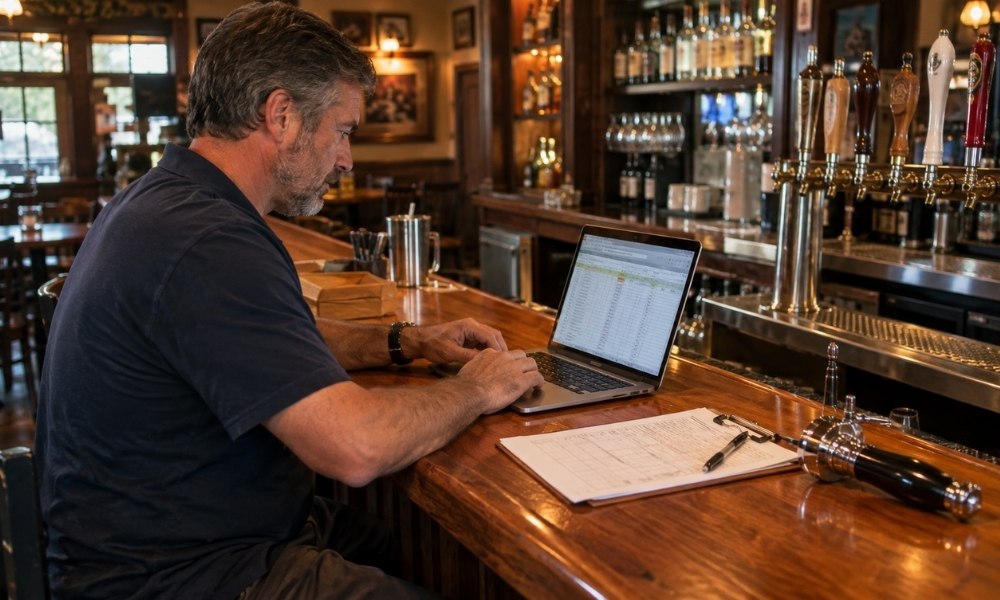
A draft beer cleaning log is a written or digital record that tracks each time draft lines, faucets, and related components are cleaned. It typically lists the date of service, which lines or taps were cleaned, who performed the work, and any observations worth flagging for the next cycle.
The log is not a substitute for proper draft beer system cleaning itself. It creates a record of when the work was completed and gives the next person, whether that is a manager, a new hire, or a professional technician, a starting point instead of a guess.
A basic entry usually includes:
- Date of service
- Lines or taps cleaned
- Technician or staff member name or initials
- Cleaning method or service type: for example, recirculation or canister cleaning, and whether the work was performed by trained staff or a professional technician
- Notes on flow, foam, taste complaints, or equipment condition observed during service
Why Cleaning Records Matter for Putnam County Bars and Restaurants
Consistent draft beer system cleaning supports beer quality, and clear records help operators document whether they are following cleaning requirements for draft beer lines. Maintaining a cleaning log turns an assumed routine into a verifiable record, helping protect flavor, reduce avoidable waste, and strengthen staff accountability across shifts.
When beer lines are not cleaned properly, biofilm can develop quickly, while mineral deposits such as beerstone can build up over time and affect flavor and draft system performance. The Brewers Association recommends cleaning beer lines at least every 14 days and using acid cleaning every three months to remove beerstone.
Using a cleaning log also allows bars and restaurants to verify that this maintenance schedule is actively followed rather than presumed.
For a multi-tap operation in Putnam County, a log also helps with:
- Staff accountability. Shift managers can verify who last serviced the lines and when.
- Faster troubleshooting. If a tap starts producing excessive foam or the beer tastes off, the log narrows down whether the issue is timing-related or something else.
- Continuity during turnover. New hires or new management can pick up the maintenance schedule without relying on memory or word of mouth.
- Coordination with professional cleaners. A technician arriving for scheduled service can review recent notes instead of starting from zero.
What to Track Between Professional Services
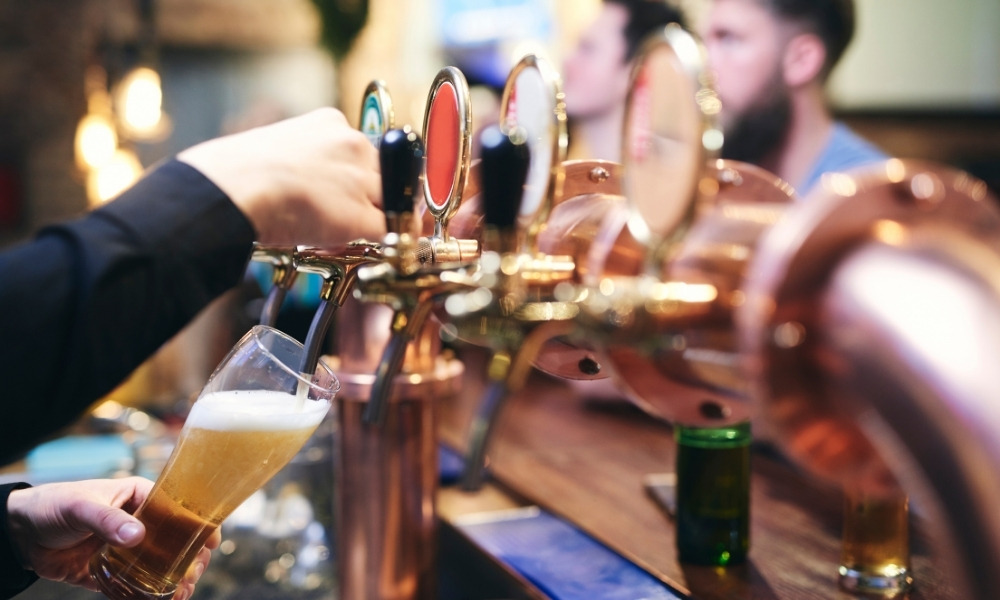
Operators should track cleaning dates, staff performing the work, lines serviced, and any performance issues noticed between each professional visit. This creates a continuous record instead of isolated snapshots tied only to scheduled service dates.
Between professional cleanings, a bar or restaurant log should capture:
- Daily or shift-level observations. Foam inconsistency, slow pours, or off-flavor complaints from guests or staff.
- Faucet and coupler condition. Visible residue, sticking handles, or leaks around connections.
- Temperature checks. Record beer temperature in the keg cooler and at the point of dispense. The Brewers Association recommends 36°F to 38°F and notes that beer above the recommended temperature can cause excessive foaming.
- Keg change notes. Date the keg was tapped, any fobbing or foam bursts during changeover, and coupler seating issues.
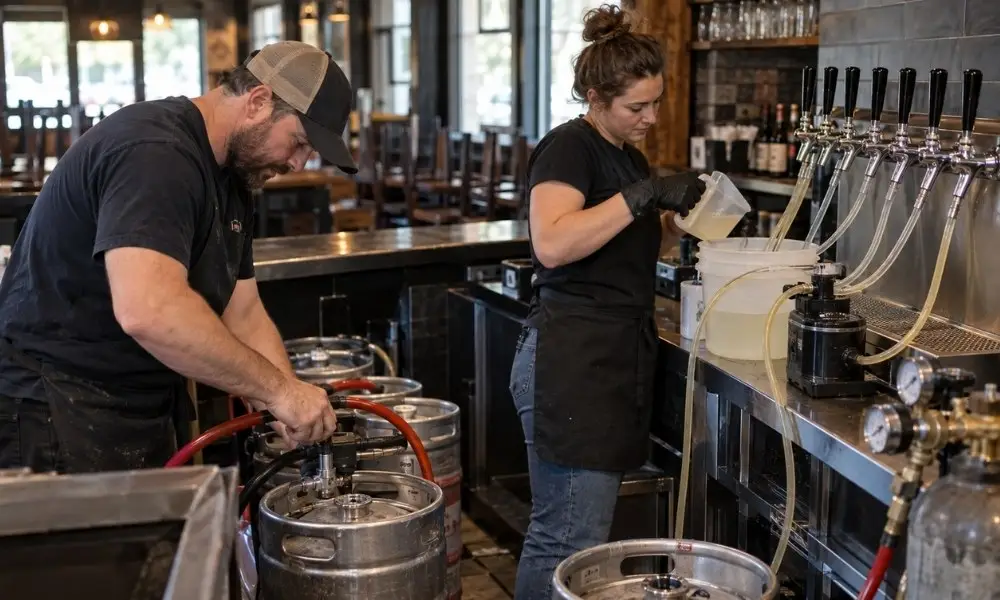
- Staff-performed maintenance. Record any authorized cleaning, inspection, or component maintenance completed between professional service visits, along with who performed it. Chemical line cleaning should only be performed by trained personnel.
Tracking this level of detail gives a business a fuller picture than a bare cleaning date. It also gives a professional technician useful context before a scheduled visit, since patterns like recurring foam on one tap or a consistently slow pour often point to a specific mechanical or hygiene issue.
READ MORE: Beer Line Cleaning Checklist for Bars and Restaurants
Common Recordkeeping Mistakes That Undermine Draft Quality
One common mistake is relying on memory instead of a written log, which can lead to missed or delayed cleaning cycles. When a cycle is missed, the system goes longer between cleanings, increasing the opportunity for buildup and draft quality problems.
Other frequent gaps include:
- No documented owner for the task. If cleaning responsibility is not assigned to a specific role or shift, it tends to fall through during busy weeks.
- Verbal-only handoffs. Passing along “the lines were cleaned last week” without a written date creates confusion the moment staff changes.
- Skipping faucet and coupler details. Logs that only track the line itself miss the small components that collect residue quickly.
- No record of professional visits. In-house notes and professional service dates should live in the same log, not separate systems that never get compared.
- Inconsistent formatting. A log that changes format from month to month makes it harder to spot patterns, like a tap that foams every few weeks regardless of cleaning.
Left unaddressed, these gaps do not just create paperwork problems. Dirty lines and inconsistent maintenance can contribute to off-flavors and poor pour performance, which may increase beer waste and affect the guest experience and operating costs.
Building a Simple Draft Beer Cleaning Log

A workable cleaning log does not need to be complicated. A single spreadsheet or a printed sheet posted near the draft system, updated consistently, is usually enough for most bars and restaurants.
A practical structure includes:
|
Date |
Lines/Taps Serviced |
Performed By |
Method |
Notes |
To build a log that actually gets used:
- Assign ownership. Designate a manager or lead bartender responsible for confirming entries.
- Post it near the system. A log that is easy to reach gets filled out more consistently than one buried in a back office.
- Standardize the format. Use the same columns every time so patterns are easy to spot over months, not just weeks.
- Review it on a set cadence. A weekly or biweekly review catches gaps before they turn into missed cycles.
- Keep professional service records in the same document. This avoids a split record where in-house notes and technician visits never get cross-checked.
Documentation, Scheduling, and Coordination With Professional Cleanings
Cleaning logs work best when they are shared with the professional team handling scheduled service, not kept as a purely internal document. Giving a technician access to recent notes helps them evaluate whether an issue is new or recurring before they start.
This coordination matters most when:
- A tap has recurring foam or flavor complaints. Recent log entries can help a technician determine whether the pattern lines up with cleaning timing, temperature, or a mechanical issue.
- Ownership or management changes. A documented history prevents new decision-makers from starting the maintenance schedule blind.
- A business is preparing for a health inspection or internal compliance review. The Putnam County Department of Health inspects food service establishments for facility cleanliness and sanitation. A documented beer line maintenance history can provide a useful internal record, but any specific beer-line cleaning or recordkeeping requirement should be confirmed directly with the Department of Health.
When to Bring in a Professional Draft System Provider
A professional draft system provider should be brought in when recurring issues appear in the log, when internal cleaning cannot fully address buildup, or when a business needs a documented, standardized cleaning cycle it can rely on.
Water rinsing alone is not a substitute for proper draft beer system cleaning. The Brewers Association recommends chemical line cleaning by trained personnel, with caustic cleaning used for organic buildup and periodic acid cleaning used to remove beerstone.
Signs it is time to schedule professional service include:
- The log shows repeated foam or flavor complaints despite regular draft beer system cleaning.
- Cleaning has been inconsistent or undocumented for more than one cycle.
- A new draft system or renovated bar area needs a maintenance schedule established from the start.
- Ownership wants a documented history of professional cleaning services for internal recordkeeping or future reference.
Frequently Asked Questions
How long should a bar keep draft beer cleaning records?
There is no single universal retention period for draft beer cleaning logs. Businesses can establish an internal retention policy that keeps enough history to identify recurring maintenance issues, verify past service, and provide continuity when managers or service providers change. Any specific regulatory recordkeeping requirement should be confirmed with the applicable local health authority.
Should each draft line have its own cleaning record?
It can be helpful for bars with larger draft systems. Identifying individual taps or lines makes it easier to trace recurring foam, flavor, or flow problems to a particular part of the system instead of treating every issue as systemwide.
Should keg changes be recorded in the same log?
They can be. Recording keg changes alongside cleaning and maintenance notes can provide useful context when troubleshooting a sudden change in foam, flavor, or pour performance. Larger operations may choose to keep keg-change records separately while using consistent tap or line numbers across both records.
What happens if a cleaning entry is missed?
The missing entry should not be recreated from memory unless the cleaning can be verified. Instead, note the gap, confirm the system’s current condition, and determine whether cleaning should be scheduled. Clear records are more useful than entries based on uncertain dates.
Can cleaning logs help identify recurring draft system problems?
Yes. Reviewing several weeks or months of records can reveal patterns involving the same tap, repeated foam complaints, temperature changes, leaks, or other performance issues. Those patterns can give a draft system technician useful information when diagnosing the underlying problem.
Ready to Build a Reliable Cleaning Log for Your Draft System?
Beer Line Cleaning USA supports bars and restaurants across Putnam County with scheduled draft system cleaning that fits into a documented maintenance routine. Our team works directly with operators to keep service dates consistent and easy to track.
Contact us to schedule draft system cleaning and start building a documented maintenance routine for your bar or restaurant.