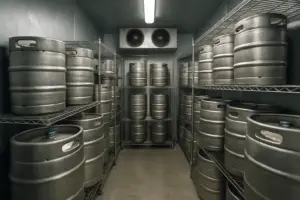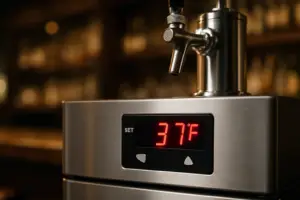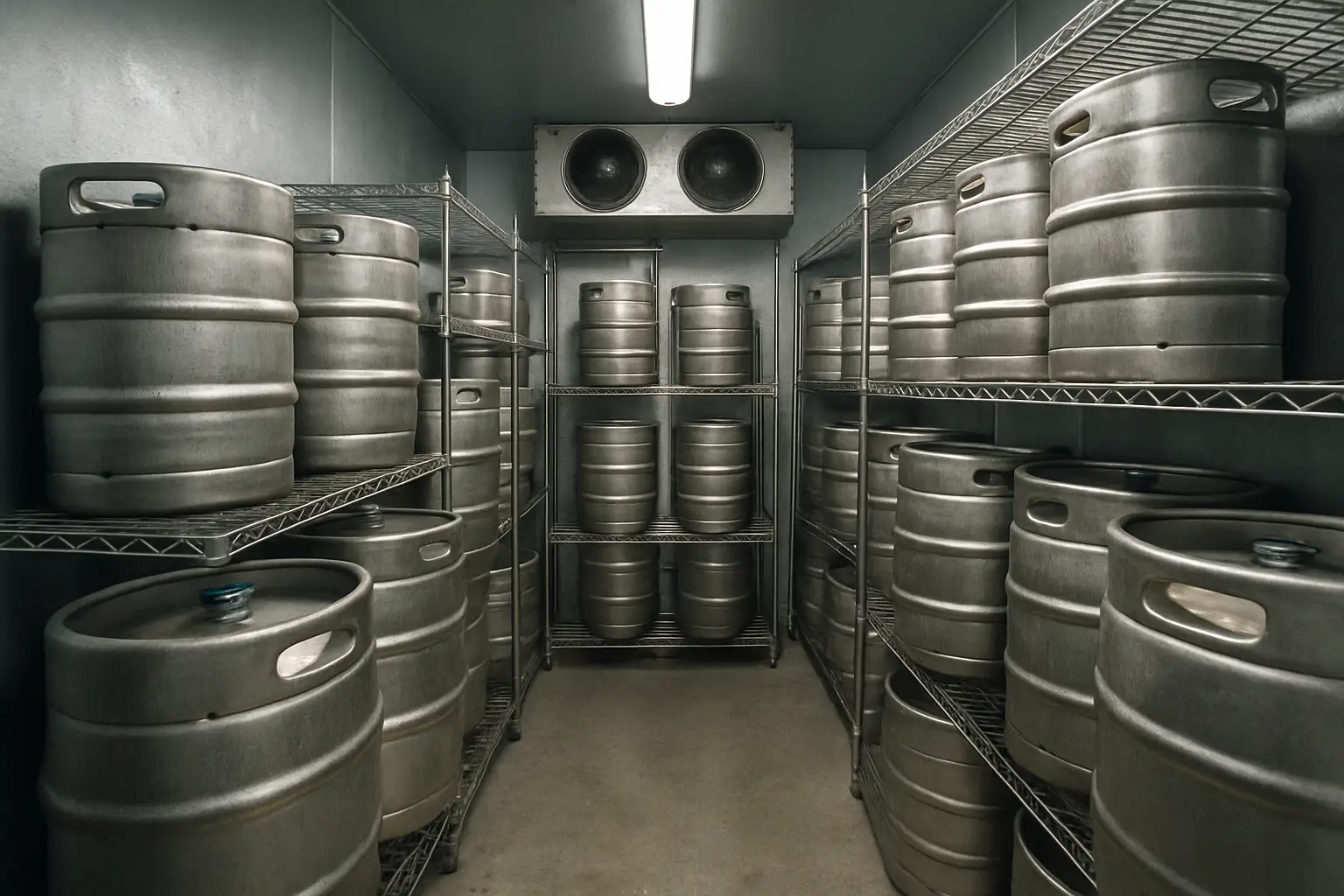
The best temperature for keg beer sits between 36°F and 38°F for storage. Most draft systems target this range to preserve flavor and prevent foaming. Getting this right matters more than most bar and restaurant operators realize, because even a few degrees off can ruin a pour, accelerate spoilage, and frustrate customers.
Table of Contents
- Why Temperature Is the Deciding Factor in Draft Quality
- The Recommended Temperature Ranges for Best Temperature for Keg Beer by Style
- Storage vs. Serving Temperature: Understanding the Difference
- What Happens When Best Temperature for Keg Beer Goes Wrong
- Kegerator and Draft System Settings
- How Line Cleanliness Ties Into Best Temperature for Keg Beer Performance
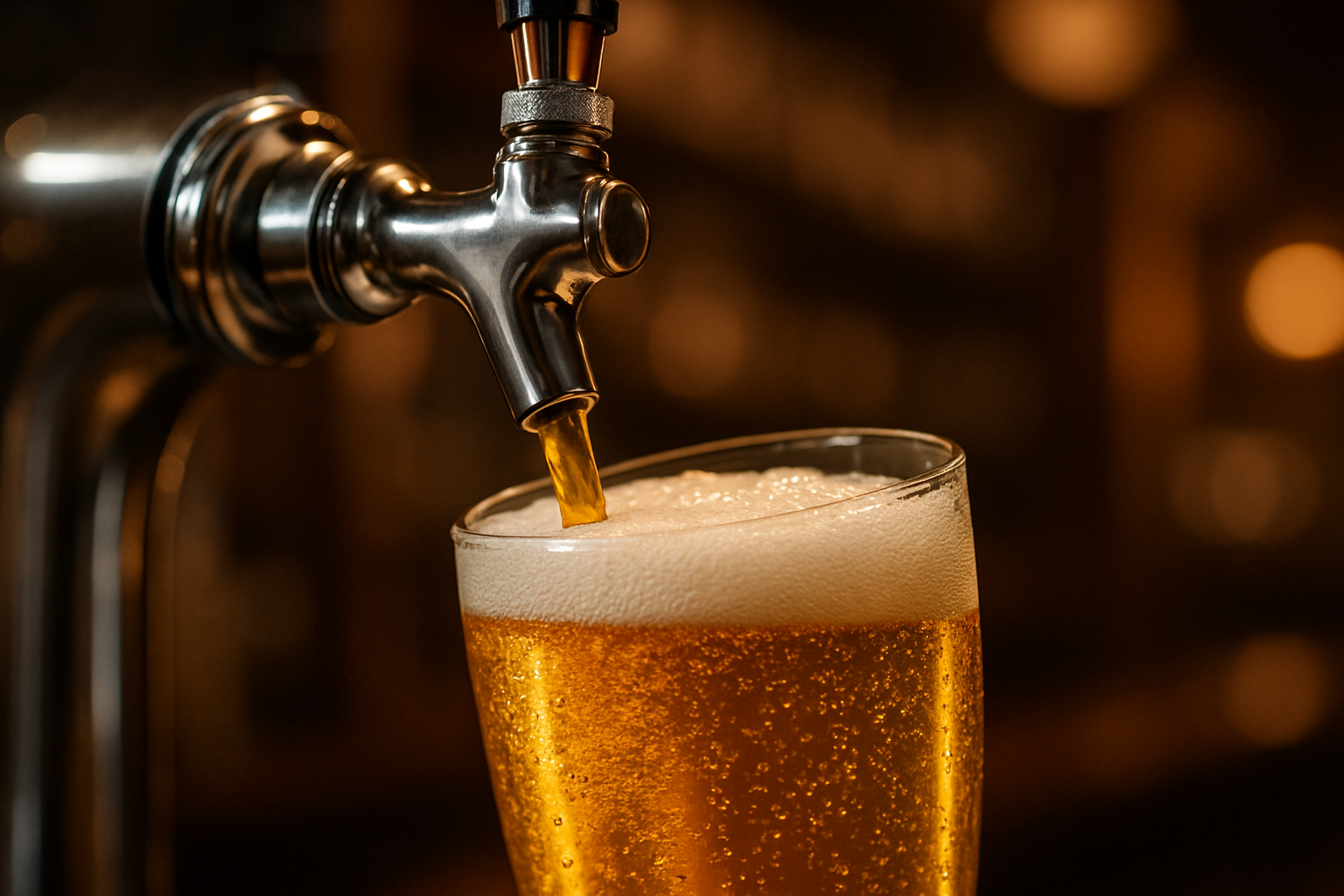
Why Temperature Is the Deciding Factor in Draft Quality
Temperature is the single most controllable variable in a draft beer system. CO2 pressure, line length, and faucet design all play supporting roles. However, none of them can compensate for a keg stored or served at the wrong temperature. When a keg is too warm, dissolved CO2 comes out of solution too quickly. This produces excessive foam at the tap. When it is too cold, some beer styles lose their aromatic complexity and flavor definition before the glass even reaches the customer.
According to Micromatic, most keg draft beer packaged in the United States is not pasteurized. Therefore, it must be kept cold, preferably between 36°F and 38°F, to prevent spoilage and preserve product integrity. This is not merely a preference. It is a food safety and quality baseline for any establishment serving draft beer.
The practical consequences extend beyond foam. Additionally, warm beer that sits in improperly cooled lines picks up off-flavors. It loses carbonation consistency and can harbor bacterial growth if lines are not maintained with the help of how to clean beer lines. For bars, restaurants, breweries, and taprooms, temperature control directly ties to product quality. It also affects customer satisfaction and profit margins on every pint sold.
The Recommended Temperature Ranges for Best Temperature for Keg Beer by Style
Not every beer should be served at the same temperature. However, storage requirements are fairly uniform. The ideal temperature for storing beer is between 36°F and 40°F, according to industry guidance published by Danby (July 2024). Serving temperatures vary meaningfully by style. The table below outlines widely accepted serving ranges drawn from industry consensus:
| Beer Style | Recommended Serving Temperature |
|---|---|
| American Lager / Light Lager | 34°F to 38°F |
| Pilsner | 38°F to 42°F |
| IPA (American) | 45°F to 50°F |
| Pale Ale | 44°F to 50°F |
| Wheat Beer | 40°F to 45°F |
| Stout / Porter | 50°F to 55°F |
| Belgian Ale | 50°F to 55°F |
| Sour / Farmhouse Ale | 45°F to 55°F |
These ranges reflect how hop aromatics, malt character, and carbonation present differently at varying temperatures. A properly chilled lager should be bracingly cold. In contrast, a robust stout served too cold will taste flat and muted, with none of the roasted complexity the brewer intended. According to the Beer Serving Temperature Chart published by Drink Countr (2026), even small deviations of 3°F to 5°F can noticeably shift how a beer tastes to an experienced drinker.
For most commercial draft systems, the practical approach is straightforward. Store all kegs in the 36°F to 38°F range. Then adjust serving temperature at the line or faucet level for specialty styles if the system allows it. Long-draw glycol systems, in particular, give operators more control over beer line cleaning frequency and this variable.
Storage vs. Serving Temperature: Understanding the Difference
Storage temperature and serving temperature are related but distinct concepts. Conflating them causes real operational problems. Storage temperature refers to what the keg experiences while sitting in the cooler. Serving temperature is what reaches the glass after traveling through the beer lines, shanks, and faucets.
In a direct-draw system, storage and serving temperatures are closely aligned. The keg is directly below or behind the tap. The beer travels only a short distance through cooled lines. Therefore, if the keg is at 38°F, the pint will likely pour close to that temperature as well.
In a long-draw system, the situation differs significantly. The keg may be located in a walk-in cooler hundreds of feet from the tap. Without proper glycol cooling running through the trunk line, the beer picks up heat as it travels. As a result, it arrives at the faucet several degrees warmer than it left the keg. This is one of the most common sources of over-foaming complaints in bars and restaurants with remote cooler setups.
Knowing how to change a keg correctly also plays a role here. Additionally, swapping a keg improperly, such as shaking it or moving it aggressively right before tapping, temporarily warms the beer. This disrupts CO2 equilibrium. Allowing a freshly tapped keg to rest for a short period before serving gives the temperature and pressure a chance to stabilize.
What Happens When Best Temperature for Keg Beer Goes Wrong
Understanding failure modes is often more instructive than reviewing ideal conditions. Here is what operators typically observe when temperature management breaks down:
Too Warm (above 45°F for lagers, above 55°F for ales):
- Excessive foaming at the tap, leading to product waste and slower service
- Loss of carbonation consistency from glass to glass
- Faster spoilage in unpasteurized kegs
- Off-flavors, particularly buttery or sour notes, caused by accelerated bacterial activity
- CO2 coming out of solution in the lines rather than in the glass
Too Cold (below 33°F for most styles):
- Beer begins to partially freeze in lines or at the faucet
- Aromatic compounds in hop-forward beers are suppressed
- Some styles, particularly darker ales and stouts, taste thin and lifeless
- Over-carbonation perception because cold CO2 does not dissipate normally at the faucet
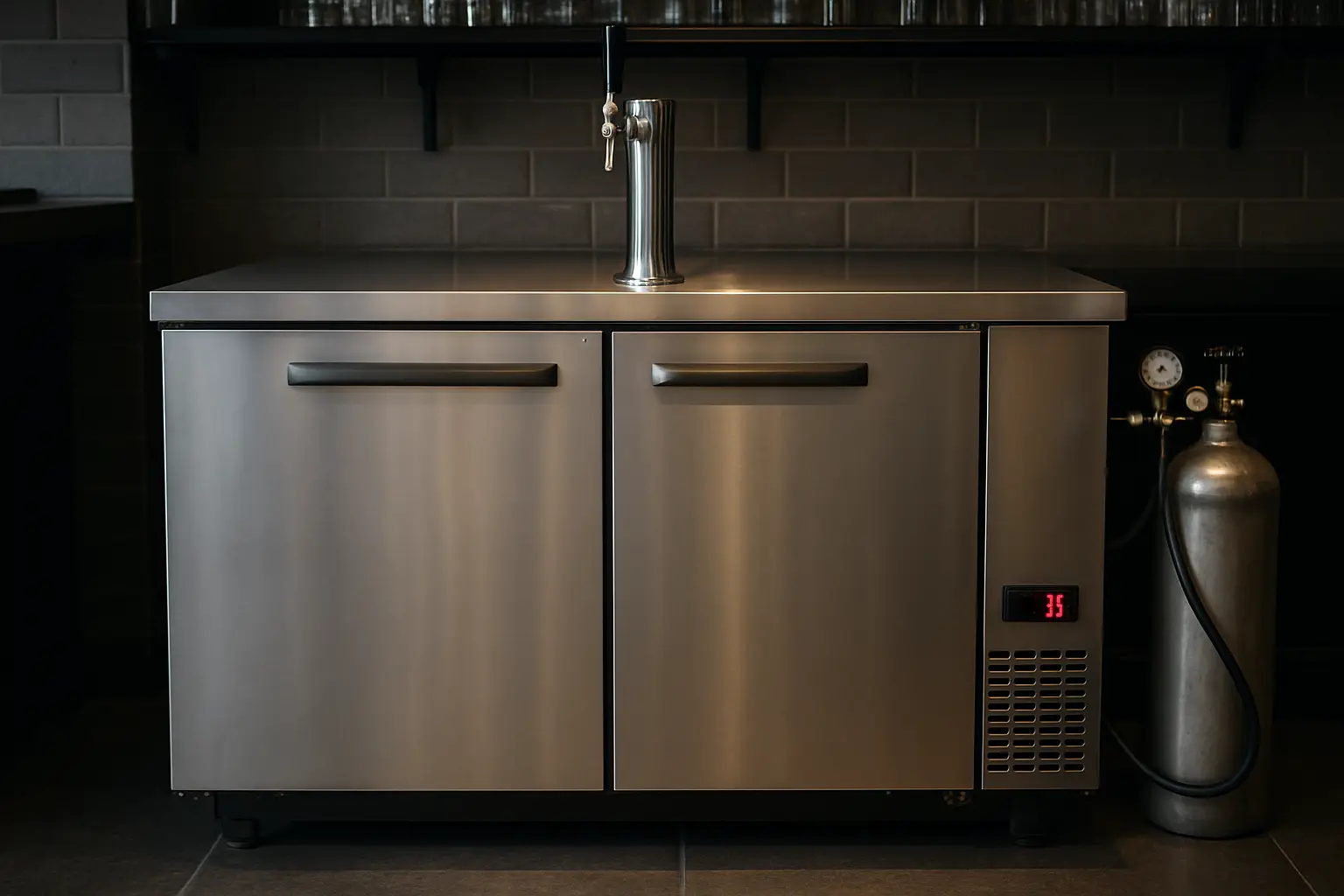
For draft system operators, most of these problems trace back to equipment calibration. Moreover, understanding how much does beer line cleaning cost as part of total maintenance is important. According to Zephyr’s guidance for kegerator settings, the ideal thermostat setting for most kegerators is between 35°F and 40°F. In addition, 38°F is considered a reliable midpoint for mixed-style keg inventories. Operators with aging refrigeration units should verify actual internal temperatures with a calibrated thermometer. They should not rely solely on the dial setting, as compressor performance degrades over time.
Kegerator and Draft System Settings
Setting up a kegerator or walk-in cooler correctly requires attention to several variables beyond the thermostat dial. Airflow inside the cooler affects temperature uniformity. A cooler that runs at 38°F on average may have warm and cold spots. This is particularly true if kegs are stacked close to the door, away from vents, or positioned without adequate space between them.
For commercial draft systems, here is a practical calibration checklist:
- Set the thermostat to 36°F to 38°F and verify with a thermometer placed at keg height
- Check door seals regularly; a failing gasket causes temperature fluctuations and energy waste
- Keep kegs away from the cooler door when possible to avoid warm air exposure during each opening
- Monitor CO2 pressure in tandem with temperature; pressure and temperature interact, and a warmer cooler requires higher pressure to maintain the same carbonation level
- Use a glycol chiller on long-draw systems to maintain line temperature throughout the entire beer path
The beer keg system industry is growing steadily. According to Future Market Insights (2025), the beer keg system market was valued at approximately USD 1,210.2 million in 2025. It is projected to reach USD 1,757.2 million by 2035, growing at a compound annual growth rate of 3.8%. This growth reflects sustained investment in draft infrastructure. As a result, temperature management has become an increasingly relevant operational skill for establishments that depend on it.
For operators running multiple tap handles across different beer styles, some glycol systems allow zone cooling. Lager lines and ale lines can run at different temperatures. This is a more advanced configuration. However, it can make a meaningful difference in product quality when a taproom serves both 34°F pilsners and 52°F Belgian ales side by side.
How Line Cleanliness Ties Into Best Temperature for Keg Beer Performance
Temperature management does not exist in a vacuum. Beer lines that are not cleaned regularly introduce variables that interact with temperature in ways that worsen draft quality. Additionally, biofilm, yeast, and mineral scale inside the lines accelerate beer spoilage even when storage temperature is correct. A keg held at a perfect 37°F will still produce off-flavored beer if the lines carrying it are contaminated.
The Brewers Association recommends cleaning draft lines every two weeks under normal commercial use conditions. Operators who want to understand beer line cleaning frequency in more detail should account for pour volume, beer style, and system type when setting their cleaning schedule. High-volume lines may need more frequent attention than those running lower turnover.
Knowing how to clean beer lines properly is a distinct skill from temperature management. However, both contribute to the same outcome: a consistent, high-quality draft pour. Operators who optimize temperature but neglect line maintenance will still encounter foam, off-flavors, and customer complaints.
For businesses considering professional maintenance, it is worth understanding how much does beer line cleaning cost relative to the product waste and reputation damage that comes from a poorly maintained system. In most commercial settings, professional cleaning is cost-effective compared to the ongoing losses from inconsistent pours and spoiled product.
Beer Line Cleaning USA serves bars, restaurants, breweries, taprooms, hotels, and venues across New York, New Jersey, and Connecticut, including the NYC metro area, Westchester County, Putnam County, and Fairfield County, CT. The company provides commercial draft system cleaning, installation, repair, maintenance, and consulting for beverage-serving businesses that rely on consistent draft performance every shift.
Maintaining the best temperature for keg beer is most effective when it is part of a broader draft system management approach. Furthermore, this approach should include regular line cleaning, CO2 monitoring, equipment calibration, and professional servicing when problems arise. No single variable operates independently in a draft system. Therefore, temperature is most powerful when the entire system is dialed in correctly.
Things to Know
- Most keg draft beer sold in the United States is unpasteurized, meaning temperature is not just a quality issue but a food safety concern. Kegs stored above 40°F for extended periods are at higher risk of spoilage and bacterial growth.
- CO2 pressure and temperature are interdependent. If the cooler temperature rises even a few degrees, the existing CO2 pressure setting may no longer be correct. This leads to over-carbonation or excessive foam at the faucet.
- A thermostat dial reading and the actual internal temperature of a keg cooler are often different. Aging compressors, poor airflow, and failing door gaskets all cause discrepancies that operators may not notice until draft quality suffers.
- Beer style matters when setting serving temperature. Storing all kegs at 37°F is appropriate. However, high-ABV ales, stouts, and Belgian styles are meant to be served warmer. A long-draw glycol system with zone control is the most effective way to accommodate that range in a commercial setting.
- A freshly moved or shaken keg should rest for a minimum of one to two hours before tapping. Agitation warms the beer and throws CO2 out of solution temporarily. As a result, the first several pints pour as pure foam.
- Line contamination mimics temperature problems. Operators who chase foaming or off-flavor issues by adjusting thermostat and CO2 settings, without addressing dirty lines, will rarely solve the root cause.
Stop Losing Revenue to Inconsistent Pours
Every warm, foamy, or off-flavored pint that leaves your tap represents lost product, a frustrated customer, and a margin that does not come back. A properly calibrated draft system, maintained by professionals who understand both temperature and line hygiene, is one of the most direct ways to protect your beverage program.
Request a free quote from Beer Line Cleaning USA today and find out exactly what your draft system needs to perform at its best. Serving bars, restaurants, breweries, taprooms, and venues across New York, New Jersey, and Connecticut, the team is ready to assess your setup and recommend the right service plan. Fill out the contact form now and get a response within one business day.
Frequently Asked Questions
Q: What is the best temperature for keg beer storage in a commercial setting?
The industry consensus, supported by Micromatic and other draft equipment authorities, is 36°F to 38°F for unpasteurized keg beer storage.
Most commercial kegs sold in the United States are not pasteurized. Therefore, cold storage is essential for both safety and quality. Temperatures above 40°F increase the risk of spoilage. Meanwhile, temperatures below 33°F risk partially freezing the beer or over-suppressing carbonation. Holding the cooler at a consistent 37°F is a reliable target for most bar and restaurant operations running mixed keg inventories.
Q: Why does my keg beer keep coming out foamy even though my cooler is set to the right temperature?
Foam issues are often caused by a combination of factors. Temperature alone is rarely the complete explanation.
If the thermostat reads correctly but foam persists, the actual line temperature may be higher than the keg temperature. This is particularly true in long-draw systems without proper glycol cooling. Additionally, CO2 pressure set too high for the current temperature is another common cause. Furthermore, dirty beer lines are a significant contributor because biofilm and yeast residue inside the lines disrupt CO2 equilibrium and accelerate gas release before the beer reaches the glass.
Q: Should different beer styles be stored at different temperatures?
For storage purposes, keeping all kegs at 36°F to 38°F is practical and appropriate regardless of style.
Where style-specific temperature matters most is at the point of service. Light lagers and pilsners are best served between 34°F and 42°F. In contrast, stouts, porters, and Belgian ales benefit from serving temperatures between 50°F and 55°F. In most single-zone draft systems, operators accept a compromise serving temperature and let stronger or darker styles warm slightly in the glass. Long-draw glycol systems with zone cooling offer the most control for venues serving a wide range of styles.
Q: How often should beer lines be cleaned to maintain draft quality alongside proper temperature?
The Brewers Association recommends cleaning draft beer lines at least every two weeks under standard commercial conditions.
High-volume taps or lines running certain beer styles, such as wheat beers or unfiltered ales, may require more frequent cleaning. For example, these styles leave more residue inside the lines. Temperature management and line cleanliness work together. Therefore, a keg stored at the correct temperature will still produce off-flavors and inconsistent carbonation if the lines it travels through are contaminated. Professional cleaning services are the most reliable way to ensure lines meet industry standards consistently.
Q: Can a kegerator maintain the correct temperature for commercial use, or is a walk-in cooler necessary?
A properly calibrated kegerator can maintain the correct temperature range for small to medium commercial applications. However, walk-in coolers are better suited to high-volume operations.
Single-tap kegerators are commonly used in smaller bars, taprooms, and event settings. They can reliably hold temperatures between 35°F and 40°F when maintained correctly. For venues running six or more taps, or any operation where kegs are turned over rapidly, a dedicated walk-in cooler paired with a long-draw glycol system provides more consistent temperature control across the entire draft path. The right choice depends on tap count, pour volume, and the physical layout of the venue.