Draft beer lines should be replaced approximately once per year under standard commercial operating conditions. When lines age beyond that threshold, they accumulate biofilm, absorb off-flavors, and degrade in ways that no amount of routine cleaning can fully reverse. Understanding the draft beer line replacement schedule is essential for maintaining consistent quality and protecting your business reputation.
Table of Contents
- Why Line Replacement Is a Separate Concern From Cleaning
- Industry-Standard Draft Beer Line Replacement Schedule
- What Happens Inside an Aging Beer Line
- Signs a Line Needs Replacement Before the Annual Mark
- Replacement Variables by System Type
- The Cost Side of the Equation
- What a Professional Draft Beer Line Replacement Service Covers
Why Line Replacement Is a Separate Concern From Cleaning
One of the most persistent misconceptions in commercial draft service is that cleaning and replacement are interchangeable. However, they are not. Cleaning removes surface-level contamination and suspended solids from the interior of a line. Replacement addresses the structural and microbial degradation that happens to the tubing material itself over time.
Knowing how to clean beer lines is essential operational knowledge for any bar or taproom. But cleaning has limits. Older lines develop microscopic abrasions on their inner walls. Those abrasions become anchor points for bacteria, wild yeast, and biofilm colonies that recirculating cleaning solution cannot fully dislodge. Therefore, at some point, the line itself becomes the contamination source. No amount of chemistry will fix a physical problem.
Industry-Standard Draft Beer Line Replacement Schedule
The widely accepted standard in the commercial draft industry is annual line replacement paired with biweekly cleaning. This cadence is not arbitrary. It reflects the material limitations of standard polyvinyl chloride (PVC) and polyethylene tubing commonly used in beer dispensing systems.
A full beer line cleaning frequency program includes cleaning every two weeks and replacing the physical lines on an annual cycle. This dual approach addresses both short-term contamination that builds between cleans and long-term material degradation that accumulates over months of use.
Some higher-volume accounts warrant more frequent replacement. Busy sports bars, hotel banquet systems, and stadium concession setups benefit from replacement cycles of eight to ten months. Additionally, systems running high-gravity or high-hop beers leave behind more residue. Conversely, a low-volume taproom running perhaps two or three kegs per week may reasonably stretch to fourteen or fifteen months before replacement becomes urgent. Nevertheless, annual replacement remains the professional benchmark.
What Happens Inside an Aging Beer Line
Understanding the science behind line degradation helps operators make informed decisions. Rather than treating replacement as an arbitrary chore, you can approach it strategically.
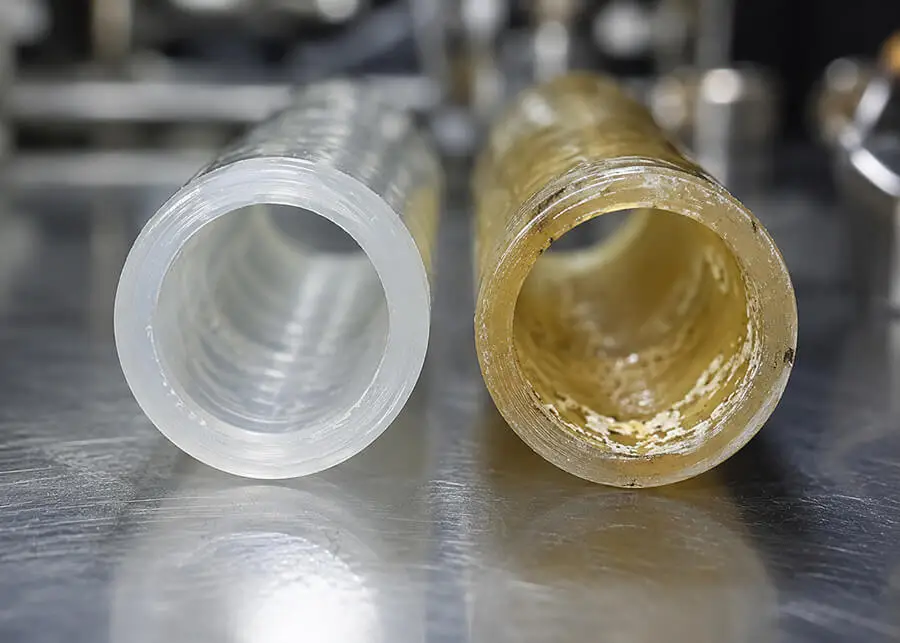
Biofilm accumulation: Bacteria and wild yeast do not simply float through beer lines and exit through the tap. They colonize the inner wall. A 2024 study published in ScienceDirect found that tubing aged to simulate five years of use accumulated bacterial densities of 6.6 Log10(CFU/cm2). In contrast, new tubing showed 5.6 Log10(CFU/cm2). While that simulation represents extreme aging, the trend is clear. Older tubing harbors significantly more microbial load regardless of cleaning frequency.
Flavor absorption: Draft line tubing is slightly porous, especially older or lower-grade material. Over time, hop oils, yeast byproducts, and cleaning chemical residues absorb into the tubing wall. This absorbed material then leaches back into fresh beer poured through the line. The result produces off-flavors ranging from stale or cardboard notes to unexpected sourness. No cleaning cycle removes absorbed contamination from within the tubing wall itself.
Physical degradation: UV exposure, temperature swings, and the mechanical stress of pressurized gas running through the line all contribute to material fatigue. Lines can develop micro-cracks, kinks, or sections where the inner diameter has slightly narrowed. These issues create turbulence that accelerates foaming and oxidation at the tap.
Signs a Line Needs Replacement Before the Annual Mark
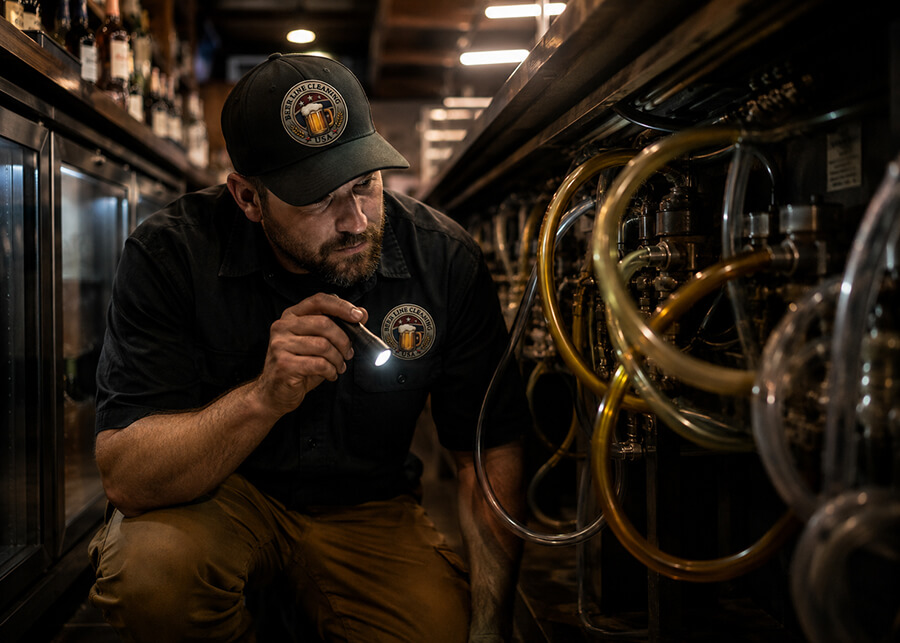
Annual replacement is the scheduled baseline, but certain conditions signal that a line needs to come out sooner. Operators and service technicians at Beer Line Cleaning USA look for several specific indicators during inspections.
Persistent off-flavor after cleaning: If a beer consistently tastes stale, sour, or “off” immediately after a professional cleaning, the line is almost certainly the source. The keg checks out fine in this scenario.
Unusual foaming that resists adjustment: Excessive foam that does not respond to standard pressure calibration and temperature checks often traces back to a degraded or kinked line interior.
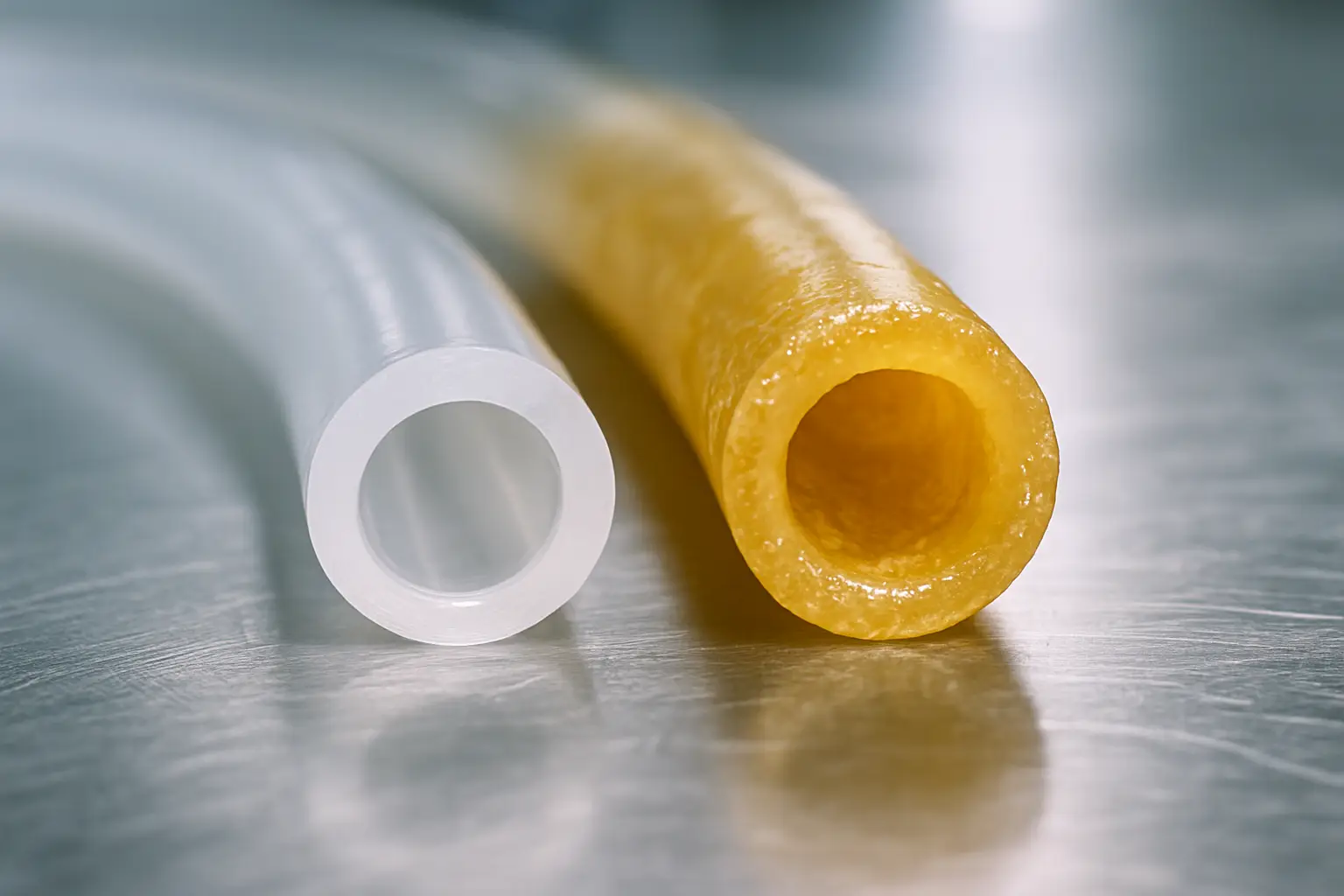
Visible discoloration or cloudiness in clear lines: Clear tubing allows visual inspection. Yellowing, brown tinting, or visible particulate buildup inside the line is a direct sign of material breakdown or embedded contamination.
Odor inside the line during cleaning: Technicians who flush lines regularly develop a sense for what a clean line smells like during the cleaning process. A persistent sulfur, sour, or musty odor that does not clear with cleaning solution indicates embedded biofilm. This buildup is beyond surface-level reach.
Physical damage: Any kink, crack, visible split, or connection point that has been repeatedly repaired is a liability. Damaged lines also create carbon dioxide leak points that affect carbonation balance.
Replacement Variables by System Type
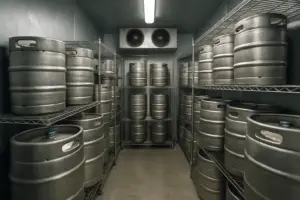
Not all draft systems age at the same rate. The draft beer line replacement schedule that works for a simple direct-draw kegerator behind a bar is not necessarily appropriate for a long-draw glycol system. Long-draw systems run 80 feet from a walk-in cooler to a remote tap tower.
Direct-draw systems: These are the most straightforward setups. The keg sits directly beneath or behind the tap with a short run of line, typically under 10 feet. Annual replacement remains appropriate, and the short length makes the replacement fast and inexpensive.
Long-draw and glycol systems: These involve significantly longer line runs, often 50 to 150 feet or more. They run through a glycol-chilled trunk line to keep beer cold across the distance. The greater line length means more surface area for biofilm accumulation. Replacement may require partial or full trunk line overhaul depending on the system configuration. The complexity makes professional service essential. Understanding how to change a keg is basic operational knowledge for staff. However, trunk line replacement on a long-draw system is distinctly different work.
Nitrogen and mixed-gas systems: Stouts and nitro beers use different gas blends. These blends interact with tubing material differently than standard CO2 systems. Operators running nitro taps should discuss system-specific replacement timelines with a certified draft technician.
High-acid and high-hop products: Sour beers, kombucha, hard cider, and heavily dry-hopped IPAs leave more residue in lines than lighter lagers or pilsners. Systems carrying these products regularly may benefit from replacement at the eight to ten month mark. This approach makes sense rather than waiting a full twelve months.
The Cost Side of the Equation
Line replacement is a cost of doing business in commercial draft service. The price varies based on system complexity, line length, and the region of the country. In the New York, New Jersey, and Connecticut metro area where Beer Line Cleaning USA operates, operators can expect costs that reflect the density and complexity of draft systems common in NYC bars, Westchester taprooms, and Fairfield County restaurants.
Operators who want to understand how much does beer line cleaning cost will find that bundling cleaning and replacement services together typically produces better value. Bundling is more effective than scheduling them separately. Some service providers offer annual maintenance contracts that include biweekly cleaning and a scheduled annual line replacement. This approach helps operators budget predictably and avoid the higher emergency costs that come with delayed maintenance.
The cost of neglecting replacement is also worth factoring in. Beer poured through degraded lines produces a lower-quality product. In a competitive market where draft beer accounts for a meaningful share of bar revenue, consistent off-flavors reduce repeat orders and damage a venue’s reputation. According to CGA by NIQ’s Draft Beer Report, covered by Craft Brewing Business, draft beer remains a premium revenue driver. This makes quality consistency a direct financial concern.
What a Professional Draft Beer Line Replacement Service Covers
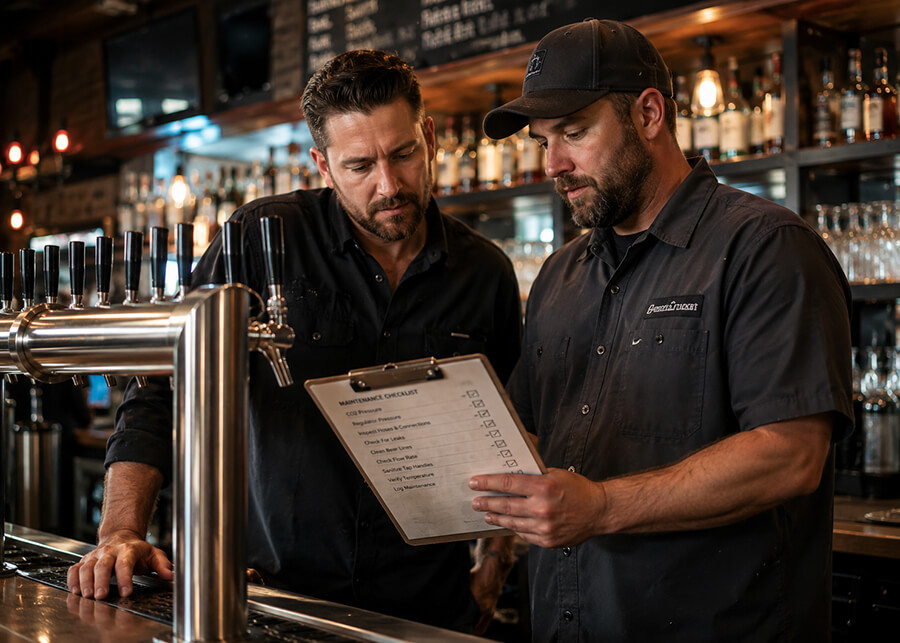
A professional draft beer line replacement visit from a service provider like Beer Line Cleaning USA goes beyond simply swapping out old tubing. A thorough replacement service typically includes the following steps.
Full system inspection before replacement: Technicians assess the condition of all hardware. This includes couplers, FOBs (foam-on-beer detectors), shanks, and faucets. Replacing a line while leaving degraded hardware in place undermines the value of the replacement.
Decommissioning and line removal: The service removes old lines completely rather than leaving them in place. Leaving old lines coiled behind the bar creates a contamination source and clutter. This complicates future servicing.
New line installation and calibration: Fresh line is installed and immediately balanced for the specific carbonation level and temperature of the beer being served. Proper balancing prevents over-carbonation, excessive foam, and flat pours.
Post-installation cleaning flush: New lines receive a flush before the first commercial pour. This removes any manufacturing residues or handling contamination from the tubing.
Documentation: Reputable service providers document the date of replacement and the condition of the system at the time of service. This creates an audit trail useful for health inspections and vendor relationships.
The Beer Line Cleaning Kit Market reached a valuation of USD 910.3 million in 2026. Furthermore, it is projected to grow to USD 1,614.9 million by 2036 at a compound annual growth rate of 5.9%, according to Future Market Insights (2026). That trajectory reflects how seriously the broader beverage industry is treating draft system maintenance as a professional service category rather than an afterthought.
More than 1.9 million licensed outlets worldwide operate draught dispensing systems, according to Market Reports World (2026). In the United States alone, the scale of commercial draft service means that consistent replacement and maintenance standards have a direct impact on beer quality at a national level.
For operators across New York City, Brooklyn, Queens, Westchester, the Bronx, New Jersey, and Connecticut, working with a dedicated draft system service company is the best approach. Professional service ensures the work is done to a professional standard, with equipment and expertise that most individual operators do not maintain on their own.
Prioritize Replacement Before You Have a Problem
Waiting for a customer complaint or a health inspection citation to address aging beer lines is a costly approach. The draft beer line replacement schedule that protects beer quality, equipment longevity, and customer trust is annual replacement paired with consistent biweekly cleaning. Adjust as needed for system type, product mix, and volume.
Request a free quote from Beer Line Cleaning USA to schedule a professional line replacement or full system inspection for your bar, taproom, restaurant, or venue. Our team serves the NYC metro area, including all five boroughs, Westchester, Putnam County, New Jersey, and Fairfield County, CT.
Take the next step today. Reach out to Beer Line Cleaning USA and get a clear assessment of where your draft system stands. We will explain exactly what replacement will involve.
Frequently Asked Questions
Q: How often should draft beer lines be replaced in a commercial bar?
The industry standard is annual replacement for most commercial draft systems.
Lines should be replaced approximately once per year under normal operating conditions. High-volume accounts or systems serving high-acid or heavily hopped beers may benefit from replacement every eight to ten months.
Q: Can cleaning replace the need to physically swap out beer lines?
No. Cleaning and replacement address different types of degradation and are not interchangeable.
Cleaning removes surface-level contamination and maintains line hygiene between replacements. Replacement addresses material fatigue, embedded biofilm, and absorbed off-flavors that cleaning chemistry cannot reverse.
Q: What type of tubing is used for draft beer lines, and does it affect replacement frequency?
Standard PVC and polyethylene tubing are the most common materials, and their quality directly affects how quickly they degrade.
Higher-grade barrier tubing resists oxygen transmission and flavor absorption better than basic PVC. This may allow slightly longer intervals between replacements. A draft system professional can recommend the best tubing material for a specific setup.
Q: Does a long-draw glycol system require more frequent line replacement than a direct-draw setup?
Not necessarily more frequent, but the replacement process is significantly more complex.
Long-draw systems have greater line length and more connection points. Therefore, full replacement requires more labor and technical expertise. Annual replacement remains the standard, but the scope of work is larger.
Q: How do I know if my draft lines need replacement before the annual schedule?
Persistent off-flavors after cleaning, unusual foaming that resists calibration, and visible discoloration inside clear tubing are the clearest warning signs.
Any of these symptoms after a recent professional cleaning indicates the line itself is likely the contamination source. A qualified draft technician can inspect the system and confirm whether early replacement is warranted.
Things to Know
- Annual replacement is a baseline, not a ceiling. High-volume bars, taprooms running sour or nitro beers, and systems with long line runs may need replacement every eight to ten months. Waiting the full twelve months is not always necessary.
- Cleaning and replacement serve different functions. Biweekly cleaning removes active contamination; replacement addresses material degradation that cleaning chemistry cannot reverse. This includes absorbed off-flavors and embedded biofilm within the tubing wall itself.
- New lines still need a flush before first use. Fresh tubing carries manufacturing residues and handling contamination. A post-installation cleaning flush is a standard part of any professional replacement service. You should never skip this step.
- Hardware condition matters as much as the line. Replacing tubing while leaving worn couplers, degraded FOBs, or corroded shanks in place limits the benefit of the replacement. A full inspection of all contact hardware should accompany every line swap.
- Delayed replacement has a direct revenue cost. Off-flavors from aging lines reduce customer reorders and damage a venue’s reputation for draft quality. In on-premise environments where draft beer drives premium margins, this represents a measurable loss.
- Documentation creates accountability. Reputable service providers log the date and condition findings of every replacement visit. That record supports health inspections, vendor relationships, and internal maintenance planning.
Schedule Your Draft Line Replacement Before It Costs You Customers
Draft line degradation does not announce itself with a single dramatic failure. It shows up gradually in off-flavored pints, rising foam complaints, and repeat customers who quietly order something else. Getting ahead of that curve means scheduling replacement on a professional cadence. This approach is better than reacting after the problem is visible.
Request a free quote from Beer Line Cleaning USA today and get a clear, no-obligation assessment of your draft system’s current condition. We will explain exactly what a professional replacement service will involve for your specific setup.
Contact Beer Line Cleaning USA now to book your inspection and lock in a replacement schedule. This protects your beer quality, your equipment, and your bottom line.
Additional Frequently Asked Questions
Q: How often should draft beer lines be replaced in a commercial bar?
The industry standard for most commercial draft systems is annual replacement.
Lines should be replaced approximately once every twelve months under normal operating conditions. Accounts running high-acid products like sour beer or kombucha, high-hop beers, or operating at very high volume may benefit from replacement every eight to ten months. The annual benchmark exists because tubing material degrades over time in ways that routine cleaning cannot address.
Q: Can regular cleaning eliminate the need to physically replace beer lines?
No. Cleaning and replacement address fundamentally different problems and are not interchangeable.
Cleaning removes surface-level contamination, yeast, and mineral deposits from the interior of the line during normal operation. Replacement addresses physical material fatigue, embedded biofilm anchored in microscopic wall abrasions, and off-flavors absorbed into the tubing itself. A line that has been cleaned on schedule can still be past its service life and actively degrading beer quality.
Q: What are the signs that a draft beer line needs replacement before the annual scheduled date?
Persistent off-flavors immediately after a professional cleaning, unusual foaming that does not respond to pressure or temperature adjustment, and visible discoloration inside clear tubing are the most reliable warning signs.
A sulfur, sour, or musty odor inside the line during the cleaning process is another indicator that technicians use to flag early replacement. Any one of these symptoms following a recent professional clean points to the line itself as the contamination source. Rather than suspecting the beer or the gas system, a certified draft technician can confirm whether early replacement is warranted after a direct inspection.
Q: Does a long-draw glycol system follow a different draft beer line replacement schedule than a direct-draw setup?
The annual replacement standard applies to both system types, but the scope and complexity of the work differs significantly.
Direct-draw systems have short line runs, often under ten feet, making replacement straightforward and fast. Long-draw glycol systems can involve fifty to one hundred fifty feet of line running through a chilled trunk line to remote tap towers. The greater surface area and number of connection points in a long-draw system make full replacement a more labor-intensive process. Professional expertise is required rather than in-house handling.
Q: How much does draft beer line replacement typically cost, and is it worth bundling with cleaning services?
Replacement costs vary based on system length, complexity, and the service provider’s region, but bundling replacement with a regular cleaning contract almost always produces better value than scheduling the two services separately.
In dense urban markets like New York City and the surrounding metro area, system complexity tends to be higher than in suburban or rural accounts. This is reflected in service pricing. Operators who bundle biweekly cleaning with an annual replacement under a maintenance agreement can budget predictably. This avoids the premium costs that typically come with emergency or reactive service calls. For a specific cost estimate based on your system type and location, reaching out to a professional draft service provider is the most reliable path to an accurate figure.