What’s In This Guide
- Warm Draft Beer Usually Starts at the Cooling System, Not the Keg
- How a Draft Cooling System Is Supposed to Work
- Why Warm Beer Causes Both Foam and Flat Pours
- Signs Your Cooling System (Not Just Your Setup) Is the Problem
- Quick Checks Before You Call for Service
- When It’s Time to Call a Draft System Specialist
- How to Prevent Warm Draft Beer in the Future
- Frequently Asked Questions
- Get Your Draft System Cooling Properly Again
If your draft beer is pouring warm, the keg is probably not the problem. In most bars and restaurants, warm beer points back to the cooling system: a tower that is not holding temperature, a glycol unit working harder than it should, or trunk lines picking up heat before beer reaches the faucet.
That matters fast. Warm beer foams more, tastes flatter, wastes product, and slows down service. The fix starts with finding where the heat is entering the system, not guessing at the keg, adjusting pressure, or blaming the distributor.
Quick Facts
- Warm draft beer is usually caused by a cooling system issue, not the keg itself.
- Warm beer loses carbonation and creates excessive foam.
- Towers, beer lines, trunk lines, and glycol systems are common sources of heat gain.
- Simple temperature checks can help identify cooling problems early.
- Prompt repairs protect beer quality, reduce waste, and improve service.
Warm Draft Beer Usually Starts at the Cooling System, Not the Keg
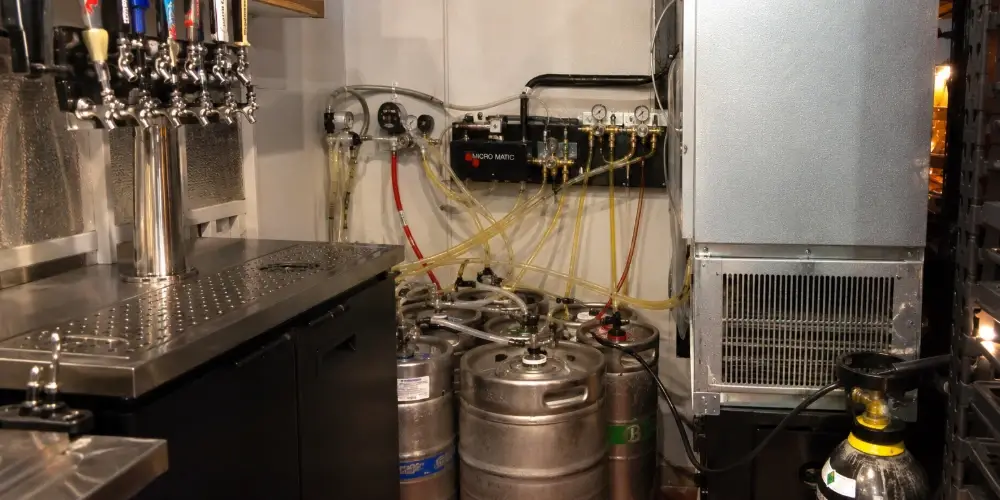
A keg can leave the brewery perfectly carbonated and still pour warm by the time it reaches the glass. That’s because draft beer travels through several temperature zones before it’s served: the keg itself, the beer lines, the tower or shank, and finally the faucet. A failure or weak point in any one of those zones can undo proper cooling at the source.
Proper dispensing temperature for draft beer generally falls in the 38°F to 44°F range. When any part of the system runs warmer than that, the keg is no longer the variable worth chasing.
How a Draft Cooling System Is Supposed to Work
Different draft setups cool beer in different ways, and knowing which type you’re running matters when something starts pouring warm.
Direct-Draw Cooling
In a direct-draw system, kegs sit inside a refrigerated cabinet or walk-in cooler close to the tap, so the beer travels only a short distance before reaching the faucet. Cooling problems here are usually tied to the refrigeration unit itself: a failing compressor, a door that doesn’t seal, or a thermostat that’s drifted out of calibration.
Glycol-Cooled (Long-Draw) Systems
When kegs are stored farther from the bar, a glycol chiller circulates chilled coolant alongside the beer lines through insulated trunk lines, keeping beer cold over distances that can run 100 feet or more. These systems have more points of potential failure: glycol pump issues, poor trunk line insulation, or a chiller that can’t keep pace during high-volume service. Long-draw setups amplify small temperature problems, since beer has more distance to warm up before it reaches the tap.
In both setups, the tower and faucet are usually the warmest points in the system, since they sit outside refrigeration and are exposed to ambient room temperature between pours.
Why Warm Beer Causes Both Foam and Flat Pours
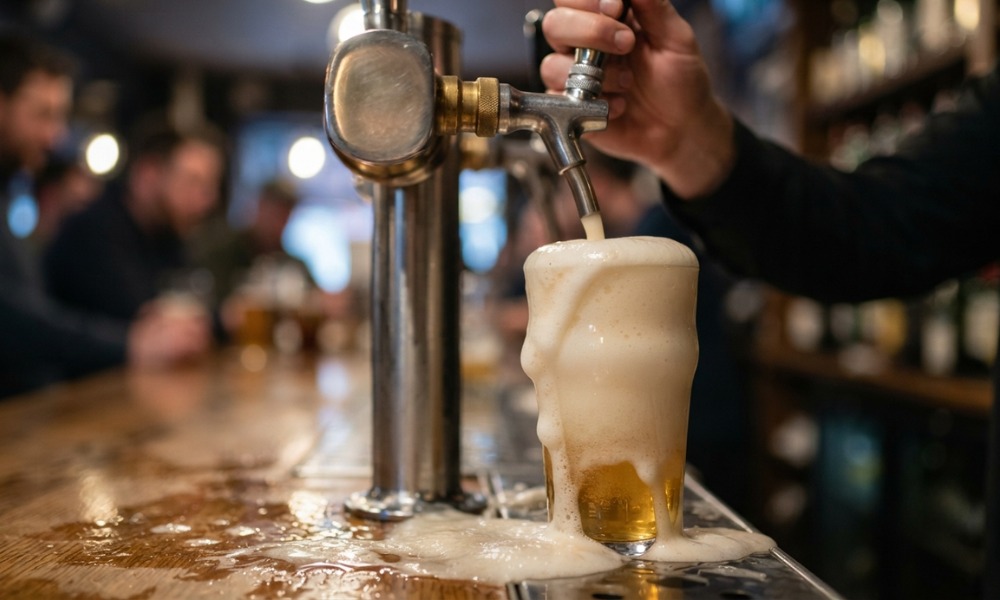
Warm beer and foam go together because CO₂ doesn’t stay dissolved as well once temperature rises. Beer that’s stored and served around 38°F retains the carbonation set at the brewery, and that same CO₂ expands and breaks out faster as the beer warms.
That breakout shows up two ways:
- In the moment: Foam at the faucet, since gas is leaving the beer before it ever reaches the glass.
- Over time: Flat-tasting beer, since carbonation that has already broken out of solution may not recover quickly once the system is corrected.
This is why warm draft beer rarely presents as just one problem. A tower running a few degrees too warm can produce a foamy first pour and a flatter-tasting pour an hour later, even from the same keg.
MORE ON THIS TOPIC: Why Your Beer Is Foamy: Kegerator Troubleshooting Guide
Signs Your Cooling System (Not Just Your Setup) Is the Problem
Temperature and pressure issues can look similar on the surface, but a few patterns point specifically toward a cooling failure rather than a PSI or cleaning issue.
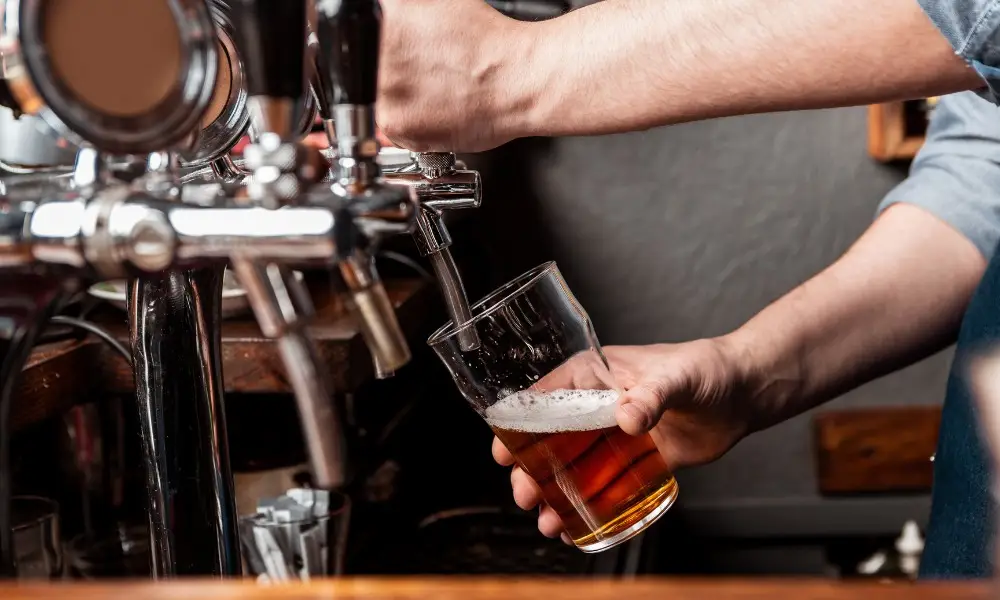
- The first pour is always foamy, but later pours improve. This usually means the tower or line segment closest to the faucet is warming between uses, not that the keg itself is at fault.
- Foam shows up across multiple taps at once. When several lines foam at the same time, especially during a rush, the shared cooling source (cooler, walk-in, or glycol chiller) is the more likely culprit than any single tap.
- Pours get worse as the day goes on. A cooling system that can’t keep pace with demand often shows its weakest performance during peak service, when the door opens often and recovery time shrinks.
- Beer that pours fine at open but flattens out by closing. If carbonation seems to fade over the course of a shift, the system may be losing its ability to hold temperature consistently rather than losing CO₂ in the keg itself.
Quick Checks Before You Call for Service
A few checks can help confirm whether the issue lives in the cooling system before a technician arrives.
- Check liquid temperature directly. A glass of water left in the cooler long enough to stabilize, checked with a calibrated thermometer, gives a more accurate reading than trusting an external dial.
- Feel for warm spots. Run a hand along the tower, shanks, and any line segments near doors or other heat sources.
- Watch the first pour versus the third. A foamy first pour that clears up points toward a warm tower rather than a keg or pressure problem.
- Confirm the cooler door seals properly. A door that doesn’t fully close lets warm air in steadily, which forces the whole system to work harder than it should.
What these checks shouldn’t lead to is repeated PSI adjustments. Changing pressure to compensate for a temperature problem tends to mask the real issue and can introduce a second one.
When It’s Time to Call a Draft System Specialist
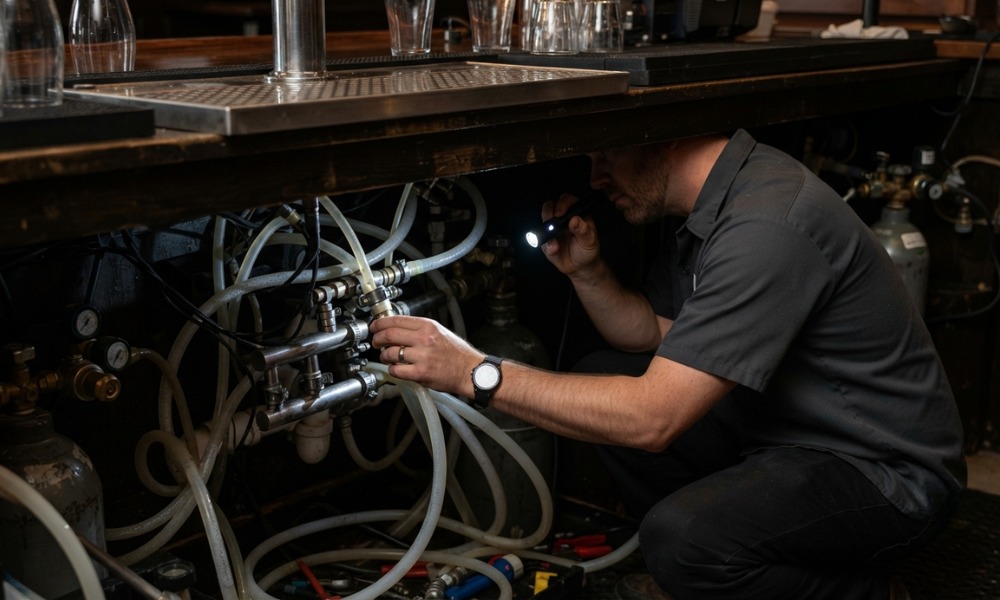
Some cooling issues are simple fixes. Others point to equipment that’s failing and getting worse. It’s time to bring in a professional when:
- Warm pours continue after confirming the cooler and tower temperature
- One tap or zone consistently runs warmer than the rest
- The system is a long-draw or glycol setup, where diagnosing the source takes specialized tools
- The cooling unit seems to be running constantly without holding temperature
A draft specialist can test the system from keg to faucet, isolate where the cooling is breaking down, and address the actual mechanical issue instead of cycling through temporary workarounds.
How to Prevent Warm Draft Beer in the Future
Keeping draft beer cold is easier than troubleshooting repeated temperature problems. A few routine maintenance practices can help your cooling system perform consistently and reduce the risk of warm pours during service.
- Monitor cooler temperatures daily. Use a calibrated thermometer rather than relying only on the unit’s display.
- Inspect tower and trunk line insulation. Damaged or missing insulation allows heat to enter the system before beer reaches the faucet.
- Keep condenser coils and vents clean. Dust and debris reduce refrigeration efficiency, forcing the system to work harder.
- Check cooler door seals regularly. Worn gaskets let warm air into the cooler, making it difficult to maintain stable temperatures.
- Schedule routine draft system maintenance. Regular inspections of glycol chillers, refrigeration equipment, and draft lines can identify developing issues before they affect beer quality or lead to product loss.
- Avoid placing heat-producing equipment near draft lines. Refrigerators, ovens, dishwashers, and direct sunlight can raise the temperature of nearby beer lines and towers, making it harder to keep beer cold from keg to faucet.
Frequently Asked Questions
Why does my draft beer pour warm even though the kegerator feels cold?
The cooler itself may be holding temperature while the tower or faucet runs warm, since that section sits outside refrigeration. Beer sitting in the tower between pours absorbs ambient heat, which is why the first pour of the day is often the worst.
Can a warm tower really cause foam if the rest of the system is cold?
Yes. Even a short section of warm line near the faucet is enough to cause CO₂ to break out of solution before the beer reaches the glass, since that’s the last point of contact before service.
Is warm draft beer a sign my glycol chiller is failing?
It can be. If multiple taps are warming at the same time, especially during busy stretches, the shared glycol system is more likely the source than an issue with any single keg or line.
Will adjusting the PSI fix warm draft beer?
No. Pressure and temperature are related, but raising or lowering PSI does not cool the beer. Adjusting pressure to compensate for warm beer usually hides the real problem and can create a separate foam or flat-pour issue.
How fast can a cooling problem get worse?
It depends on the cause. A door that won’t seal or a struggling compressor tends to get worse gradually, while a failed glycol pump or major refrigeration fault can affect pours within a single shift.
Get Your Draft System Cooling Properly Again
Warm beer is rarely the keg’s fault, and pressure changes usually delay the real fix. Beer Line Cleaning USA helps bars, restaurants, breweries, and hospitality venues inspect cooling systems, glycol setups, towers, and draft lines so beer pours cold, consistent, and ready for service.