Key Takeaways✔ A U.S. half-barrel keg holds 15.5 gallons or 1,984 ounces of beer. ✔ Ideal yield equals about 165 twelve-ounce beers or 124 pints. ✔ Keg sizes vary, and U.S. half kegs are larger than European 50-liter kegs. ✔ Clean draft lines and proper setup directly affect beer yield and quality. |
Table of Contents
A half keg is one of the most common choices for parties, events, and large gatherings, but many people are unsure what it actually delivers once it is tapped.
For quick reference, a standard U.S. half-barrel holds enough beer to serve a large group, though the real number of pours is usually lower than the theoretical maximum due to foam and handling loss.
Knowing what you truly get from a half keg helps set realistic expectations, avoid running short, and plan more accurately.
What Is a Half Keg?
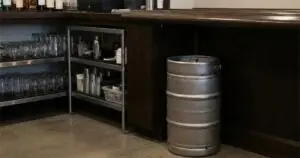
A half keg, also called a half-barrel keg, is the largest standard keg used in the United States. It holds 15.5 gallons of beer, which equals 58.67 liters. This size is commonly used for large parties, weddings, bars, and events where beer consumption is high.
➤ How Many Ounces in a Keg
A standard half keg contains 1,984 ounces of beer. This number comes from the U.S. gallon measurement of 128 ounces multiplied by 15.5 gallons. Understanding ounces in a keg makes it much easier to estimate pours and plan servings accurately.
Why You Never Get the Full 165 Beers
Foam and Temperature Issues
Beer foams excessively when it is too warm or when the temperature fluctuates. Most beers are best served between 36 and 55 degrees Fahrenheit to maintain proper carbonation. Even a few degrees higher increases foam and waste, reducing total pours.
Pressure and Tap Setup Problems
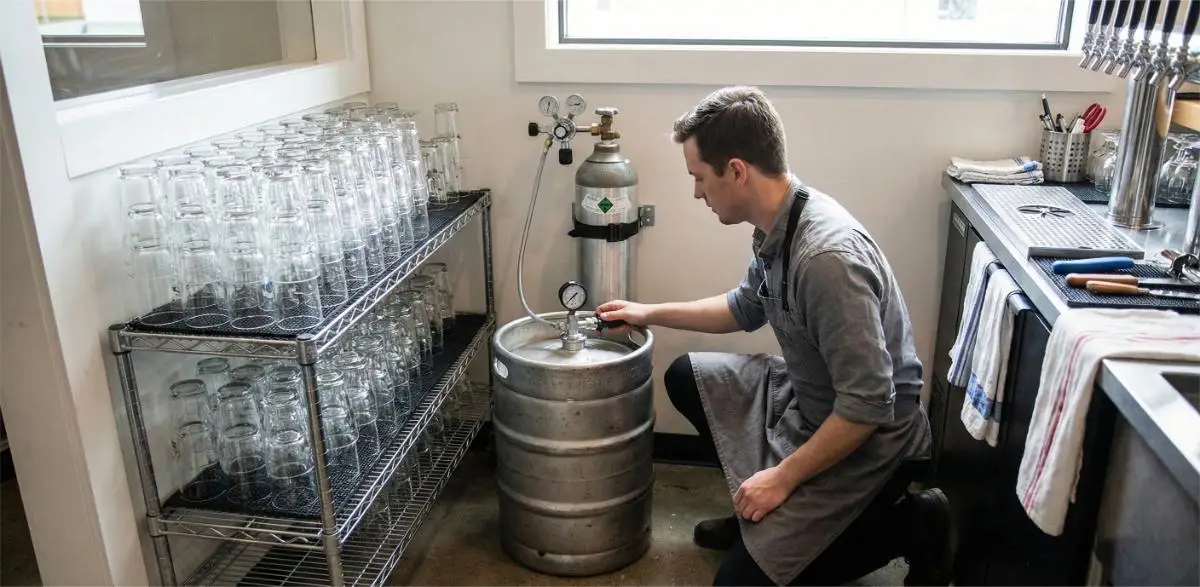
Carbon dioxide (CO₂) is typically the best dispense gas for direct-draw draft systems because it helps maintain carbonation in the keg. The correct pressure depends on the beer’s carbonation level, the keg temperature, and even altitude.
If the pressure is set too high, the beer can become over-carbonated in the keg. If it is set too low, the beer can lose carbonation and taste flat.
Dirty Beer Lines and Flavor Loss
Dirty draft lines increase foam and degrade flavor. Residue buildup creates nucleation points where carbon dioxide escapes, turning beer into foam before it reaches the glass. This is one reason bars and event hosts often look for nearby beer line cleaners when preparing for high-volume pours.
How Many Beers in a Keg: Getting the Figures Right
How Many Beers in a 1/6 Keg
A sixth-barrel keg holds 5.16 gallons, or about 55 twelve-ounce beers. When comparing how many beers in a 1/6 keg versus a half keg, remember that a half keg provides triple the volume and a lower cost per beer for large groups.
When a Half Keg Makes More Sense
A half keg works best for:
- Large parties and weddings
- High-consumption environments
- Events where refilling or swapping kegs is inconvenient
Smaller keg sizes are better suited for variety or limited space.
Keg Type | Capacity (Gallons) | Capacity (Ounces) | 12-oz Beers | 16-oz Pints | 64-oz Growlers |
Cornelius (Corny) Keg | 5.0 gal | 640 oz | 53 | 40 | 10 |
Sixth-Barrel (Sixtel) Keg | 5.16 gal | 661 oz | 55 | 41 | 10 |
Quarter-Barrel (Pony) Keg | 7.75 gal | 992 oz | 82 | 62 | 15.5 |
Slim Quarter Keg | 7.75 gal | 992 oz | 82 | 62 | 15.5 |
Half-Barrel Keg (Full Keg) | 15.5 gal | 1,984 oz | 165 | 124 | 31 |
50-Liter Keg (Import) | 13.2 gal | 1,690 oz | 140 | 105 | 26 |
How to Calculate How Many Beers You Need for an Event
Step 1: Count the number of guests expected
Start with a realistic headcount. Overestimating attendance can leave you with excess beer, while underestimating often leads to running out early. Your guest count helps estimate the total number of beers a keg should provide.
Step 2: Estimate average consumption per person
For most casual events, plan on two to three beers per person over several hours. Longer events or celebrations with heavier drinkers may push that number higher. This estimate helps translate your guest count into a total number of beers rather than guessing based on keg sizes alone.
Step 3: Decide on serving size
Serving size has a direct impact on volume. Twelve-ounce pours yield more servings, while sixteen-ounce pints reduce the total count. Since the number depends on pour size, this decision can change whether one half keg is enough or if additional kegs are needed.
Step 4: Choose the number and size of kegs that match the adjusted total
Once you know the final beer count, select the keg size that fits best. A half keg works well for large groups, while smaller gatherings may benefit from mixing keg sizes. Factoring in realistic loss ensures you get the most usable pours from every keg.
Step 5: Account for real-world waste and pour conditions
Draft beer rarely pours perfectly from start to finish. Foam, spills, and inconsistent pours can reduce what actually gets served. Building in a small buffer helps protect your plan if conditions are not ideal.
Step 6: Plan for beer variety and backup options
If you are offering multiple beer styles or also serving other drinks, demand may spread out differently than expected. Having a flexible backup, such as an extra smaller keg or packaged beer, helps you adapt without overcommitting.
Common Mistakes People Make With Half Kegs
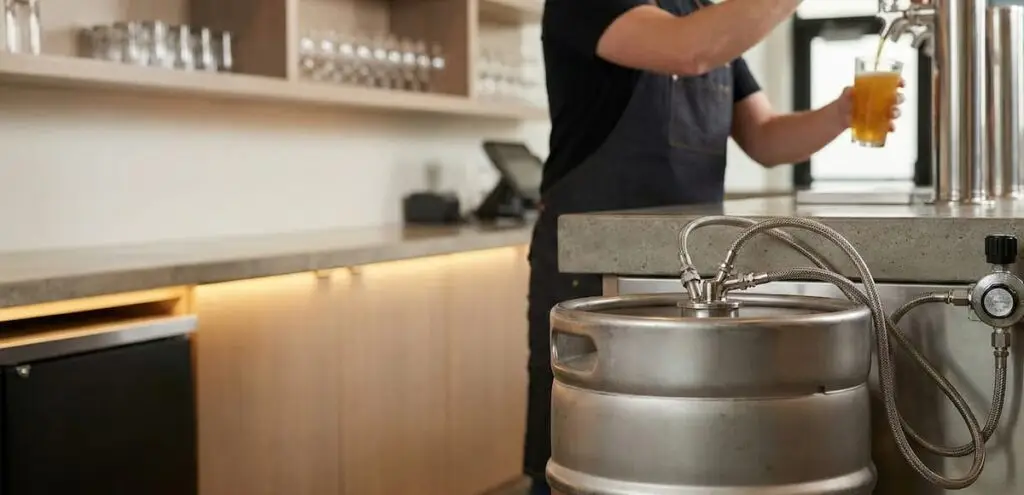
Half kegs are straightforward to use, but small oversights can lead to wasted beer, excess foam, or fewer servings than expected. Understanding where people go wrong helps avoid waste and ensures expectations match reality when estimating how much beer will actually be served.
Buying Based on Ideal Math Only
Many people assume a half keg will always deliver the full theoretical count of beers. In practice, foam, spillage, and imperfect pours reduce yield. Planning without accounting for loss often leads to running out early, even though the math on paper looks sufficient.
Confusing Keg Sizes
Keg terminology is not universal. A 50-liter keg is commonly used by European breweries and is close in size to a U.S. half-barrel, though it holds slightly less beer. It is the standard keg size across many European countries, including the UK. In the U.S., this format is often seen with imported brands.
Neglecting System Cleanliness
Dirty draft lines create excess foam and dull beer flavor. Residue buildup causes carbon dioxide to release too quickly, wasting beer before it reaches the glass. Poor cleanliness directly affects both taste and how many beers a keg realistically delivers.
Underestimating Weight and Space Needs
A full half barrel keg weighs roughly 160 pounds and requires proper refrigeration. Limited space or inadequate cooling leads to warm beer and increased foam, which reduces usable servings and complicates handling during the event.
General Tips for Managing a Half Keg
Managing a half keg properly helps preserve beer quality and ensures you get as many usable pours as possible.
Keep the Keg Properly Chilled
Temperature is one of the biggest factors affecting draft performance. A half keg should stay consistently cold from the time it is picked up until it is empty. Warm beer creates excess foam, which reduces the amount of beer that can be poured from half a keg.
Handle the Keg Carefully
Moving or shaking a keg shortly before serving can disturb carbonation and lead to foamy pours. Once the keg is in place, allow it time to settle before tapping. Gentle handling helps maintain carbonation and improves pour consistency.
Monitor Pressure and Flow
Correct pressure keeps beer flowing smoothly from the keg to the tap. Pressure that is too high or too low can waste beer and affect taste. Balanced pressure helps ensure the half keg delivers close to its expected number of servings.
Use Clean Draft Lines and Equipment
Cleanliness directly impacts beer quality and yield. Dirty lines increase foam and off-flavors, which can reduce how many beers in a keg are realistically served. Regular cleaning supports better pours and a more consistent drinking experience.
Plan for Pour Technique
Even with proper setup, poor pouring technique can waste beer. Slow, controlled pours at the correct angle help minimize foam and stretch the usable volume of a half keg over the life of the event.
Frequently Asked Questions
How many kegs for 50 guests?
It varies based on how long the event lasts, how much guests drink, and what other beverages are available. In many cases, one keg can be sufficient, but some events may require more to account for higher consumption.
Is it cheaper to buy a keg or cans?
A keg is usually cheaper per serving than buying the same amount in cans or bottles, especially when you are serving a crowd. The price advantage is stronger when you choose the right keg size and keep waste low so more of the beer you buy ends up in the glass.
How long does a keg last once tapped?
A tapped keg can stay drinkable for weeks if it is kept consistently cold and the system stays properly pressurized. Quality tends to drop faster when temperature fluctuates, or the draft setup introduces excess foam and exposure.
Can a keg be tapped twice?
Yes, a keg can be tapped more than once if it has been kept cold and properly pressurized. Each time it is tapped, there is a higher risk of oxygen exposure, which can affect freshness. As long as the beer has not gone flat or spoiled, it is generally safe to tap again.
How much does a half keg cost?
A half keg typically costs between $70 and $200, depending on the beer you choose and your local market. Half keg pricing varies based on brand, beer style, and local market conditions, so there is no single standard price. Domestic options generally cost less, while craft, seasonal, and imported beers often cost more, and deposits or tap rental can change the total.
Get the Most From Your Half Keg in Putnam County
Draft beer quality depends on more than volume. Foam control, pressure balance, and clean lines all influence how many usable beers come out of a half keg. In Putnam County, many hosts and venues look for a dependable beer line cleaner near them before major events to reduce waste and protect flavor.
Beer Line Cleaning USA provides professional draft system cleaning services designed to help keg beer pour cleanly and consistently. Proper maintenance ensures that the beer you paid for ends up in the glass, not in the drip tray.
Connect with us today to ensure clean pours every time.