Quick Facts
 Clean beer lines on a consistent schedule to protect taste and pour quality.
Daily maintenance helps prevent buildup and contamination.
Proper contact time improves cleaning effectiveness
Periodic acid cleaning controls mineral scale
Foam, off-flavors, or slow pours signal needed service
What’s In This Guide
Beer lines require routine cleaning, with deeper cleanings scheduled throughout the year. Simple daily habits like keeping taps, connectors, and drip trays clean can also help prevent buildup and protect beer quality.
The key takeaway is that great draft beer depends as much on the system as it does on what’s in the keg. When lines and components aren’t maintained, flavor and pour consistency can slip fast.
Here’s an easy, no-stress breakdown of what routine draft system care generally looks like.
Why Beer Line Cleaning Is Critical
Your draft system is a high-margin part of the bar, but it’s easy to overlook until something tastes off. Inside beer lines, residue builds up fast, including yeast, sugar, proteins, mold, and bacteria, plus biofilm and mineral scale called beer stone.
Biofilm is the biggest concern because it can shield microbes from disinfectants, letting stressed or partially damaged organisms recover and multiply over time. It can also contribute to pipe corrosion and interfere with flow inside the system, which makes cleaning less effective if buildup is allowed to sit. On top of that, minerals can harden into beer stone, and alkaline cleaners may not fully remove that scale on their own.
What Happens If You Don’t Clean Beer Lines?
Customers often blame the beer brand. In reality, poor draft beer system maintenance is usually the cause.
Dirty beer lines affect more than taste. You may notice:
- Sour, buttery, or metallic off-flavors
- Excess foam or inconsistent pours
- Cloudy appearance
- Slower flow
- Premature equipment wear
- Health inspection risks
Daily Beer System Maintenance Checklist
Daily maintenance keeps small issues from becoming contamination problems. It also makes weekly deep cleaning more effective.
1. Tap Faucets and Nozzles
At the end of each day:
- Remove and disassemble tap faucets
- Soak components in hot water or an approved cleaning solution
- Scrub away visible residue
- Allow parts to air dry before reassembling
2. Couplers and Connectors
Couplers often collect sticky beer residue that hardens over time.
- Disconnect and scrub couplers
- Inspect gaskets and seals
- Ensure tight connections before reconnecting
3. Drip Trays
Drip trays attract bacteria, mold, and fruit flies.
- Empty trays daily
- Wash and sanitize thoroughly
- Dry before reinstalling
4. System Inspection
Take a few minutes to inspect:
- Leaks along the tubing
- Loose fittings
- Refrigerator temperature, ideally around 38°F
- Keg rotation using first-in, first-out practices
Weekly Beer Line Cleaning Checklist (Every 7 to 14 Days)
This is the core of proper beer line cleaning for bars and restaurants.
Step 1: Flush the Lines
Flushing the lines prevents dilution of the cleaning solution. Disconnect kegs and:
- Run clean water through each line
- Remove all remaining beer
Step 2: Prepare the Alkaline Cleaning Solution
Use a 2 to 3 percent caustic or alkaline detergent. Alkaline cleaners break down proteins, carbohydrates, and yeast. Follow manufacturer instructions for proper dilution.
- Temperature should be between 80°F and 110°F
- Always mix in a clean container
Step 3: Circulate the Cleaner
Circulate the solution through each line for at least 15 minutes. This contact time is critical.
- Use a pump system for proper flow
- A color-indicating cleaner can confirm full circulation
- Alternatively, soak for 20 minutes if circulation is not possible
Step 4: Rinse Thoroughly
Poor rinsing affects taste and can damage equipment.
After circulation:
- Flush with cold, fresh water
- Continue until water runs clear
- Test pH if possible to ensure no chemical remains
Step 5: Clean Tap Components
Do not skip removable components. They collect the most residue. While lines circulate:
- Soak faucets in cleaning solution
- Scrub thoroughly
- Reassemble after rinsing
Step 6: Document the Cleaning
Documentation supports compliance and accountability. Record:
- Date of cleaning
- Type of cleaner used
- Staff member responsible
Quarterly and Specialized Cleaning (Every 3 Months)
Even if weekly cleaning is consistent, mineral deposits still accumulate.
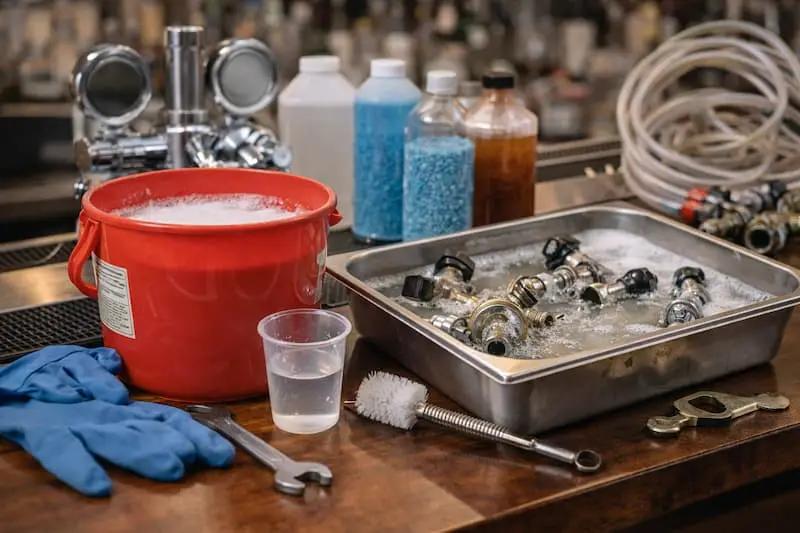
1. Acid Cleaning Cycle
Acid cleaning dissolves beer stone that alkaline detergents cannot remove. Skipping this step eventually affects flow and taste.
Every three months:
- Use an approved acid line cleaner
- Follow dilution instructions carefully
- Circulate according to manufacturer guidance
2. FOB Devices
Foam on Beer detectors help maintain pressure balance. Malfunctioning FOB systems can create excessive foam issues. These devices should be:
- Cleaned
- Inspected
- Tested for proper function
3. High-Maintenance Beer Lines
Certain beverages require more frequent attention:
- Ciders
- Sour beers
- Hazy IPAs
These products contain higher sugar and yeast content, which accelerates buildup. Consider cleaning these lines more often than the standard 7 to 14-day schedule.
Additional Practices for Effective Beer Line Cleaning
Effective beer line cleaning is about doing the basics correctly every time. A few smart habits help you avoid contamination, protect equipment, and keep pours tasting the way they should.
Use Separate Containers for Clean and Dirty Water
Using the same bucket for everything can reintroduce residue back into the system. Keep one container strictly for fresh water and another for used solution. This reduces cross-contamination and keeps your rinse step actually effective.
Never Mix Chemicals Unless the Manufacturer Directs It
Combining cleaners can trigger unsafe chemical reactions and reduce how well each product works. In some cases, mixing certain cleaning products can release corrosive fumes into the air, creating a real safety hazard in tight bar or kitchen spaces. Use one cleaner at a time and follow the label directions exactly, and if there’s any uncertainty, keep products separate.
Always Allow at Least 15 Minutes of Circulation
Cleaning solution needs enough contact time to break down yeast, proteins, and biofilm. A quick flush may look productive but usually leaves buildup behind. Treat the full circulation time as non-negotiable for consistent results.
Wear Gloves and Eye Protection
Line cleaners are designed to be strong enough to remove stubborn residue. That same strength can irritate skin and eyes if handled casually. Basic protective gear keeps the process safe and routine.
Replace Worn Tubing When Buildup Won’t Come Out
If tubing stays cloudy, smells off, or still affects taste after proper cleaning, it may be past its usable life. Old lines can hold residue in tiny cracks that cleaners cannot fully remove. Replacing worn tubing is sometimes the simplest fix.
Store Chemicals Safely and Clearly Labeled
Mislabeling or poor storage can lead to improper mixing and safety issues. Keep chemicals sealed, labeled, and away from food storage areas. Organized storage also makes it easier for staff to follow the right process every time.
How to Tell If Your Beer Lines Need Immediate Cleaning
Sometimes problems show up between scheduled cleanings, especially during busy weeks or menu changes. When a draft system starts pouring differently than normal, a quick check can prevent bigger quality issues.
Sudden Excess Foam
A sharp increase in foam usually points to a system issue rather than the beer itself. Buildup can disrupt flow and make pours unstable. If foam appears across multiple taps, immediate cleaning or inspection is often warranted.
Flat or Sour Taste
When beer loses its crisp finish or starts tasting slightly sour, residue inside the line is a common cause. Flavor changes can happen before anything looks visibly wrong. Catching it early helps prevent the issue from spreading across the system.
Cloudy Beer
Cloudiness can signal contamination, residue, or buildup moving through the line. It may appear inconsistently, especially at first pour. If clarity does not improve after a short run, the system likely needs attention.
Metallic Aftertaste
A metallic note can point to buildup, mineral deposits, or issues with components that contact the beer. Even a mild change can be a warning sign. This is especially important to address quickly if it shows up on more than one tap.
Slower Pours
When beer pours slower than normal, restrictions inside the line are often the culprit. Buildup can narrow the pathway and interfere with pressure balance. Slow flow usually gets worse over time if not addressed.
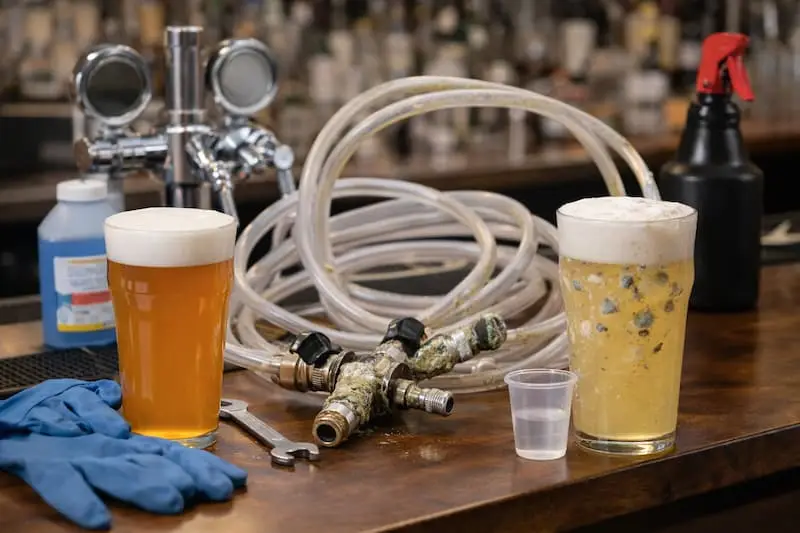
Visible Buildup in Clear Tubing
If tubing is clear and residue is visible, cleaning is overdue. Cloudiness, streaking, or film inside the line often indicates biofilm or deposits. Visible buildup is a strong indicator that flavor and sanitation may already be compromised.
Customer Comments About Taste or Consistency
Customer feedback is one of the most reliable early warnings. If multiple guests mention off-flavors, odd foam, or inconsistent pours, the draft system should be checked right away. Waiting typically makes cleaning harder and increases the chance of ongoing issues.
Frequently Asked Questions
How does staff turnover affect draft maintenance?
When training is inconsistent, cleaning routines can become irregular. Small steps may get skipped without clear procedures in place. A simple, repeatable checklist reduces errors. Consistency matters more than complexity.
Is visual inspection enough to confirm clean beer lines?
Clear tubing does not always mean clean lines. Biofilm and microscopic residue can still be present even when the line looks fine. Taste and performance are better indicators than appearance alone. Regular cleaning should not depend on visual cues.
Can poor maintenance damage draft equipment?
Yes, buildup and mineral scale can strain components over time. Restricted flow increases pressure on fittings and connectors. That wear can shorten the lifespan of parts. Preventive cleaning helps protect equipment investment.
Do seasonal menu changes require draft adjustments?
Adding new beverage styles may change how often lines need attention. Certain drinks leave more residue than others. Reviewing your cleaning schedule during menu shifts helps prevent unexpected issues. Flexibility keeps the system reliable.
Should beer lines be cleaned before special events or peak seasons?
Increased volume puts more strain on the draft system. Cleaning before busy periods helps ensure consistent pours under pressure. It also reduces the risk of mid-service problems. Planning protects both service speed and quality.
Schedule Professional Beer Line Cleaning in Putnam County
Consistent beer line maintenance supports better flavor, smoother pours, and reliable equipment performance for bars and restaurants in Putnam County. Beer Line Cleaning USA provides routine service designed to keep draft systems clean, compliant, and operating consistently across Putnam County.
Call today to book a cleaning and lock in a dependable maintenance schedule.