If your draft beer is pouring foamy or tasting flat, the keg is usually not the problem.
The root cause usually comes down to a short list of mechanics: beer that is too warm, pressure (PSI) that is wrong for the beer’s temperature, and lines or hardware that are short, restricted, or dirty.
When those variables drift, CO₂ either breaks out too fast (foam) or fails to stay properly dissolved (flat).
Here’s the practical fix: keep beer at 36–38°F, set pressure around 10–14 PSI (based on style and temperature), and clean lines and draft parts on a consistent schedule.
What’s In This Guide
Quick Facts
- Keep beer cold and stable (commonly 36–38°F).
- Many standard systems land around 10–14 PSI, then fine-tune.
- Short lines, kinks, or mismatched parts create turbulence and foam.
- Faucets, couplers, and small parts can cause recurring problems.
- Fix in order: temperature → PSI → restriction → cleaning.
Foamy vs. Flat: What’s Actually Happening in the Line
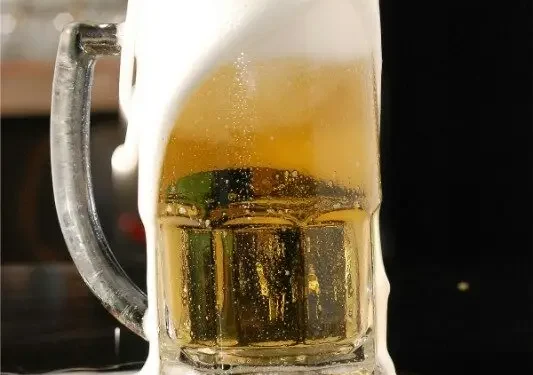
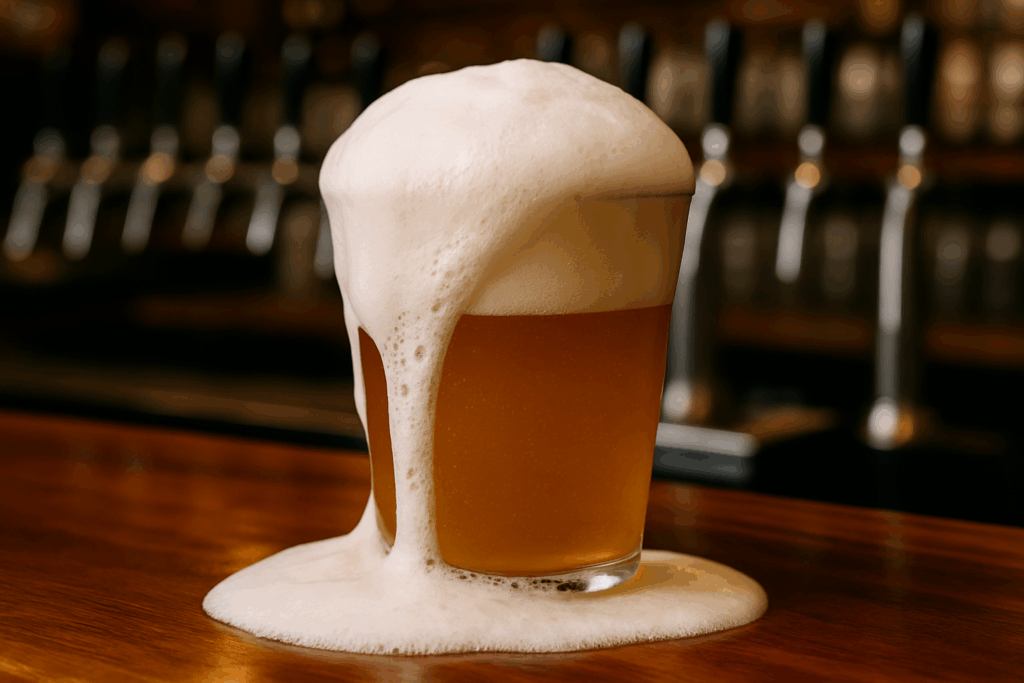
Foamy draft beer is usually “too much CO₂ breakout.” That means CO₂ is leaving the beer before it reaches the glass, forming bubbles inside the line, the faucet, or as it exits.
Foam is often triggered by warm beer, pressure mismatch, and nucleation sites (tiny surfaces or buildup that encourage bubbles to form). Temperature and carbonation level are major factors in whether foam forms and how stable it is.
Flat draft beer typically does not have enough carbonation at the point of service. That can happen because:
- The beer warmed up and lost CO₂ over time.
- The applied pressure is too low for the beer’s temperature and desired carbonation.
- There’s a leak or inconsistent pressure that lets carbonation escape.
Note: Foam and flatness can share the same root causes. Warm beer can pour foamy in the moment, and also end up flatter over the next hours or days because CO₂ won’t stay dissolved at higher temperatures.
Why Your Draft Beer Tastes Foamy or Flat
Temperature Problems
Beer stored at 38°F retains the carbonation created at the brewery, and that CO₂ expands as it heats up. When beer is stored above the suggested temperature, CO₂ can come out of solution over time.
It also helps to think in zones:
- Keg temperature (what the beer actually is)
- Line temperature (especially trunk lines in long-draw systems)
- Tower and faucet temperature (often the warmest point)
- Glass temperature (affects foam and perceived carbonation)
Any increase in temperature between the cooler and the faucet can lead to dispensing problems, such as foaming.
Quick Checks Operators Can Do Today
- Measure liquid temperature: A simple method is to use a calibrated thermometer and check liquid temperature at the first pour or in a glass of water kept in the cooler long enough to stabilize.
- Check for warm spots: Towers, shanks, beer lines near doors, and any sections exposed to ambient heat.
- Watch the first pour: If the first pour is always foamy but subsequent pours are better, you likely have a warm tower or warm line segment rather than a keg problem.
Fixes
- Immediate: Stop chasing foam by cranking PSI up and down until you confirm the temperature. Pressure changes can mask the problem and create new ones.
- Operational: Keep cooler doors sealed and closed, avoid storing kegs near warmer thresholds, and reduce heat sources near towers.
- System-level: For long-draw systems, confirm trunk line insulation and glycol performance. Long runs amplify small temperature mistakes.
Pressure and Gas
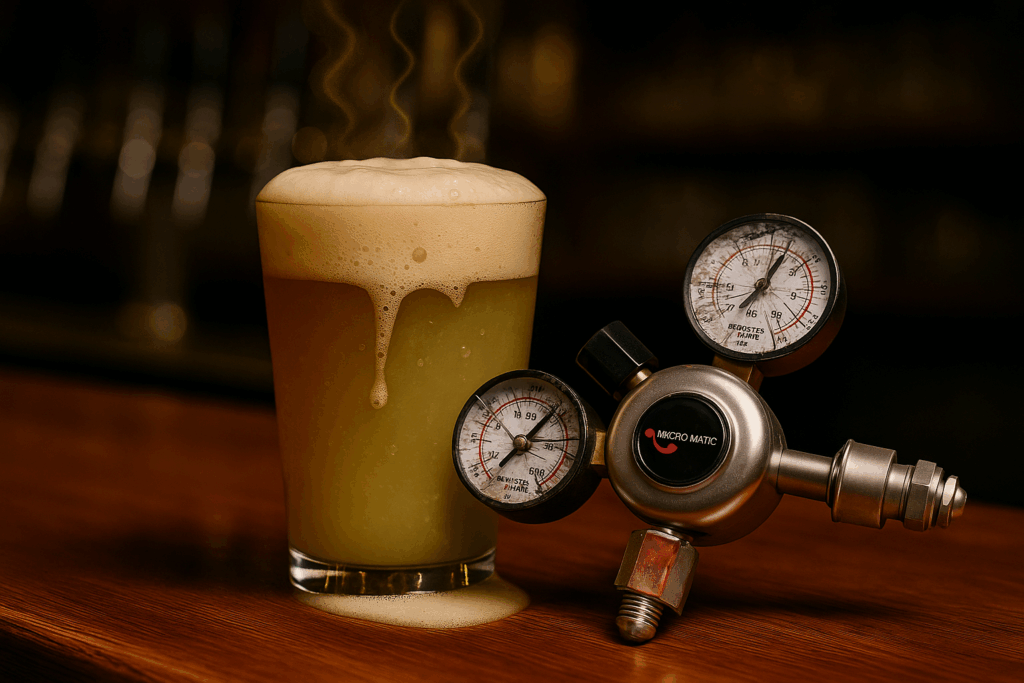
Pressure and temperature are paired. If beer warms up but PSI stays the same, you have a mismatch that can show up as foam, changing flow rate, and eventual carbonation loss.
Industry guidance commonly anchors “typical” draft pressure around the low teens at standard draft temperatures. For example, a beer at 36°F with 2.6 volumes of CO₂ has an ideal pressure around 11.3 PSI, with adjustments needed for altitude and system design.
What To Look For
- Foam on every tap: Often points to temperature drift, a regulator issue, or a gas supply problem.
- Flat beer across multiple taps: Could be under-pressure, leaks, or warm storage over time.
- One line acting up: More likely a restriction imbalance, dirty hardware, tower warming, or a coupler/FOB issue.
If you operate a long-draw system, you may need blended gas or higher applied pressure to move beer without over-carbonating.
Restriction and System Balance
A draft system is balanced when:
- Pressure is high enough to keep CO₂ dissolved and move beer.
- Restriction is sufficient to prevent beer from racing to the faucet and breaking out.
When the restriction is too low (often from short lines or mismatched components), beer can hit the faucet too fast and shed CO₂ into foam.
When the restriction is too high (kinks, clogs, failing check valves), you can get slow, inconsistent, sometimes foamy pours that tempt staff to crank PSI and create a different problem.
Practical Signs of Restriction Issues
- One tap pours more slowly and foamiest than others.
- Foam appears intermittently or after a few seconds, not instantly.
- You see bubbles in the line that persist even after temperature and PSI checks.
Fix Path
- Check for kinks, pinched lines, and worn seals.
- Inspect couplers, check valves, FOBs, and faucets.
- Standardize line length/diameter across similar products whenever possible.
Dirty Lines
Even if your temperature and PSI are dialed in, dirty beer lines and parts can still cause foam. Buildup and biofilm create surfaces where CO₂ can nucleate and break out.
They also distort flavor and aroma so beer can taste dull, stale, or “flat” even when carbonation is technically present.
Biofilms form in dispensing lines, and managing microbial growth is essential to maintaining draft quality.
What this looks like:
- The same tap keeps “mysteriously” foaming.
- Beer tastes off, dull, or sour sooner than expected.
- Pours are inconsistent even after the staff adjusts the PSI.
If your troubleshooting keeps circling back every week, cleaning and maintenance are often the missing variable.
General Fixes for Foamy or Flat Draft Beer
Clean Beer Lines and Draft Components
Buildup and biofilm create “bubble-starting” surfaces inside the system. That encourages CO₂ to break out into foam, even if temperature and PSI are close to correct.Clean More Than Just the Line
Foam and flavor issues often live in the small parts:- Faucets and spouts
- Shanks and couplers
- Check valves and FOB devices
- O-rings and seals
Treat Cleaning as Preventive Maintenance
Simply running water through the line does not remove biofilm or beer stone. Effective cleaning requires:- The right chemical approach for organic buildup
- Periodic removal of inorganic scale (beer stone)
- Consistency, documentation, and repeatability
Confirm Glassware Is Not the Hidden Variable
Understand How Residue Changes the Pour
Detergent, grease, and sanitizer residue can make beer look wrong even if the draft system is functioning properly. It can:- Collapse your head quickly
- Create excessive foaming
- Make beer seem dull or lifeless
Use a Simple Beer-Glass Protocol
- Keep beer glass cleaning separate from greasy kitchenware
- Avoid overusing detergent and ensure a thorough rinse
- Air-dry fully before service
- Handle glasses by the base or exterior to avoid contaminating the rim
Lock in a Repeatable Fix
Log the Four Numbers That Matter
For consistent troubleshooting, record:- Cooler temp (air)
- Beer temp (liquid)
- Applied PSI
- Cleaning dates and who performed the work
Standardize Your Settings by Zone
If you run different beer styles, different cooler zones, or long-draw versus short-draw lines, treat them as separate “systems” and avoid one-size-fits-all adjustments.Know When It’s Time To Bring in a Draft Specialist
Call in a professional service when:- Foam persists after temperature and PSI are verified
- One line remains a repeat offender
- You have a complex long-draw system or mixed-gas setup
- You suspect restriction mismatches or failing hardware
Set the Correct PSI for Your Temperature
Pressure must match beer temperature and carbonation level.- For many standard ales and lagers stored around 36–38°F, applied pressure commonly falls in the 10–14 PSI range.
- At approximately 38°F, maintaining natural carbonation often requires around 12–14 PSI, depending on the beer and system design.
Make one adjustment at a time and allow the system to stabilize before making another change.
Fix the Variables in This Order
- Temperature
- Pressure
- Restriction
- Cleanliness
When those four variables are controlled, most foamy or flat draft beer issues disappear quickly and stay resolved.
STOP BEER WASTE. SCHEDULE PROFESSIONAL SERVICE TODAY
Frequently Asked Questions (FAQs)
Why is my draft beer so foamy?
Draft beer is usually too foamy due to warm temperatures, incorrect pressure, or a dirty system, causing the liquid to escape. Key fixes include setting the kegerator to 36–40°F, balancing pressure (usually 10–13 PSI), cleaning faucets, and ensuring lines are not too short or restricted.
Why do I get foam only during rush hour or when the bar is busiest?
Peak volume can overwhelm cooling. More pours plus frequent cooler-door openings can warm towers/shanks and let temps drift. If your tower or walk-in can’t recover fast enough, pour quality drops during the rush.
Can over-carbonated beer in the keg cause foamy pours even if my system is set correctly?
Yes. An over-carbonated keg (often from incorrect storage pressure or excess movement) can pour foamy even in a balanced system. Let it stabilize at the proper temperature and serving pressure long enough for the carbonation to settle back down.
What causes “fobbing” or spurts of foam after a keg change?
Most often, it’s air introduced during the swap or a coupler that isn’t fully seated. Air pockets travel through the line and expand at the faucet, creating bursts of foam. Tight connections and clean changeover steps reduce it.
Why does my draft beer taste flat?
Draft beer usually tastes flat due to improper CO₂ pressure, incorrect temperature (too warm), or dirty equipment. The most common cause is low pressure, which fails to keep carbonation in the beer, or excessive pressure creating foam that goes flat. Ensuring consistent refrigeration (36-40°F) and cleaning lines is crucial.
Get Your Draft System Back Under Control
The good news is that these issues are measurable and fixable. If you want a reliable, professional assessment instead of guesswork, bring in a draft specialist.
Beer Line Cleaning USA works with bars, restaurants, breweries, and hospitality venues to inspect, clean, balance, and maintain draft systems so pours stay consistent and predictable.