Table of Contents
What to Remember 🍺✔ A kegerator keeps pasteurized beer fresh for up to four months under CO2. ✔ Unpasteurized beer has a shorter lifespan and requires stricter maintenance. ✔ Dirty lines shorten keg life faster than time alone. ✔ The best beer line cleaner practices prevent flavor loss and contamination. ✔ Temperature control and CO2 pressure are essential for draft quality. ✔ Regular cleaning directly affects how long a keg lasts in real use. |
A keg in a kegerator typically stays fresh 2 to 4 months for pasteurized beer and 1 to 2 months for unpasteurized beer when it’s kept at the proper dispensing temperature of 34–38°F and served with CO2.
The part many people miss is that “fresh keg” does not always mean “fresh-tasting draft.” Even at the right temperature and pressure, beer can pick up stale, sour, or funky notes if the lines and faucet are carrying buildup.
That’s why draft system hygiene matters: using the best beer line cleaner on a consistent schedule helps prevent yeast, bacteria, and residue from affecting flavor. For most home setups, that means cleaning beer lines every 2–4 weeks, and weekly if your system sees heavy use.
What Is a Kegerator and How Does It Keep Beer Fresh?
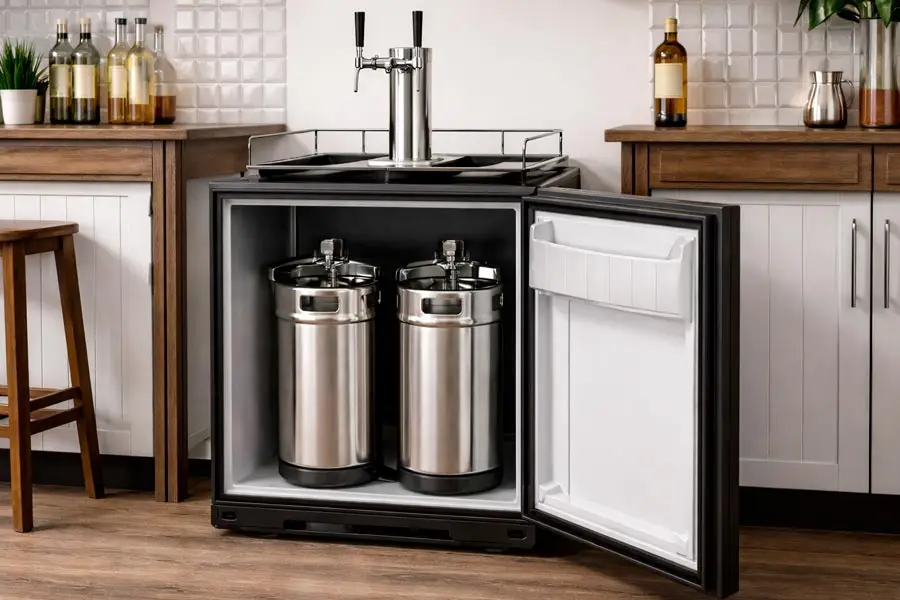
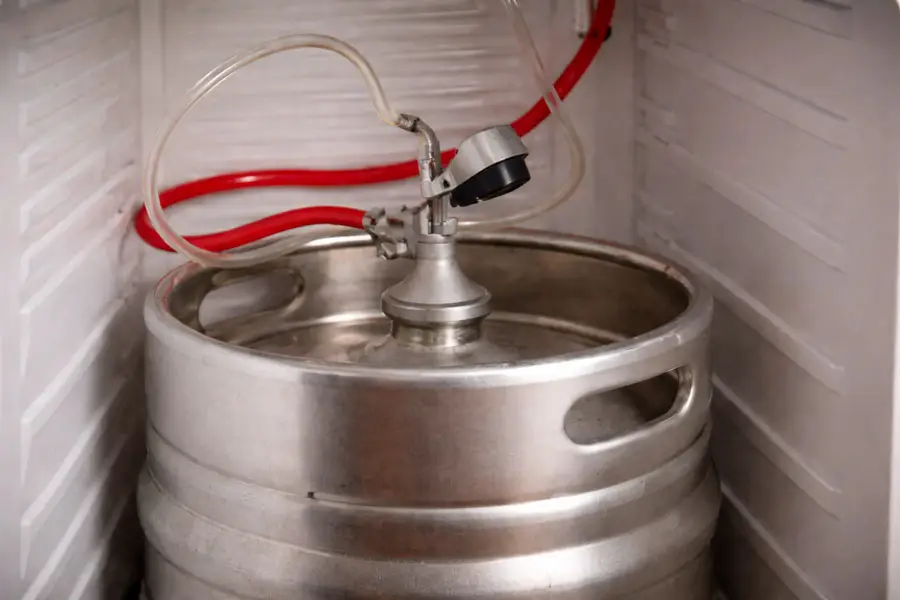
A kegerator is a refrigerated draft system built to store and pour kegged beer under consistent, controlled conditions. It keeps beer fresher than a standard fridge setup because it maintains a steady temperature and uses pressurized CO2 to dispense beer without introducing oxygen.
- Consistent cold storage: Maintains a stable serving range (typically 34–38°F) to slow flavor breakdown and reduce foaming.
- CO2-driven pouring: Pushes beer from the keg to the faucet while keeping oxygen out, helping prevent staling.
- Sealed draft components: A typical kegerator kit includes a CO2 tank, regulator, beer lines, and a faucet connected to a beer tower dispenser for controlled, closed-system dispensing.
- Less oxidation risk: Oxygen exposure can dull hop aroma and create cardboard-like off-flavors, which is why limiting air contact is critical.
- Clean system requirement: A beer dispenser depends on clean lines and faucets; residue buildup can taint beer before it reaches the glass, even if the keg is fresh.
How Long Is a Keg Good for in a Kegerator?
Keg Freshness When Using a CO2 System
When a keg is tapped using CO2, the beer is protected from oxygen and can remain stable for weeks or months. CO2 creates a closed system that preserves carbonation and slows oxidation. According to the Brewers Association Draught Beer Quality Manual, dispensing with compressed air exposes beer to oxygen, which can create stale, paper- or cardboard-like flavors and can also introduce outside contaminants that increase the risk of bacterial spoilage and off-flavors..
Pasteurized Beer Shelf Life
Pasteurized beer typically lasts 3 to 4 months, or 90 to 120 days, once connected to a kegerator. Pasteurization reduces microbial activity, which extends shelf life. Many domestic lagers and widely distributed craft beers fall into this category.
Unpasteurized Beer Shelf Life
Unpasteurized beer lasts 1 to 2 months, or about 45 to 60 days, under ideal conditions. These beers are more sensitive to temperature changes and contamination. Many small-batch craft beers are unpasteurized to preserve flavor, which makes line cleanliness especially important.
When Does the Countdown Start?
The clock starts at the brewery fill date, not the day the keg is tapped. Most kegs include a “born on” or packaging date. The closer that date is to purchase, the longer the beer will taste fresh. This is central to answering ‘how long does a keg last?’ in real-world conditions.
How Long Does Beer Last in a Keg Without a Kegerator?
Party Pump (Air) vs. CO2 Systems
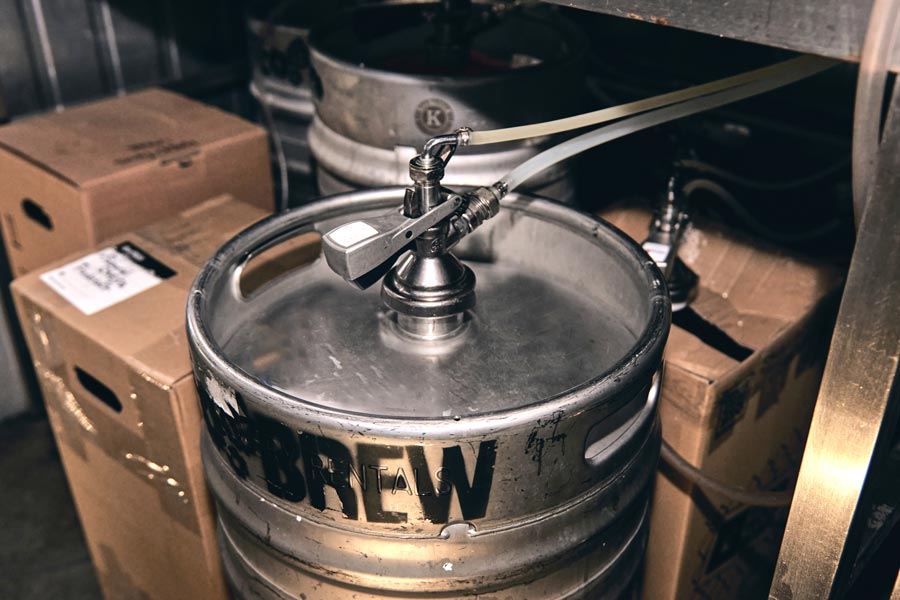
Using a party pump introduces air directly into the keg. With oxygen present, beer typically goes stale within 8 to 12 hours. The Brewers Association confirms that air-driven systems dramatically reduce draft beer life compared to CO2 systems.
Why Air Exposure Causes Stale Beer
Oxygen reacts with beer compounds, flattening carbonation and creating off-flavors. This process accelerates in warm environments. Without refrigeration and CO2, the answer to ‘how long does beer last in a keg?’ becomes measured in hours, not months.
4 Factors That Affect How Long a Keg Lasts
Temperature Control
A keg lasts longer when it stays at a steady, cold dispensing temperature. Warmer temps or frequent temperature swings can shorten freshness.
Cleanliness of Beer Lines
Even if the keg is still “good,” dirty lines can make it taste old faster. Clean lines help the beer stay true to flavor for more of the keg’s life.
CO2 Pressure and Leaks
A stable CO2 setup helps protect the beer and keep it tasting fresh. Leaks or inconsistent pressure can cause faster quality decline.
Frequency of Use
Kegs tend to stay fresher when beer is flowing regularly. Long gaps between pours can make the system more prone to stale flavors.
Why Clean Beer Lines Matter More Than the Keg Itself
Most draft beer flavor problems originate in the delivery system, not the keg. Beer lines accumulate protein, hop resin, and yeast over time. These deposits feed bacteria that produce sour or buttery flavors.
Signs of dirty lines include cloudy pours, excessive foam, and off-smells at the faucet. A beer dispenser can ruin a fresh keg in days if lines are neglected. This is why professionals emphasize line hygiene over simply tracking how long is a keg good for.
Clean lines ensure that beer tastes the same at day one and day sixty. Without cleaning, even the best kegerator setup cannot protect flavor.
How to Clean Beer Lines in a Kegerator (Step-by-Step)
Tools You’ll Need
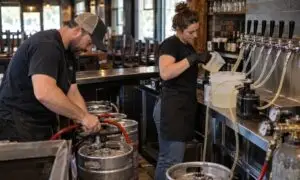
A basic cleaning setup includes a kegerator line cleaning kit, a cleaning bottle or pump, approved cleaning solution, and clean water for rinsing.
Step-by-Step Beer Line Cleaning Process
- Turn off the CO2 tank.
- Disconnect the keg and beer lines.
- Pump cleaning solution through the lines.
- Let the solution soak per manufacturer’s instructions.
- Rinse thoroughly with clean, cold water.
- Reconnect the system and purge with CO2.
- Test pour before serving.
Skipping steps or rushing the rinse leaves residue behind. Proper cleaning protects both flavor and system longevity.
How Long Can Beer Stay in the Fridge?
Storing beer in the fridge helps slow aging by reducing oxidation and other reactions that affect flavor. Cold temperatures preserve beer longer than room temperature storage, but refrigeration does not stop aging completely. Over time, beer can still lose freshness and develop off-flavors.
Most beer can remain drinkable in the fridge for several months, though the exact timeline depends on how it’s made and packaged:
- Commercial pasteurized beer: Often stays drinkable for about 6–8 months when kept cold.
- Craft beer: Typically holds quality for around 3–4 months, especially hop-forward styles.
- Unpasteurized beer: Usually has the shortest fridge life, often 2–3 months.
While refrigeration helps preserve bottled and canned beer, a kegerator offers better long-term freshness once a keg is tapped by maintaining consistent temperature and using CO2 to limit oxygen exposure.
3 Common Draft Beer Problems and What They Mean
✔ Foamy Beer
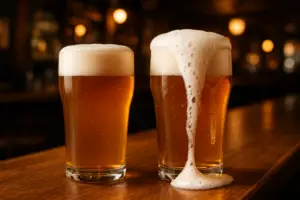
Foam often comes from warm beer, incorrect CO2 pressure, or dirty lines. Buildup inside the beer tower dispenser can disrupt flow and cause CO2 release too fast. Check the temperature first, then inspect your pressure and connections.
✔ Sour or Metallic Taste
These flavors are often caused by residue, bacteria, or yeast buildup in the lines or faucet. Even if the keg is fresh, dirty lines can make the beer taste “off” immediately. Cleaning the system is usually the fastest fix.
✔ Flat Beer
Flat beer can signal a CO2 leak, low tank pressure, or regulator settings that aren’t matched to your serving temperature. Oxygen exposure can also make beer taste dull and lose its crisp finish. Confirm the tank level, check for leaks, and purge the lines with CO2.
Frequently Asked Questions
How to know if a keg has gone bad?
Look for sour, skunky, or “off” smells, unusual taste (vinegary, buttery, metallic), and changes in appearance like unexpected cloudiness or particles. Excessive foaming or beer that suddenly pours flat can also signal contamination, oxidation, or a handling/storage issue.
Can you clean beer lines every 2 weeks?
Yes. Cleaning every 2 weeks is a solid best practice for most draft setups to maintain flavor and prevent yeast, bacteria, and beer stone buildup. If you pour infrequently, serve sweeter beers/ciders, or notice off-flavors/foaming, cleaning more often can help.
Do unopened kegs go bad?
Yes. Even unopened kegs have a shelf life, typically around 3–6 months depending on beer style, freshness goals, and storage conditions. Keeping the keg cold and stable helps preserve flavor; hop-forward beers often taste best sooner.
Can sunlight affect a keg?
Yes. Sunlight and strong UV exposure can “skunk” beer by reacting with hop compounds, especially over time. While stainless kegs block most light, it’s still best to store kegs out of direct sun to avoid heat swings and quality loss.
How to keep a keg good for a week?
Keep it cold (about 36–38°F / 2–3°C), maintain steady CO₂ pressure, and avoid shaking or moving it around. Store it upright, minimize warm exposure during service, and keep all fittings/lines clean to prevent off-flavors.
Keep Your Kegerator Pouring Fresh in Putnam County!
Even well-maintained home systems benefit from expert care. In Putnam County, draft beer quality often suffers not from old beer but from overlooked line maintenance. Professional service ensures your beer tower dispenser, lines, and kegerator kit stay aligned with industry standards.
Beer Line Cleaning USA helps protect flavor, extend keg life, and maintain safe, clean systems for homes and businesses. If your draft beer does not taste as fresh as expected, line condition is the first place to look.
Contact Beer Line Cleaning USA to schedule beer line cleaning in Putnam County and keep every pour tasting fresh.