Table of Contents
Key Takeaways✔ Choosing the right keg size and understanding how many beers are in a keg helps bars, venues, and event planners control costs and reduce waste. ✔ Knowing standard keg dimensions and types ensures proper fit with draft systems, coolers, and kegerators. ✔ Clean, well-maintained draft lines using proper commercial beer line cleaning equipment are essential for preserving beer flavor, freshness, and pour quality. ✔ In many cases, a keg of beer is more cost-effective than buying multiple cases, especially for large gatherings, high-volume venues, and home kegerator setups. ✔ Partnering with experienced providers like Beer Line Cleaning USA helps protect product quality, improve draft efficiency, and deliver a consistently great pour. |
Knowing the right keg size, how many beers are in a keg, and how draft-line cleaning actually works can save money, preserve beer quality, and eliminate guesswork, whether someone is running a bar, planning a party, or simply trying to choose the right keg of beer.
Beer kegs aren’t one-size-fits-all. Their dimensions affect how they fit inside coolers, how well they serve crowds, and how easily they pair with U.S. draft systems. Add in the importance of commercial beer line cleaning, and it quickly becomes clear why understanding keg specs is essential for any American bar owner, event planner, or home-kegerator enthusiast.
Understanding Beer Keg Sizing Standards
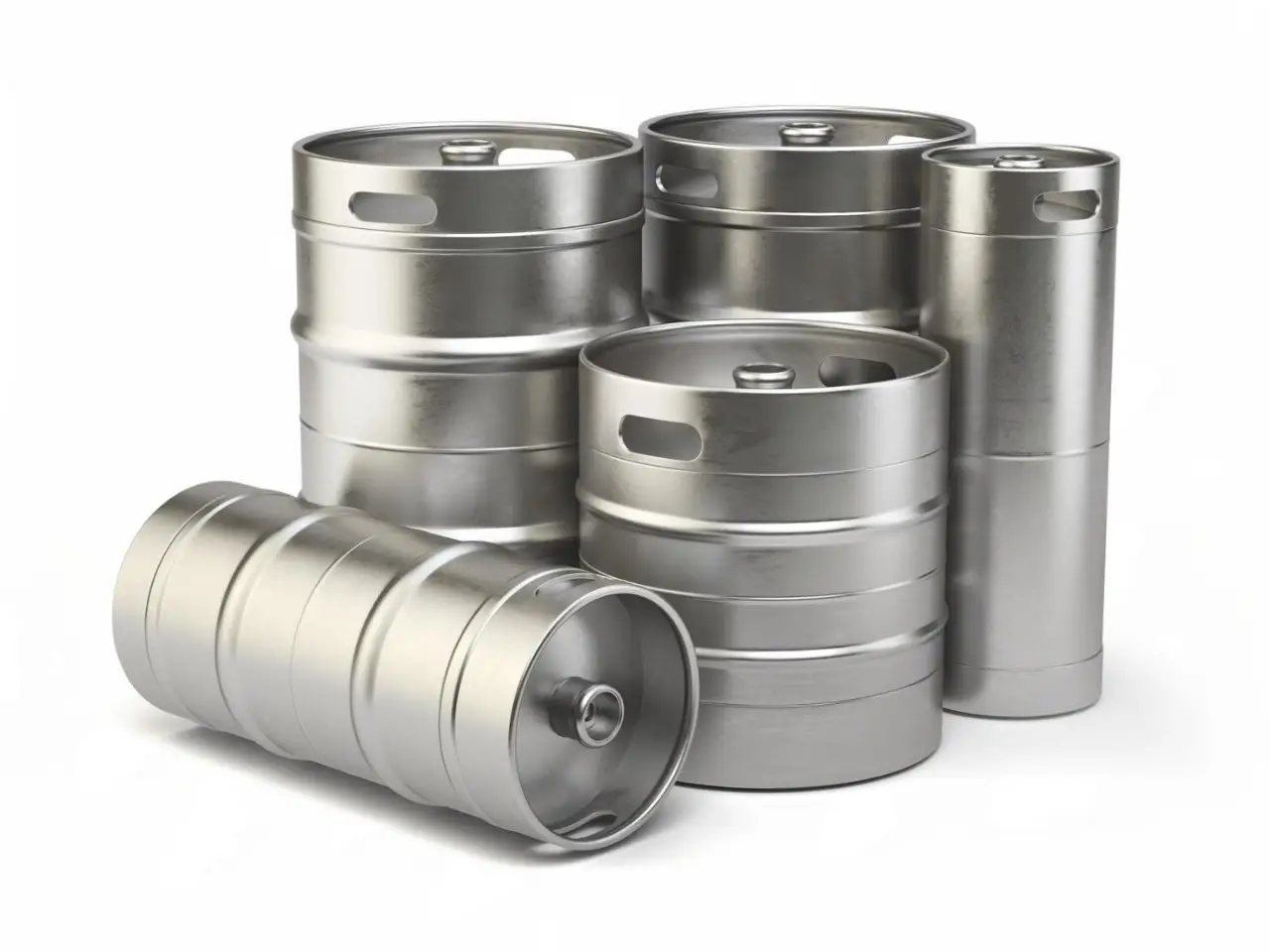
Beer keg sizes in the United States follow established American brewing standards that define each keg’s volume, dimensions, and compatibility within draft systems. While consumers often focus on how many beers in a keg, the actual dimensions matter just as much.
Width, height, and coupler type affect whether the keg fits in a kegerator, how stable it is during transport, and how well it pours in a commercial environment.
Draft technicians, brewers, and beverage managers rely on standardized measurements because even small variations can lead to foaming, wasted beer, or poor flow. Meanwhile, consumers tend to search for practical answers—“how many beers are in a keg?” or “kegs near me”—especially before events or holidays.
Understanding keg specs ensures the right beer, the right size, and the right equipment come together without surprises.
How Do You Measure the Size of Beer Kegs?
Measuring a keg is straightforward, but accuracy matters. The two most important dimensions are:
- Volume (total gallons or liters)
- Physical dimensions (width/diameter and height)
A simple measuring tape will capture diameter and height, but the internal volume is fixed based on manufacturing standards. Breweries also assign each keg a coupler type, usually a U.S. Sanke D, ensuring compatibility with American draft systems.
These measurements ultimately answer the questions most buyers care about: how many beers in a keg, which keg fits their cooler, and how to pair it with draft equipment.
With kegged beer becoming more popular for parties and backyard gatherings, knowing the difference between a sixtel, a half barrel, and a pony keg helps avoid mismatches.
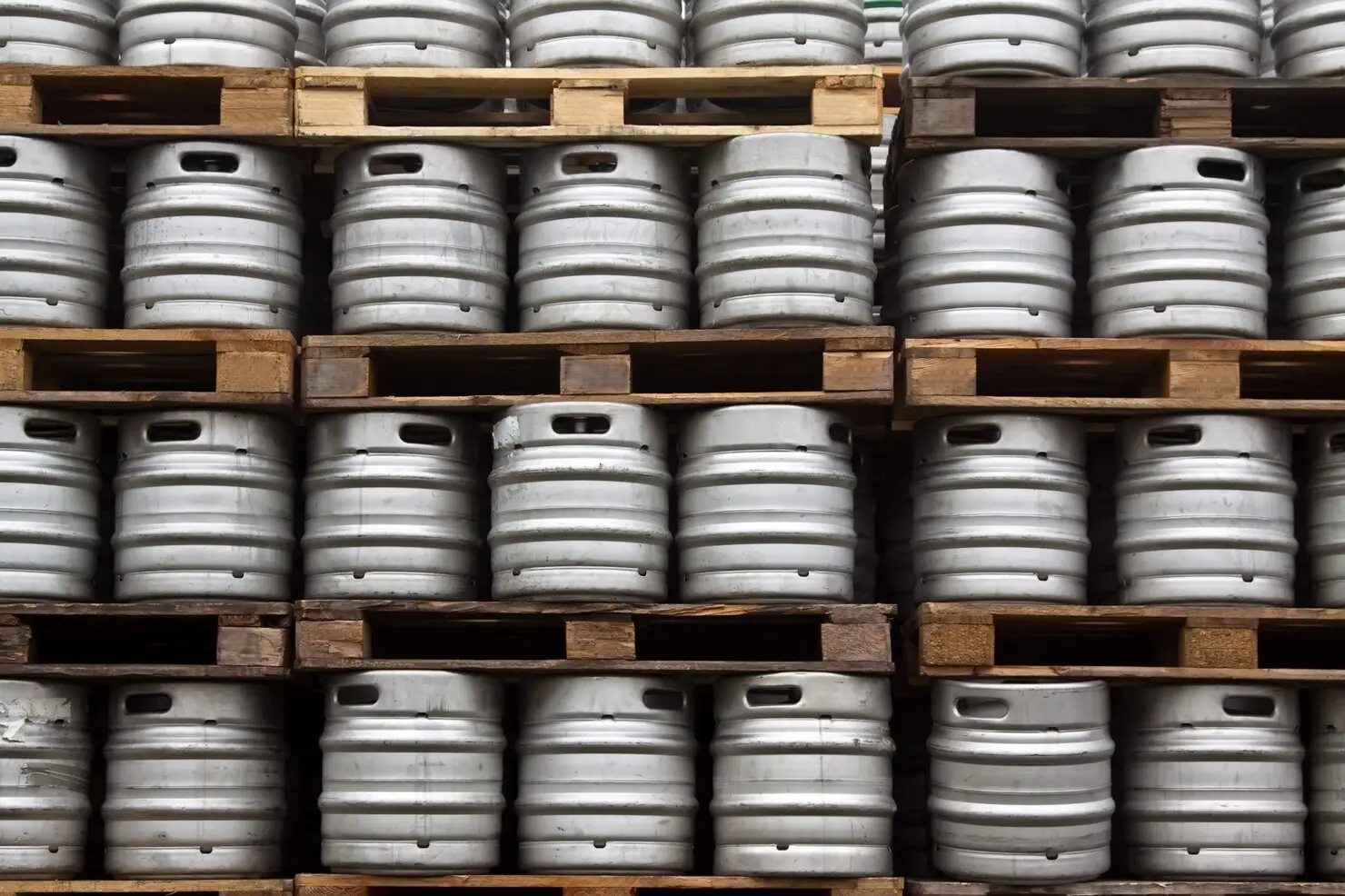
Common Commercial Keg Sizes & Specs
Here are the most widely used kegs in bars, restaurants, and homebrew setups.
Half Barrel (Full Keg)
- 15.5 gal (58 L)
- ~165 12 oz beers
- ~16.2″ W × 23.3″ H
Bars rely heavily on half barrels because they offer the best value per ounce and minimize changeovers during busy shifts.
Quarter Barrel (Pony Keg)
- 7.75 gal (29.3 L)
- ~82 12 oz beers
- ~16.1″ W × 13.8″ H
Known best as the pony keg, this size works perfectly for mid-size events and small bars. It holds roughly half the beer of a half barrel but occupies less vertical space. Americans planning backyard parties frequently search for kegs near me and often end up choosing a pony keg because it’s easy to transport and chill.
Sixth Barrel (Sixtel)
- 5.16 gal (19.8 L)
- ~55 12 oz beers
- ~9.25″ W × 23.3″ H
The sixtel has become a favorite among craft breweries and taprooms offering multiple rotating beers. Its narrow width makes it ideal for multi-tap kegerators. Sixtels also make it simple for consumers to sample new brews without committing to a full keg of beer.
50 Liter (European Import Keg)
- 13.2 gal (50 L)
- ~140 12 oz beers
- ~16″ W × 21″ H
This is the standard for many European brands like Heineken and Stella Artois. Since imports often require a different coupler, buyers must ensure compatibility before ordering.
Cornelius (Corny) Keg
- 5 gal (18.9 L)
Mostly used by homebrewers, these kegs are easy to clean, fill, and maintain. Their ball-lock or pin-lock fittings differ from commercial systems, but they’re popular for small-batch creations.
What Is the Proper Name for a Full-Size Keg?
Although consumers use the phrase “full keg,” the correct industry name is Half Barrel. Historically, beer barrels were 31 gallons, and half that amount or 15.5 gallons became the commercial standard for draft beer.
That’s why the full-size keg Americans know today is technically half of a traditional brewing barrel.
The terminology can be confusing, which explains why so many people Google how many beers in a keg or how many beers are in a keg before placing an order.
But in the professional draft world, “half barrel” remains the accurate and widely accepted term.
Commercial Beer Line Cleaning Essentials
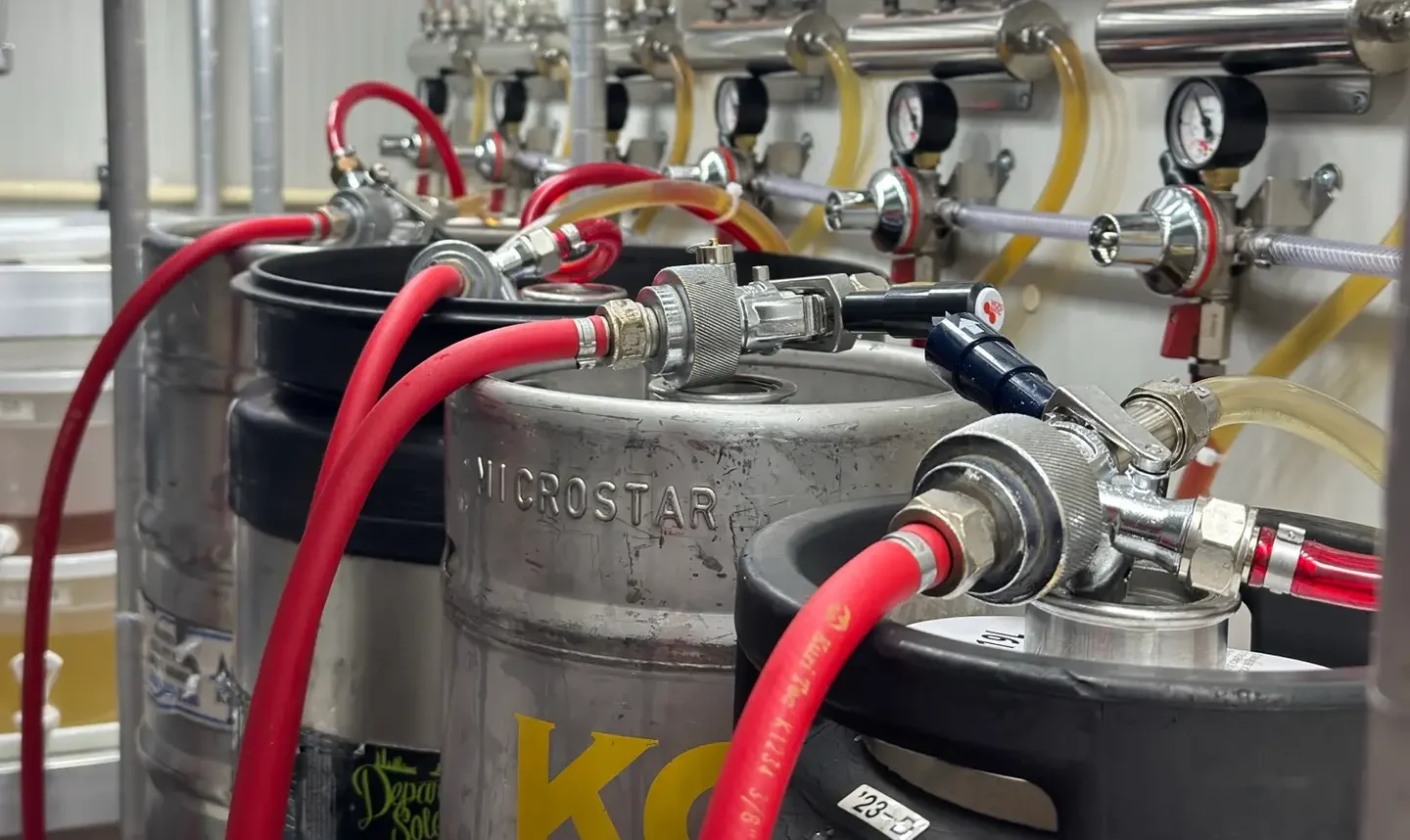
Clean draft lines are non-negotiable for any business serving beer. Flavor, freshness, and hygiene depend on a strict cleaning routine, and that’s where proper commercial beer line cleaning tools come in.
1. Cleaning Kegs
A dedicated stainless-steel 19L (5-gallon) cleaning keg is the backbone of a professional cleaning system. Equipped with a Sanke D coupler and pressure relief valve, it allows cleaning solution to circulate safely through the entire draft line.
2. Couplers
The coupler is the key connector between the keg and the draft system. In the U.S., Sanke D is the standard, though some imports require Sanke E. Matching keg to coupler ensures proper flow and reduces foaming, two issues that cost bars money.
3. Beer Line Tubing
Commercial systems typically use 3/8″ or 5/16″ OD tubing. Smaller diameters reduce resistance, improving pour quality. Tubing condition directly impacts beer taste; dirty or worn lines can cause chemical flavors or flat pours.
4. John Guest Fittings
These modern push-fit connectors allow technicians to swap lines, connect tubing sizes, and streamline cleaning runs. They’re standard in today’s commercial beer line cleaning practices due to their durability and efficiency.
How Much Is a Keg of Beer? A Quick Cost Comparison to Buying Cases
For many Americans, especially those hosting parties, one big question is: how much is a keg of beer compared to buying multiple cases?
While prices differ by brand and region, kegs typically offer better value per ounce. A half barrel provides about 165 beers, which is significantly cheaper than purchasing equivalent volume in canned or bottled form.
When a Keg Is More Cost-Effective
- Large gatherings or tailgates
- Bars serving high-volume products
- Home kegerator owners who buy regularly
- Reducing aluminum and glass waste
When Cases Might Be Preferred
- Small gatherings
- Specialty beers not sold in keg format
- Limited space for chilling a keg
Still, most buyers find they save money, especially if they choose a pony keg or sixtel for mid-size events. And because many liquor stores advertise kegs near me, competitive pricing keeps kegged beer affordable for American consumers.
Frequently Asked Questions
Do different keg sizes require different pressures?
Yes, serving pressure can vary depending on keg size, system length, and beer carbonation level. Smaller kegs with narrow lines may need slightly different PSI for a smooth pour. Technicians often fine-tune pressure during setup to minimize foam and preserve flavor.
How long will beer stay fresh inside a keg?
Beer can stay fresh for weeks or even months when kept under proper refrigeration and CO₂ pressure, but its starting quality matters just as much. Pasteurized beers typically last longer than unpasteurized ones, yet studies have shown that beer with higher oxygen levels before pasteurization tends to develop more negative sensory attributes, such as stale or off flavors. Minimizing oxygen exposure in the system, along with maintaining clean lines and equipment, plays a major role in preserving freshness and protecting the beer’s intended taste.
Can I transport a keg in any position?
A keg should always be transported upright to avoid excessive foaming and internal agitation. Laying a keg on its side can cause pressure imbalance and make the beer difficult to pour when tapped. Keeping it upright also reduces the risk of damage.
Can you use a home kegerator for commercial kegs?
Many home kegerators can accommodate commercial kegs, but users must confirm internal dimensions. Larger kegs like half barrels may not fit in compact units. Adaptors may also be required for certain couplers or tap systems.
What happens if a keg freezes?
A frozen keg can lose carbonation and may even rupture if temperature drops too low. Once thawed, the beer often tastes flat or diluted. It’s best to keep kegs refrigerated but never below freezing.
Boost Draft System Performance With Expert Support
Exceptional draft system care starts with proven expertise, and Beer Line Cleaning USA delivers that level of precision across Putnam County. With a track record built on thousands of installations, cleanings, repairs, and maintenance visits, every service is rooted in deep industry knowledge and meticulous workmanship.
Businesses throughout Putnam County rely on us to maintain consistent quality, reduce waste, and keep draft operations performing at their highest level. Supported by partnerships with leading equipment manufacturers and ongoing training in best practices, Beer Line Cleaning USA ensures every system in Putnam County receives professional attention backed by real-world experience.
Contact Beer Line Cleaning USA today to schedule expert service.